The Rise of 'Non-Standard' Open Source AI Licenses
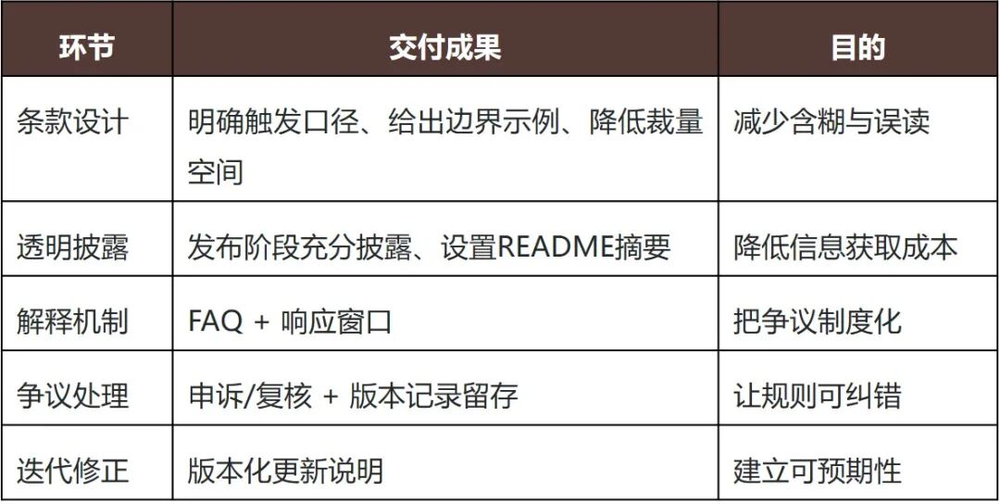
💡Understand why 'Open Source' AI is becoming restricted and how to avoid legal pitfalls in your AI stack.
⚡ 30-Second TL;DR
What Changed
Providers are adding 'non-standard' clauses like MAU thresholds and attribution requirements to open-weight models.
Why It Matters
Developers must now perform rigorous legal due diligence on model licenses, as 'open' no longer guarantees unrestricted commercial use.
What To Do Next
Audit your current model stack's license terms specifically for 'usage thresholds' or 'derivative work' restrictions before scaling to production.
Key Points
- •Providers are adding 'non-standard' clauses like MAU thresholds and attribution requirements to open-weight models.
- •The distinction between 'Open Weights' and 'Open Source' is widening due to commercial restrictions.
- •Lack of transparency in license enforcement and disclosure creates significant compliance risks for downstream users.
- •Companies are increasingly opting for closed-source releases as competitive pressures mount.
🧠 Deep Insight
Background and context from public sources — not the original article. 29 sources cited.
🔑 Enhanced Key Takeaways
- •Meta's Llama 2 license, a prominent example of a 'non-standard' AI license, includes a 700 million monthly active user (MAU) threshold, beyond which a separate commercial license is required, and explicitly prohibits using Llama materials to improve any other large language model (excluding Llama 2 or derivative works thereof).
- •The Open Source Initiative (OSI) published its Open Source AI Definition (OSAID) 1.0 on October 28, 2024, to provide a clear standard for what constitutes 'Open Source AI,' requiring access to the complete source code (including training, inference, and data processing code) and sufficiently detailed information about the training data to build a substantially equivalent system, aiming to combat 'openwashing.'
- •New licensing frameworks, such as the OpenMDW (Open Model, Data, and Weights License) introduced by the Linux Foundation, are emerging to create a standard, legally robust way to license AI models, specifically addressing the composite nature of AI (code, architecture, training data, weights) which traditional open-source software licenses were not designed for.
- •AI model licensing introduces unique compliance challenges beyond traditional software, including specific use-case restrictions (e.g., prohibiting use in surveillance, legal enforcement, or political campaigning), output restrictions, and the complexity of combining models and datasets under potentially incompatible licenses.
- •The global market for dataset licensing for AI training reached $4.8 billion in 2025 and is projected to grow significantly, driven by the exponential growth in generative AI development and increasing regulatory mandates for data governance, with proprietary licenses holding the largest share of this market.
🛠️ Technical Deep Dive
- Open Weights vs. Open Source AI: 'Open weights' refers to the public availability of a trained neural network's final weights and biases, allowing users to fine-tune or deploy the model. However, it typically excludes the training code, the full training dataset, or comprehensive data transparency. In contrast, 'Open Source AI,' as defined by the OSI, requires access to the complete source code used to train and run the system (including data processing, training, inference code, and model architecture), along with sufficiently detailed information about the training data to enable a skilled person to build a substantially equivalent system.
- Components Covered by Licenses: AI licenses can govern various components of an AI system, including the model weights, the code used for training, the training datasets themselves, the inference code for running the model, supporting libraries (like tokenizers), and even the outputs generated by the models.
- Use-Case Restrictions: Some non-standard licenses, such as Responsible AI Licenses (RAIL), incorporate specific use-case restrictions. These clauses prohibit the application of the AI model in certain domains or for particular purposes, such as surveillance, exploitation or harm of minors, or discrimination based on social behavior or personal characteristics.
🔮 Future ImplicationsAI analysis grounded in cited sources
⏳ Timeline
📎 Sources (29)
Factual claims are grounded in the sources below. Forward-looking analysis is AI-generated interpretation.
- meta.com
- xebia.com
- lesswrong.com
- byteplus.com
- wolterskluwer.com
- opensource.org
- ibm.com
- opensource.org
- opensource.org
- wikipedia.org
- linuxfoundation.org
- medium.com
- verifywise.ai
- splunk.com
- knobbe.com
- marble.onl
- dataintelo.com
- opensource.org
- medium.com
- substack.com
- orange.com
- wcr.legal
- wardandsmith.com
- jchanglaw.com
- staple.ai
- wcr.legal
- nalpeiron.com
- american-technology.net
- opensource.org
Weekly AI Recap
Read this week's curated digest of top AI events →
👉Related Updates


AI-curated news aggregator. All content rights belong to original publishers.
Original source: 虎嗅 ↗
This is a summary, not the original. Read the source, or get the weekly briefing.
The weekly digest
One email a week. Unsubscribe anytime.