💰钛媒体•Freshcollected in 20m
The ongoing battle of China's major logistics firms
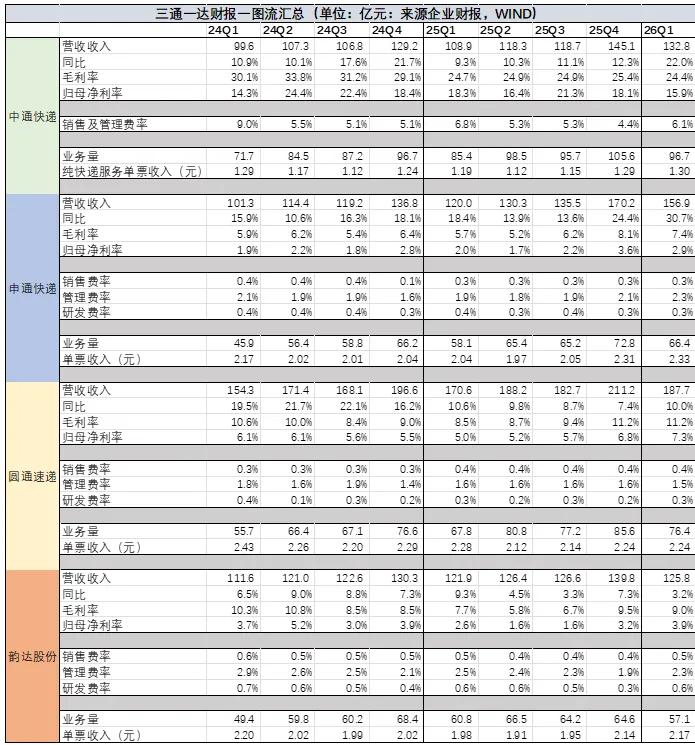
💡Understand how AI-driven logistics efficiency is becoming the deciding factor in market competition.
⚡ 30-Second TL;DR
What Changed
Intense price wars among major delivery firms.
Why It Matters
The logistics sector is a prime candidate for AI-driven route optimization and automated sorting, which are essential for competitive survival.
What To Do Next
Explore computer vision or pathfinding algorithms to address logistics efficiency bottlenecks.
Who should care:Developers & AI Engineers
Key Points
- •Intense price wars among major delivery firms.
- •Market valuation reflects ongoing operational challenges.
- •Consolidation and efficiency are critical for survival.
🧠 Deep Insight
AI-generated analysis for this event.
🔑 Enhanced Key Takeaways
- •The 'Three Tongs and One Da' (ZTO, YTO, STO, and Yunda) have shifted focus from pure volume growth to 'high-quality development' as mandated by China's State Post Bureau to curb predatory pricing.
- •J&T Express's entry into the Chinese market in 2020 acted as a primary catalyst for the most recent cycle of aggressive price wars, forcing incumbents to optimize cost structures rapidly.
- •Logistics firms are increasingly integrating AI-driven route optimization and automated sorting centers to reduce labor costs, which remain the largest variable expense in their operational models.
- •Cross-border e-commerce expansion, particularly through platforms like Temu and Shein, has become a new strategic battleground for these firms to offset domestic margin compression.
- •Regulatory intervention by the Chinese government, including the 'Administrative Measures for Express Delivery Market,' has imposed stricter penalties on companies engaging in below-cost dumping.
📊 Competitor Analysis▸ Show
| Feature | ZTO Express | YTO Express | STO Express | Yunda Holding |
|---|---|---|---|---|
| Market Strategy | Cost Leadership | Service Quality | Network Stability | Efficiency Focus |
| Pricing Model | Highly Competitive | Mid-Range | Aggressive | Mid-Range |
| Tech Benchmark | High Automation | Moderate | Moderate | High Automation |
🛠️ Technical Deep Dive
- Implementation of AGV (Automated Guided Vehicles) in sorting hubs to increase throughput efficiency by 30-40% compared to manual sorting.
- Utilization of Big Data analytics for real-time dynamic route planning, reducing fuel consumption and last-mile delivery time.
- Deployment of IoT-enabled smart lockers and tracking systems to improve delivery transparency and reduce 'lost package' rates.
- Adoption of cloud-native ERP systems to manage complex franchise-based network structures and financial clearing processes.
🔮 Future ImplicationsAI analysis grounded in cited sources
Market consolidation will accelerate, leading to a reduction in the number of major players.
Sustained margin pressure and high capital expenditure requirements for automation will likely force smaller, less efficient firms to merge or exit the market.
Profitability will become increasingly decoupled from delivery volume.
As price wars stabilize due to regulatory pressure, firms that successfully pivot to value-added services and cross-border logistics will outperform those relying solely on parcel volume.
⏳ Timeline
2016-10
ZTO Express completes its IPO on the New York Stock Exchange, marking a major capital infusion for the sector.
2019-03
Intense price competition intensifies as major firms begin aggressive market share battles in the e-commerce segment.
2020-03
J&T Express officially enters the Chinese domestic market, disrupting existing pricing structures.
2021-04
Chinese regulators impose fines on several logistics firms for predatory pricing practices.
2023-10
J&T Express completes its IPO on the Hong Kong Stock Exchange, signaling a shift toward regional expansion.
📰
Weekly AI Recap
Read this week's curated digest of top AI events →
👉Related Updates


AI-curated news aggregator. All content rights belong to original publishers.
Original source: 钛媒体 ↗