The Evolution of AI Hardware: From Devices to Ecosystems
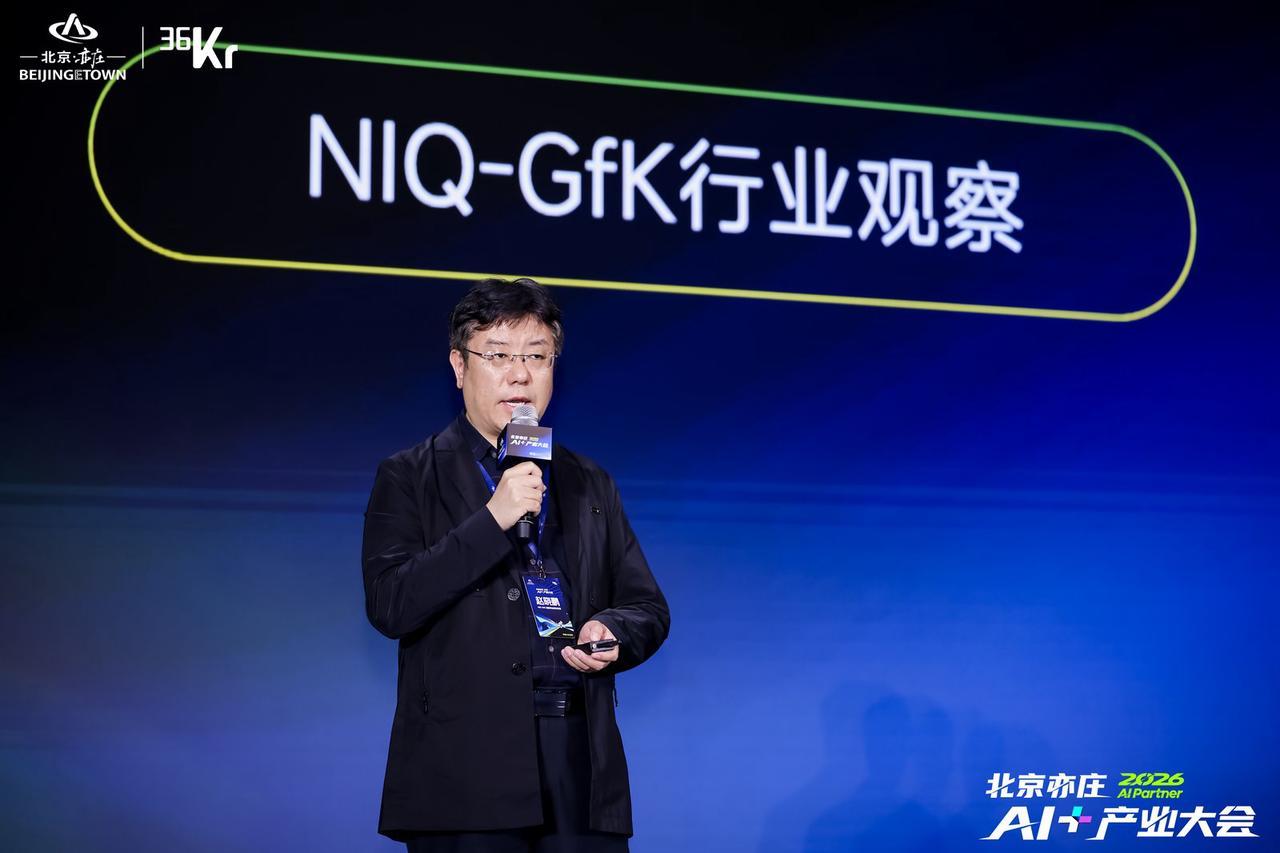
💡Understand the strategic shift from standalone AI gadgets to a unified multi-device ecosystem architecture.
⚡ 30-Second TL;DR
What Changed
AI hardware evolution: exploration, smart tools, deep integration, and ecosystem dominance.
Why It Matters
Hardware manufacturers must pivot from selling standalone devices to building cohesive, cross-platform AI ecosystems to remain competitive.
What To Do Next
Evaluate your product roadmap to see if your AI features can be offloaded or synchronized across a multi-device ecosystem.
Key Points
- •AI hardware evolution: exploration, smart tools, deep integration, and ecosystem dominance.
- •Future ecosystem model: glasses for perception, phones for decision-making, and PCs for heavy computation.
- •AI value shifts from app-based interaction to system-level OS integration and continuous learning.
🧠 Deep Insight
Web-grounded analysis with 23 cited sources.
🔑 Enhanced Key Takeaways
- •The Edge AI market is experiencing substantial growth, projected to reach valuations of USD 56.8 billion by 2030 and up to USD 165.05 billion by 2035, driven by advancements in IoT, real-time data processing, and the increasing adoption of smart devices.
- •Major technology companies like Google and Apple are increasingly adopting vertical integration strategies, designing custom AI chips such as Google's Tensor Processing Units (TPUs) and Apple's Neural Engine, to optimize AI workloads directly on devices and within their controlled ecosystems for improved performance, cost efficiency, and ecosystem control.
- •Qualcomm is actively pursuing a 'Personal AI' vision, leveraging its Snapdragon platforms to enable agent-based, contextually-aware AI across a converged ecosystem of mobile, PC, wearables, and automotive devices, emphasizing efficient on-device intelligence and distributed inference.
- •AI integration into operating systems is evolving beyond simple virtual assistants to include kernel- and system-layer functions, such as adaptive resource management, predictive performance, and enhanced security, with natural language emerging as a primary interaction modality for AI-driven OS.
- •The year 2026 marks a significant turning point where AI growth is driven by the convergence of consumerization, deep integration into physical devices, and a renaissance in specialized computer hardware development, making AI a pervasive and indispensable part of the human experience due to demands for low-latency and privacy-preserving on-device processing.
🛠️ Technical Deep Dive
- AI in Operating Systems: AI-driven OS features include smart virtual assistants with Natural Language Processing (NLP), context awareness, and task automation; AI-driven security with anomaly detection and behavioral biometrics; and predictive resource management for thermal and battery optimization.
- Kernel- and System-layer AI Integration: Machine Learning (ML) models are employed for fundamental OS functions such as CPU and I/O scheduling using reinforcement learning, and lightweight neural inference for security anomaly detection.
- Agent-based Interfaces: Modern OS agent systems utilize Large Language Models (LLMs) as planners to decompose high-level goals, often employing chain-of-thought or ReAct prompting patterns for structured plans or direct command sequences.
- Specialized AI Hardware Evolution: The evolution includes Central Processing Units (CPUs) for early AI, Graphics Processing Units (GPUs) like NVIDIA's CUDA for parallel processing in training, Field-Programmable Gate Arrays (FPGAs) for reconfigurable acceleration, and bespoke Application-Specific Integrated Circuits (ASICs) such as Google's Tensor Processing Units (TPUs) and Apple's Neural Engine for purpose-built performance and energy efficiency at the edge.
- Heterogeneous Computing: Qualcomm's AI Engine integrates a Hexagon DSP, Adreno GPU, and Kryo CPU to create a heterogeneous computing environment, optimizing performance per watt by distributing AI workloads across different processing units for mobile and edge devices.
- On-device Generative AI Capabilities: Chipsets like Qualcomm's Snapdragon 8 Gen 3 (released in 2023) are capable of supporting large language models with over 10 billion parameters directly on the device.
- Unified Memory Architecture: Apple's M-series chips feature a unified memory architecture where the CPU, GPU, and Neural Engine reside on the same silicon, allowing shared access to a single pool of memory, which significantly enhances efficiency for AI inference.
🔮 Future ImplicationsAI analysis grounded in cited sources
⏳ Timeline
📎 Sources (23)
Factual claims are grounded in the sources below. Forward-looking analysis is AI-generated interpretation.
- marketresearchfuture.com
- bccresearch.com
- grandviewresearch.com
- fortunebusinessinsights.com
- precedenceresearch.com
- digitimes.com
- 247wallst.com
- nationalcioreview.com
- techstrong.ai
- forbes.com
- youtube.com
- abiresearch.com
- cloudtexo.com
- qualcomm.com
- forbes.com
- medium.com
- emergentmind.com
- diginatives.io
- hatchworks.com
- techindustryforum.org
- cancom.de
- mewburn.com
- devdashlabs.com
Weekly AI Recap
Read this week's curated digest of top AI events →
👉Related Updates
AI-curated news aggregator. All content rights belong to original publishers.
Original source: 36氪 ↗