The Cyclical Nature of Private Banking in China
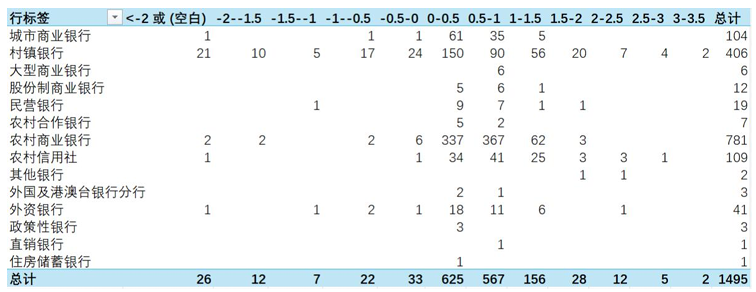
💡Understand the intersection of digital innovation and financial regulation in China's evolving banking landscape.
⚡ 30-Second TL;DR
What Changed
China's private banks follow a 'cycle of innovation and risk' similar to historical SME banking trends.
Why It Matters
The success of digital-first banks demonstrates the viability of AI-driven lending, influencing how traditional institutions adopt digital transformation strategies.
What To Do Next
Evaluate the digital lending infrastructure of successful private banks to understand how data-driven risk models are deployed at scale.
Key Points
- •China's private banks follow a 'cycle of innovation and risk' similar to historical SME banking trends.
- •Digital-first banks like WeBank and MYbank have successfully pioneered new lending models.
- •Risk management is transitioning to standardized procedures including state-led restructuring and deposit insurance.
- •The sector faces a 'private finance curse' where governance issues in private capital management lead to regulatory scrutiny.
🧠 Deep Insight
AI-generated analysis for this event — not the original article.
🔑 Enhanced Key Takeaways
- •The 2024-2025 regulatory shift in China has mandated that private banks increase their capital adequacy ratios to buffer against non-performing loans (NPLs) stemming from the real estate sector downturn.
- •Recent policy directives from the National Financial Regulatory Administration (NFRA) have restricted private banks from relying heavily on third-party internet platforms for deposit acquisition, forcing a pivot toward proprietary app ecosystems.
- •Data from 2025 indicates a divergence in profitability, where banks with 'industry-chain' integration (lending to specific supply chain ecosystems) significantly outperform those relying on general consumer credit.
- •The 'private finance curse' is being mitigated by the implementation of 'Financial Stability Guarantee Funds,' which act as a secondary layer of protection beyond the existing deposit insurance scheme.
- •Technological adoption has shifted from simple AI-driven credit scoring to 'Federated Learning' models, allowing private banks to collaborate on risk assessment without sharing sensitive customer data.
📊 Competitor Analysis▸ Show
| Feature | WeBank (Tencent-backed) | MYbank (Ant Group-backed) | Traditional Private Banks |
|---|---|---|---|
| Core Model | Consumer-focused (WeLiDai) | SME-focused (Supply Chain) | Asset-heavy/Regional |
| Tech Stack | Distributed Cloud/AI | Blockchain/Big Data | Legacy/Hybrid |
| Risk Strategy | High-volume/Low-ticket | Ecosystem-based | Collateral-based |
🛠️ Technical Deep Dive
- Implementation of Distributed Core Banking Systems (DCBS) allows for horizontal scaling to handle millions of concurrent micro-loan requests.
- Utilization of Federated Learning frameworks enables cross-institutional risk modeling while maintaining compliance with China's Personal Information Protection Law (PIPL).
- Integration of real-time transaction monitoring via graph databases to detect complex fraud patterns in supply chain finance.
- Adoption of 'Cloud-Native' architecture to decouple front-end service agility from back-end regulatory reporting requirements.
🔮 Future ImplicationsAI analysis grounded in cited sources
⏳ Timeline
Weekly AI Recap
Read this week's curated digest of top AI events →
👉Related Updates

AI-curated news aggregator. All content rights belong to original publishers.
Original source: 虎嗅 ↗
This is a summary, not the original. Read the source, or get the weekly briefing.
Weekly AI briefing
One email a week. Unsubscribe anytime.