The $650M Market Logic Behind Viral AI Videos
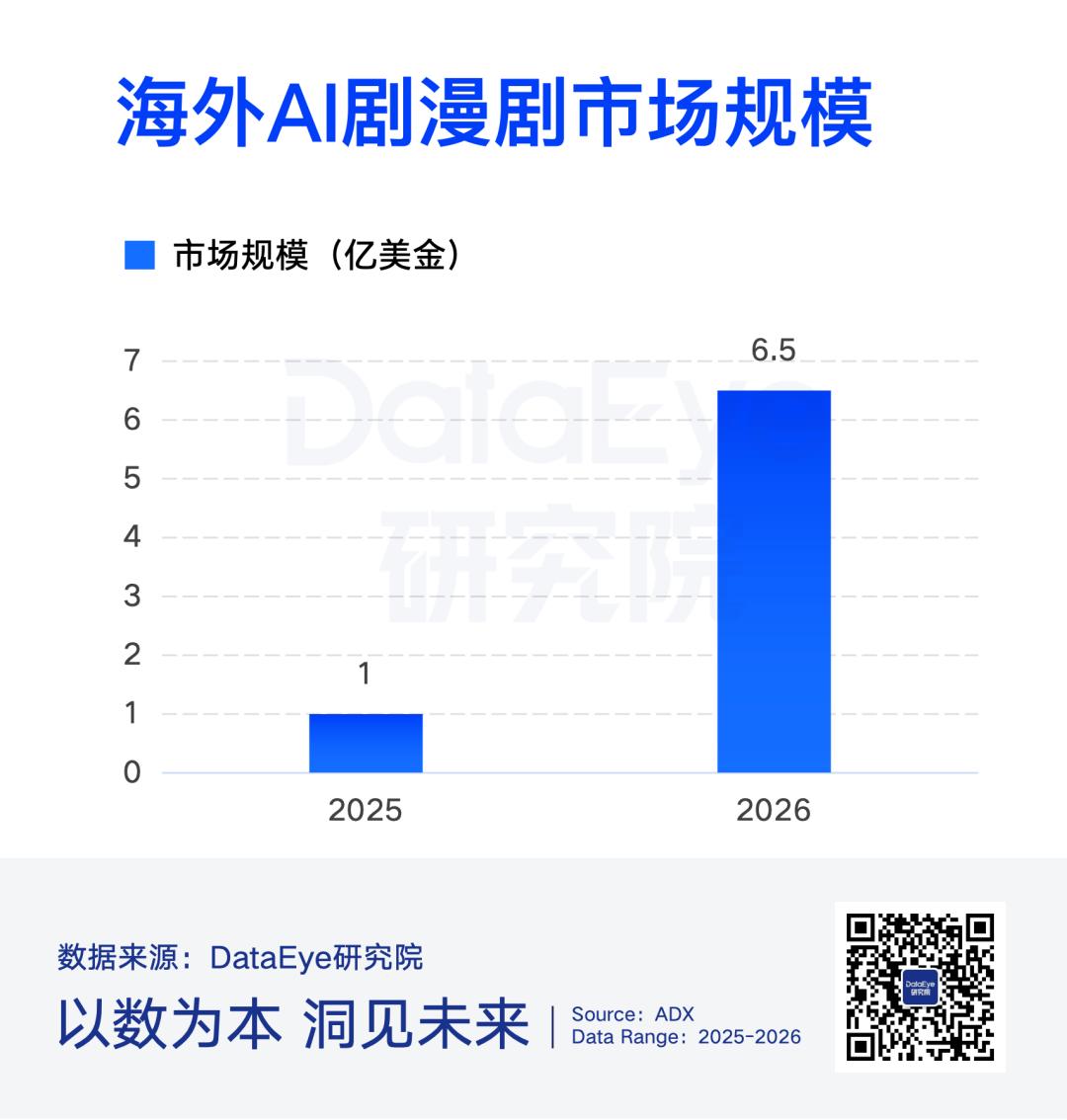
💡Learn how niche content strategies and AI video tools are building a $650M market in the short-drama sector.
⚡ 30-Second TL;DR
What Changed
AI drama market has reached a $650 million scale.
Why It Matters
Understanding these trends helps creators optimize their content strategy for platforms like TikTok or YouTube Shorts. It highlights the shift from traditional production to AI-driven rapid content deployment.
What To Do Next
Analyze the top 10 viral AI short dramas on TikTok to identify common narrative structures and visual pacing patterns.
Key Points
- •AI drama market has reached a $650 million scale.
- •Content strategy often leverages controversial or niche themes to capture attention.
- •High failure rates exist due to inconsistent quality and audience fatigue.
- •The production workflow relies heavily on rapid iteration of AI video tools.
🧠 Deep Insight
Web-grounded analysis with 24 cited sources.
🔑 Enhanced Key Takeaways
- •The broader AI video generator market, encompassing various applications beyond just dramas, was estimated at $788.5 million in 2025 and is projected to reach between $946.4 million and $1.81 billion in 2026, indicating rapid expansion beyond the $650 million specific to AI-generated dramas.
- •Viral AI videos often achieve success by combining instantly recognizable visual frames (e.g., bodycam, doorbell cam, Zoom call) with incongruous subjects (e.g., raccoons, sentient toasters), enhanced by sensory anchors and a reason for viewers to share, such as absurdity or a twist.
- •Significant challenges in AI video generation include maintaining visual and narrative consistency across longer durations, ensuring believable physics and nuanced storytelling, and addressing ethical concerns such as deepfakes, misinformation, and inherent biases in training data.
- •AI video production has dramatically reduced costs by up to 91% (from $4,500 to $400 per minute) and accelerated production times from 13 days to as little as 27 minutes for a 60-second marketing video, enabling individual creators to produce hundreds of professional videos monthly.
- •The industry is moving towards "algorithmic storytelling" and "general purpose video engines" that emphasize grounding models in user-provided assets (e.g., specific people, products) to ensure consistency and reduce hallucinations, rather than generating content from scratch.
📊 Competitor Analysis▸ Show
| Platform | Key Features | Pricing (Monthly) | Benchmarks/Strengths |
|---|---|---|---|
| Google Veo | High-quality output, strong prompt adherence, realism, good lip-sync, audio generation, frame-to-frame consistency. | 100 free credits/month (subscription pricing) | Best for cinematic realism; achieved 96.4% market share on Vivideo in early 2026 |
| OpenAI Sora | Excels at narrative storytelling, generates longer, coherent videos (up to 1 minute). | $20/month (via ChatGPT Plus for 720p, watermarked videos up to 10 seconds) | Strong narrative consistency; powerful for storytellers |
| Runway | Advanced creative control, film-making focus, visual references, dynamic motion. | Free plan (125 one-time credits) | Favored by filmmakers and VFX artists; excellent motion with a "directed" feel and physics-accurate movement |
| HeyGen | Personalized and translated videos, high-quality digital avatars. | $29/month | Best for business and training videos with professional avatars |
| Kling AI | Focus on photorealistic humans, high-action scenes. | $10/month | Solid performance at an affordable price; smooth story scene motion |
🛠️ Technical Deep Dive
- Sora (OpenAI): Utilizes a transformer architecture that operates on spacetime patches of video and image latent codes. It is trained jointly on videos and images of variable durations, resolutions, and aspect ratios. A video compression network reduces visual data dimensionality, allowing Sora to train and generate within this compressed latent space, with a corresponding decoder mapping latents back to pixel space.
- PixVerse-R1: Built upon a native multimodal foundation model called "Omni." This model unifies diverse modalities (text, image, video, audio) into a continuous stream of tokens, enabling it to accept arbitrary multimodal inputs within a single framework. It employs end-to-end training across heterogeneous tasks and native resolution training to prevent artifacts.
- General Purpose Video Engines (e.g., Google's approach): Emphasize "Grounding" and "Abstraction." Grounding involves an "asset-first" philosophy where the system ingests raw assets (e.g., photos of specific people, products, locations) and "comprehends" them to extract identity, visual style, voice, and context, creating a "Source of Truth" for consistent generation. This approach leverages advanced multimodal capabilities (e.g., Gemini 2.5).
- Underlying Challenges: AI video generation still faces technical hurdles such as maintaining consistency across longer video durations, generating believable physics, handling complex scenes with many characters or intricate movements, and ensuring accurate interpretation of nuanced prompts.
🔮 Future ImplicationsAI analysis grounded in cited sources
⏳ Timeline
📎 Sources (24)
Factual claims are grounded in the sources below. Forward-looking analysis is AI-generated interpretation.
- Google Search Source
- Google Search Source
- Google Search Source
- Google Search Source
- Google Search Source
- Google Search Source
- Google Search Source
- Google Search Source
- Google Search Source
- Google Search Source
- Google Search Source
- Google Search Source
- Google Search Source
- Google Search Source
- Google Search Source
- Google Search Source
- Google Search Source
- Google Search Source
- Google Search Source
- Google Search Source
- Google Search Source
- Google Search Source
- Google Search Source
- Google Search Source
Weekly AI Recap
Read this week's curated digest of top AI events →
👉Related Updates




AI-curated news aggregator. All content rights belong to original publishers.
Original source: 钛媒体 ↗