Tesla Autopilot Crashes into 6 Cones
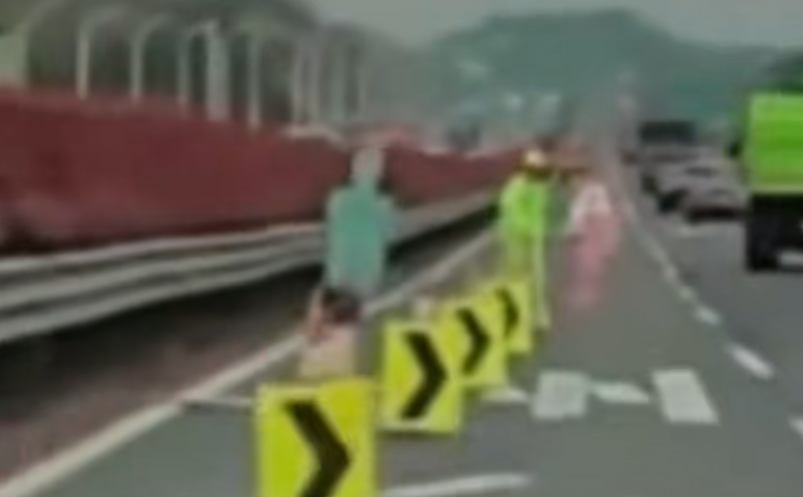
💡Tesla Autopilot cone crash reveals real-world vision AI flaws in ADAS
⚡ 30-Second TL;DR
What Changed
Vehicle entered construction area at 94km/h with Autopilot engaged
Why It Matters
Highlights vision-based ADAS limitations, eroding public trust in L2 autonomy and prompting scrutiny of Tesla's FSD rollout.
What To Do Next
Test low-obstacle detection in your CV pipeline using KITTI dataset road construction scenes.
Key Points
- •Vehicle entered construction area at 94km/h with Autopilot engaged
- •Collided with 6 warning cones and multiple linear guides
- •Nearly sideswiped a construction worker
- •Tesla attributes issue to poor recognition of low-height objects
🧠 Deep Insight
AI-generated analysis for this event — not the original article.
🔑 Enhanced Key Takeaways
- •The incident occurred in a region where Tesla's 'Vision-only' approach—which relies exclusively on cameras rather than LiDAR or radar—has faced ongoing regulatory scrutiny regarding its ability to identify static, low-profile road hazards.
- •Tesla's owner's manual explicitly warns that Autopilot may not detect stationary objects, including emergency vehicles or construction equipment, especially when traveling at highway speeds.
- •This specific incident has reignited debates in the Chinese automotive market regarding the classification of 'Level 2' driver assistance systems, with critics arguing that marketing terminology leads to driver over-reliance.
📊 Competitor Analysis▸ Show
| Feature | Tesla Autopilot (Vision) | Waymo Driver (L4) | XPeng XNGP |
|---|---|---|---|
| Sensor Suite | Cameras Only | LiDAR, Radar, Cameras | LiDAR, Cameras, Radar |
| Construction Zone Handling | Limited (Driver Supervision) | High (Autonomous) | Moderate (Driver Supervision) |
| Pricing | Included/Subscription | N/A (Robotaxi Service) | Included/Subscription |
🛠️ Technical Deep Dive
- •Tesla's current Autopilot stack utilizes a deep neural network architecture (HydraNet) that processes raw camera feeds to perform object detection, segmentation, and depth estimation.
- •The system relies on 'Occupancy Networks' to predict the 3D volume of objects, but these networks often struggle with low-profile, non-standardized objects like traffic cones that lack distinct semantic features compared to vehicles or pedestrians.
- •The lack of active depth-sensing hardware (LiDAR) means the system is highly dependent on monocular depth estimation, which can suffer from increased latency and reduced accuracy at higher speeds (e.g., 94km/h) when encountering small, low-contrast obstacles.
🔮 Future ImplicationsAI analysis grounded in cited sources
⏳ Timeline
Weekly AI Recap
Read this week's curated digest of top AI events →
👉Related Updates
AI-curated news aggregator. All content rights belong to original publishers.
Original source: cnBeta (Full RSS) ↗
This is a summary, not the original. Read the source, or get the weekly briefing.
The weekly digest
One email a week. Unsubscribe anytime.