Tencent's AI Strategy and the 'Leaky Boat' Challenge

💡Critical analysis of Tencent's AI strategy and whether their massive R&D spending is yielding real-world ROI.
⚡ 30-Second TL;DR
What Changed
Tencent has invested billions into AI infrastructure and model development.
Why It Matters
Tencent's ability to integrate AI into its massive ecosystem will determine its long-term market position against competitors like ByteDance and Alibaba.
What To Do Next
Monitor Tencent's Hunyuan model API updates and integration progress within the WeChat ecosystem for potential B2B opportunities.
Key Points
- •Tencent has invested billions into AI infrastructure and model development.
- •The company faces significant pressure to translate R&D spending into commercial success.
- •Internal leadership is re-evaluating the 'leaky boat' metaphor to address organizational efficiency in AI adoption.
🧠 Deep Insight
Web-grounded analysis with 22 cited sources.
🔑 Enhanced Key Takeaways
- •Tencent plans to more than double its AI investments in 2026, funding these significant outlays from its resilient core businesses, particularly gaming and advertising, which continue to generate substantial cash flow.
- •A major organizational overhaul of Tencent's AI research structure occurred in December 2025, leading to the creation of new departments and the appointment of Yao Shunyu, a 27-year-old former OpenAI researcher, as Chief AI Scientist reporting directly to President Martin Lau.
- •Tencent is pursuing a 'dual-track' AI strategy, which involves both the self-development of its proprietary Hunyuan large language models and strategic investments in leading domestic AI startups such as Zhipu AI and Baichuan Intelligence.
- •The company's Hunyuan-T1 model features a hybrid Transformer-Mamba Mixture-of-Experts (MoE) architecture, which Tencent claims makes it 2X faster than leading models like GPT-4 and provides superior performance in reasoning and long-context processing.
- •Tencent's AI strategy is increasingly focusing on the development and utilization of China-designed AI chips, with expectations for a substantial increase in capital spending in the latter half of 2026 as the supply of these domestic chips improves, partly influenced by US export restrictions.
📊 Competitor Analysis▸ Show
| Feature/Aspect | Tencent AI/Cloud | Alibaba Cloud | Baidu AI/Cloud | ByteDance AI/Cloud |
|---|---|---|---|---|
| Core AI Model | Hunyuan (e.g., Hunyuan-T1, Hunyuan-Large, Hunyuan 3.0) | Qwen (e.g., Qwen APP) | Ernie Bot | DouBao mobile assistant |
| Strategic Focus | Deep integration into WeChat ecosystem, gaming, media, e-commerce, AI-driven advertising, enterprise services, agent services. | Leading cloud computing services, extensive infrastructure in Asia, comprehensive service portfolio, enterprise clients. | Internet services, search engine dominance, AI, cloud computing. | Social media, content platforms (TikTok/Douyin), AI-driven entertainment applications. |
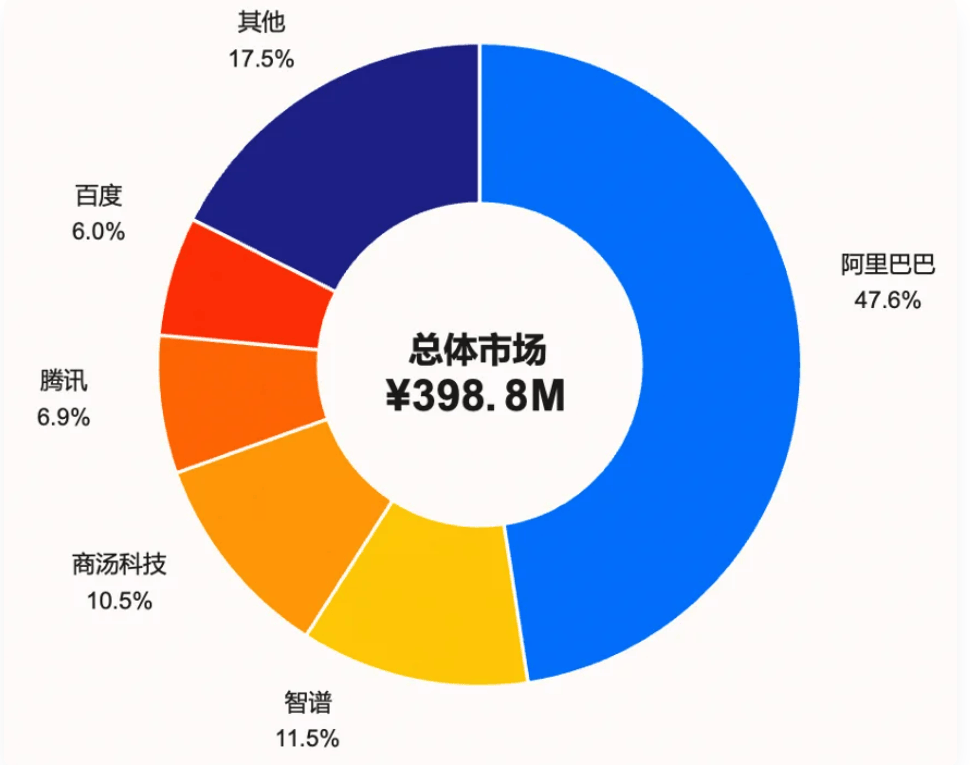
| Cloud Market Position (China) | Second-largest cloud provider in China. | Largest cloud provider in China (approx. 39% market share). | Significant player in cloud computing. | Emerging player, particularly with BytePlus ModelArk for AI-first cloud. |
| Key AI Products | Yuanbao (ChatGPT-style AI assistant), CodeBuddy, WorkBuddy, QClaw (AI agent service for WeChat). | Qwen APP | Ernie Bot | DouBao mobile assistant |
| Investment Strategy | Dual-track: self-development of Hunyuan + investment in domestic AI startups (e.g., Zhipu AI, Baichuan Intelligence, Moonshot AI, Light Years Beyond, MiniMax). | Primarily self-developed technology path, significant investment (e.g., >US$50 billion over three years). | Primarily self-developed technology path. | Aggressive promotion of AI products. |
🛠️ Technical Deep Dive
- Hunyuan Model Architecture: Tencent's Hunyuan-T1 is a Hybrid-Transformer-Mamba Mixture-of-Experts (MoE) model.
- Parameter Scale: The Hunyuan-Large (Hunyuan-MoE-A52B) model features a total of 389 billion parameters with 52 billion active parameters.
- Inference Engine: Utilizes AngelHCF, a high-performance inference engine built in collaboration with NVIDIA based on TensorRT-LLM, which has optimized inference costs by over 90%.
- Supported Tasks: Hunyuan large language models cover text-to-text, text-to-image, text-to-video, and multimodal understanding tasks.
- Optimization Techniques: Employs techniques such as PD separation, QVCache, Prefix Cache, Grouped Query Attention (GQA), and Cross-Layer Attention (CLA) for KV Cache compression to reduce memory usage and computational overhead.
- Training Data: Enhanced through the use of high-quality synthetic data to improve representation learning, long-context handling, and generalization.
- Reinforcement Learning: Incorporates a dual feedback mechanism for self-improvement, including self-rewarding and human preference alignment via Reinforcement Learning from Human Feedback (RLHF).
- Performance Claims: Hunyuan-T1 claims to achieve 2X faster decoding compared to traditional Transformer models and exhibits lower memory usage.
🔮 Future ImplicationsAI analysis grounded in cited sources
⏳ Timeline
📎 Sources (22)
Factual claims are grounded in the sources below. Forward-looking analysis is AI-generated interpretation.
- Google Search Source
- Google Search Source
- Google Search Source
- Google Search Source
- Google Search Source
- Google Search Source
- Google Search Source
- Google Search Source
- Google Search Source
- Google Search Source
- Google Search Source
- Google Search Source
- Google Search Source
- Google Search Source
- Google Search Source
- Google Search Source
- Google Search Source
- Google Search Source
- Google Search Source
- Google Search Source
- Google Search Source
- Google Search Source
Weekly AI Recap
Read this week's curated digest of top AI events →
👉Related Updates


AI-curated news aggregator. All content rights belong to original publishers.
Original source: 钛媒体 ↗