Tencent Open-Sources Hunyuan 3D 2.0
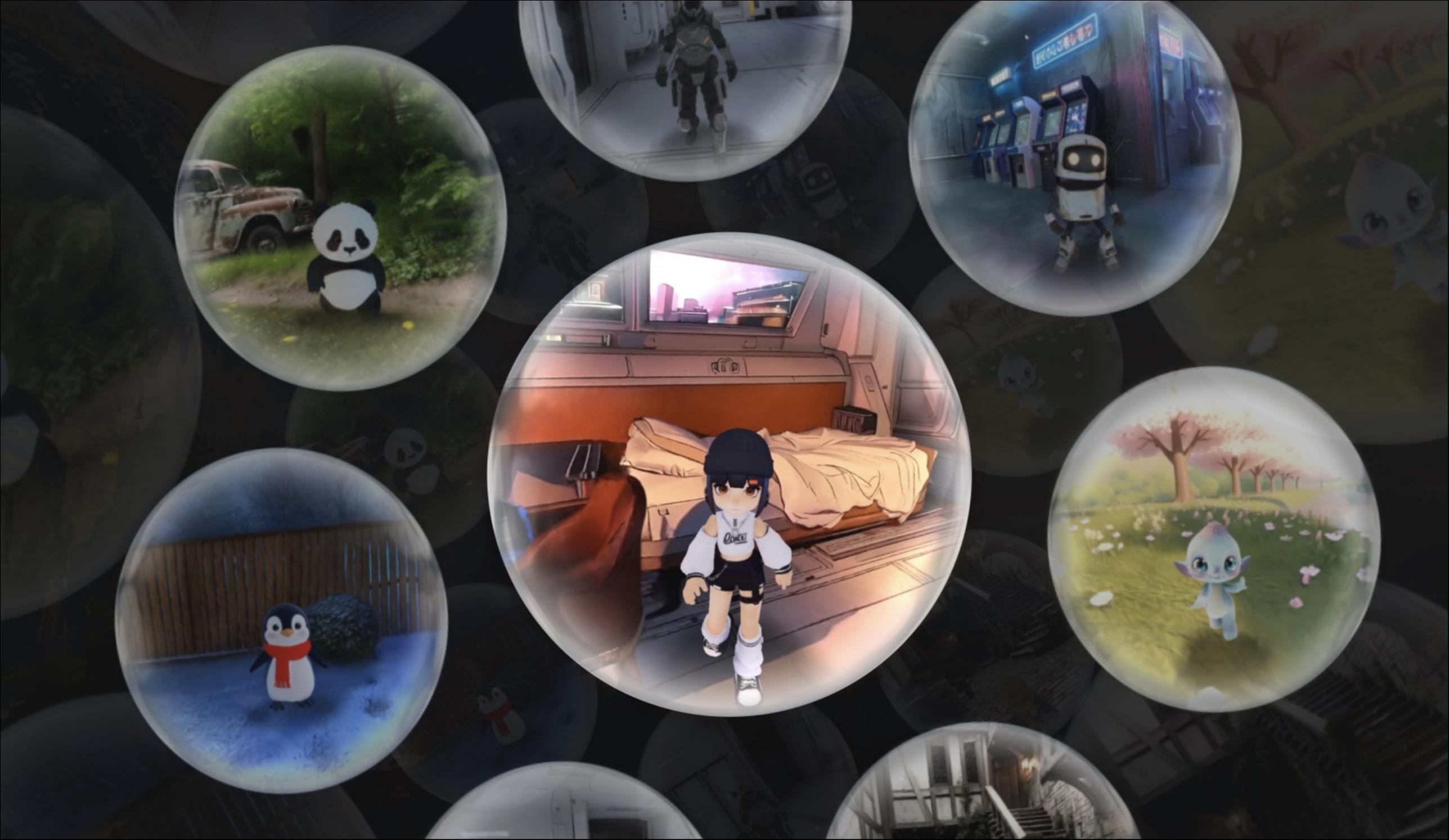
Open-source 3D model tops benchmarks by 30% vs commercial rivals – must-test for 3D AI devs.
30-Second TL;DR
What Changed
Tencent open-sources Hunyuan 3D 2.0
Why It Matters
Accelerates open-source 3D AI innovation, lowers entry barriers for developers, and intensifies competition against proprietary models.
What To Do Next
Clone the Hunyuan 3D 2.0 repo from Tencent's GitHub and fine-tune it for custom 3D asset generation.
Key Points
- •Tencent open-sources Hunyuan 3D 2.0
- •Point cloud F1-score reaches 43.16
- •Beats SEVA and Gen3C by 30%+
- •Matches performance of commercial models
Deep Insight
AI-generated analysis for this event — not the original article.
Enhanced Key Takeaways
- •Hunyuan 3D 2.0 utilizes a hybrid architecture combining a multi-view diffusion model with a feed-forward reconstruction network to achieve high-fidelity 3D asset generation in under 10 seconds.
- •The model supports diverse input modalities, including text-to-3D and image-to-3D, and is optimized for integration into game development pipelines like Unreal Engine and Unity.
- •Tencent has released the model weights under a permissive open-source license, specifically targeting the democratization of 3D content creation for indie developers and small-to-medium enterprises.
Competitor Analysis
- Hunyuan 3D 2.0
- Multi-view Diffusion + Reconstruction
- TripoSR
- Feed-forward Transformer
- LGM (Large Gaussian Model)
- Multi-view Gaussian Splatting
- Hunyuan 3D 2.0
- 43.16
- TripoSR
- ~32.5
- LGM (Large Gaussian Model)
- ~31.8
- Hunyuan 3D 2.0
- Permissive Open Source
- TripoSR
- MIT
- LGM (Large Gaussian Model)
- Research/Non-commercial
- Hunyuan 3D 2.0
- Game Assets/Production
- TripoSR
- Rapid Prototyping
- LGM (Large Gaussian Model)
- Research/Academic
| Feature | Hunyuan 3D 2.0 | TripoSR | LGM (Large Gaussian Model) |
|---|---|---|---|
| Architecture | Multi-view Diffusion + Reconstruction | Feed-forward Transformer | Multi-view Gaussian Splatting |
| Point Cloud F1-Score | 43.16 | ~32.5 | ~31.8 |
| License | Permissive Open Source | MIT | Research/Non-commercial |
| Primary Use Case | Game Assets/Production | Rapid Prototyping | Research/Academic |
Technical Deep Dive
- Architecture: Employs a two-stage pipeline: a latent diffusion model generates multi-view images, followed by a 3D reconstruction module that converts views into high-quality meshes or Gaussian splats.
- Latency: Optimized for inference speeds under 10 seconds on consumer-grade GPUs (e.g., NVIDIA RTX 4090).
- Training Data: Trained on a proprietary, large-scale dataset of high-quality 3D assets, including synthetic and scanned objects, to improve geometric consistency.
- Output Formats: Supports standard industry formats including .obj, .glb, and .ply, with automatic UV unwrapping and texture generation.
Future ImplicationsAI analysis grounded in cited sources
Timeline
- 2023-09Tencent announces the initial Hunyuan foundation model for text-to-image generation.
- 2024-05Tencent releases the first version of Hunyuan 3D, focusing on basic text-to-3D capabilities.
- 2026-04Tencent officially open-sources Hunyuan 3D 2.0 with improved performance and production-ready features.
Weekly AI Recap
Read this week's curated digest of top AI events →
AI-curated news aggregator. All content rights belong to original publishers.
Original source: 钛媒体 ↗
This is a summary, not the original. Read the source, or get the weekly briefing.
The weekly digest
One email a week. Unsubscribe anytime.