Tencent Cloud Launches QClaw V2 Multi-Agent Collaboration
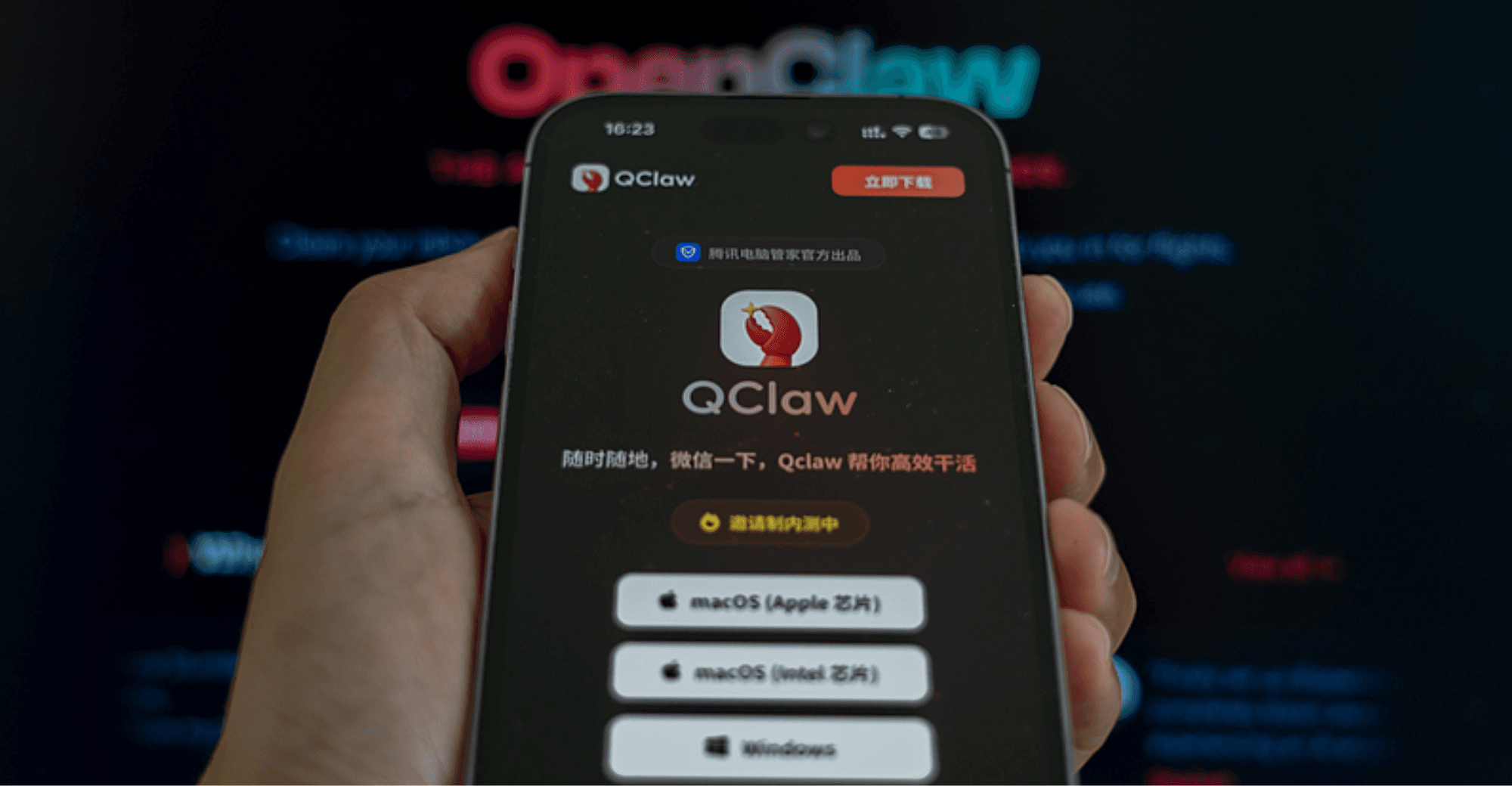
Tencent's QClaw V2 enables multi-agent AI collab—test for consumer apps despite scaling hurdles
30-Second TL;DR
What Changed
Introduces multi-agent collaboration for consumer AI assistants
Why It Matters
Enhances complex task handling in consumer AI via agent teamwork, attracting developers. Limitations may slow enterprise adoption until resolved.
What To Do Next
Test QClaw V2 multi-agent API on Tencent Cloud for collaborative AI prototypes.
Key Points
- •Introduces multi-agent collaboration for consumer AI assistants
- •Developed and launched by Tencent Cloud
- •Scalability limitations hinder large-scale deployment
- •Memory usage poses ongoing challenges
Deep Insight
AI-generated analysis for this event — not the original article.
Enhanced Key Takeaways
- •QClaw V2 integrates with Tencent's proprietary Hunyuan foundation model, utilizing a hierarchical orchestration layer to manage inter-agent communication protocols.
- •The architecture implements a 'Dynamic Context Pruning' mechanism to address memory overhead, allowing agents to selectively offload non-essential state data to long-term vector storage.
- •Tencent Cloud is positioning QClaw V2 as a B2B2C solution, specifically targeting enterprise developers looking to embed autonomous agent workflows into existing WeChat Mini Program ecosystems.
Competitor Analysis
- Tencent QClaw V2
- WeChat/Tencent Ecosystem
- Microsoft AutoGen
- General Purpose/Open Source
- OpenAI Swarm
- Experimental/Orchestration
- Tencent QClaw V2
- Managed Cloud/PaaS
- Microsoft AutoGen
- Self-hosted/Azure
- OpenAI Swarm
- API-based
- Tencent QClaw V2
- Dynamic Context Pruning
- Microsoft AutoGen
- Conversation-based
- OpenAI Swarm
- State-based
- Tencent QClaw V2
- Usage-based (Tencent Cloud)
- Microsoft AutoGen
- Free (Open Source)
- OpenAI Swarm
- API Token-based
| Feature | Tencent QClaw V2 | Microsoft AutoGen | OpenAI Swarm |
|---|---|---|---|
| Primary Focus | WeChat/Tencent Ecosystem | General Purpose/Open Source | Experimental/Orchestration |
| Deployment | Managed Cloud/PaaS | Self-hosted/Azure | API-based |
| Memory Mgmt | Dynamic Context Pruning | Conversation-based | State-based |
| Pricing | Usage-based (Tencent Cloud) | Free (Open Source) | API Token-based |
Technical Deep Dive
- Orchestration Layer: Utilizes a centralized 'Agent Orchestrator' that employs a Directed Acyclic Graph (DAG) structure to manage task dependencies between specialized sub-agents.
- Communication Protocol: Employs a lightweight JSON-RPC based messaging bus for inter-agent communication, minimizing latency compared to standard RESTful calls.
- Memory Architecture: Features a dual-tier memory system: a high-speed 'Working Memory' (in-memory cache) for immediate task context and a 'Long-term Memory' layer backed by Tencent Cloud Vector Database for historical state retrieval.
- Model Integration: Native support for Tencent Hunyuan-Large and Hunyuan-Lite, with an abstraction layer allowing for fine-tuned LoRA adapters to be loaded per-agent.
Future ImplicationsAI analysis grounded in cited sources
Timeline
- 2023-09Tencent officially unveils the Hunyuan foundation model.
- 2024-05Tencent Cloud launches the initial QClaw framework for basic agent automation.
- 2025-11Tencent announces the integration of agentic workflows into the Tencent Cloud Model-as-a-Service (MaaS) platform.
- 2026-04Official release of QClaw V2 with multi-agent collaboration capabilities.
Weekly AI Recap
Read this week's curated digest of top AI events →
Related Updates



AI-curated news aggregator. All content rights belong to original publishers.
Original source: Pandaily ↗
This is a summary, not the original. Read the source, or get the weekly briefing.
The weekly digest
One email a week. Unsubscribe anytime.