Telstra Flags AI Cost Scrutiny for 380 Use Cases
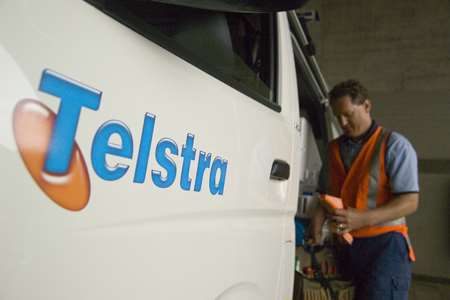
💡Telstra's 380 AI use cases + cost warning: vital ROI check for enterprise AI strategies
⚡ 30-Second TL;DR
What Changed
Identified 380 AI use cases internally
Why It Matters
Enterprises may delay AI rollouts to prioritize ROI, using Telstra's use cases as a telecom benchmark. This promotes sustainable AI strategies over rushed adoption.
What To Do Next
Benchmark your AI pilots against Telstra's 380 use cases for telecom-inspired applications.
Key Points
- •Identified 380 AI use cases internally
- •Emphasizes rigorous cost-benefit analysis for AI
- •Cautions against unexamined AI deployments
🧠 Deep Insight
Background and context from public sources — not the original article. 6 sources cited.
🔑 Enhanced Key Takeaways
- •Telstra earmarked AUD 800 million for AI-enabled network management through 2026, demonstrating significant capital commitment despite cost scrutiny[2]
- •CFOs globally are demanding rigorous cost-benefit analysis and outcome-based pricing models, with surveys revealing enterprises underestimate post-deployment expenses by double digits[1]
- •Finance teams are prioritizing AI use cases with under 12-month payback periods and embedding real-time cost dashboards into every release to control spending[1]
- •Asia-Pacific enterprises are consolidating scattered AI pilots into fewer, sovereign-ready platforms that demonstrate repeatable value across multiple use cases rather than isolated point solutions[6]
- •The telecom industry is shifting toward AI-native operations ('TelcOS') that simultaneously reduce costs, boost efficiency, and modernize legacy systems across network planning, assurance, and customer care[3]
📊 Competitor Analysis▸ Show
| Aspect | Telstra | Liberty Global | Industry Trend |
|---|---|---|---|
| AI Investment Scale | AUD 800M through 2026 | Google Cloud partnership (Gemini AI integration) | Hyperscalers announced USD 8.2B in new capacity (2024-2025)[2] |
| Cost Control Approach | Rigorous cost-benefit analysis for 380 use cases | Targeting AI-powered customer services and network efficiencies | Outcome-linked funding with measurable ROI requirements[6] |
| Focus Areas | Network management and AI-enabled operations | Horizon TV platform, customer care, SME revenue streams | Predictive maintenance, dynamic spectrum, closed-loop assurance[3] |
| Payback Expectation | Under 12-month ROI prioritized[1] | Revenue stabilization and churn reduction targets | Consolidation of pilots into platform capabilities[6] |
🛠️ Technical Deep Dive
- High-Density Compute Infrastructure: Australian data centers deploying 40-50 kW liquid-cooled GPU racks for transformer model training in financial trading, radiology imaging, and predictive maintenance[2]
- Power Distribution Architecture: Hardware budgets allocate 35-40% to power distribution (double traditional data center share) and significant cooling allocation for direct-to-chip and immersion systems[2]
- Network Resilience Standards: Tier IV certification with N+1 redundancy across all subsystems for mission-critical telecom operations; modular Tier III pods deployable within eight months for pilot workloads[2]
- AI-Native Operations Stack: Embedding AI agents across network planning, assurance, sales, care, and field operations to compress cycle times and enable predictive maintenance and dynamic spectrum allocation[3]
- Cost Bucket Composition: Cloud compute/storage (model training and inference), external data acquisition and engineering, consulting/integration/change management, and commercial model licensing fees[1]
🔮 Future ImplicationsAI analysis grounded in cited sources
Telstra's cautious approach to 380 use cases reflects a broader industry maturation where AI investment discipline supersedes hype-driven adoption. The emphasis on cost scrutiny aligns with CFO gatekeeping trends that will consolidate scattered pilots into fewer, outcome-linked platforms by 2026[6]. For telecom operators, this disciplined approach enables sustainable competitive advantage through AI-native operations that simultaneously reduce service costs and improve capital allocation, but only when paired with legacy system shutdowns and vendor consolidation[3]. The shift toward sovereign-by-design execution in Asia-Pacific will likely accelerate consolidation among regional competitors unable to justify AI spending through measurable ROI within 12-month payback windows[1][6].
⏳ Timeline
📎 Sources (6)
Factual claims are grounded in the sources below. Forward-looking analysis is AI-generated interpretation.
- aicerts.ai — Cfos Align Financial Strategy with AI Budgets
- mordorintelligence.com — Australia Artificial Intelligence AI Data Center Market
- pwc.com — Telecom Outlook Perspectives
- au.investing.com — Liberty Global Earnings in Focus As AI Strategy Faces Test 93ch 4262633
- ptc.org — Ptc26 Brought Global Infrastructure Leaders Together to Define the Future of AI Driven Connectivity
- itnews.asia — AI Sovereignty Will Set the Pace for Asia Pacific in 2026 623233
Weekly AI Recap
Read this week's curated digest of top AI events →
👉Related Updates
AI-curated news aggregator. All content rights belong to original publishers.
Original source: iTNews Australia ↗
This is a summary, not the original. Read the source, or get the weekly briefing.
Weekly AI briefing
One email a week. Unsubscribe anytime.