Teens Build AI Ransomware Vaccine
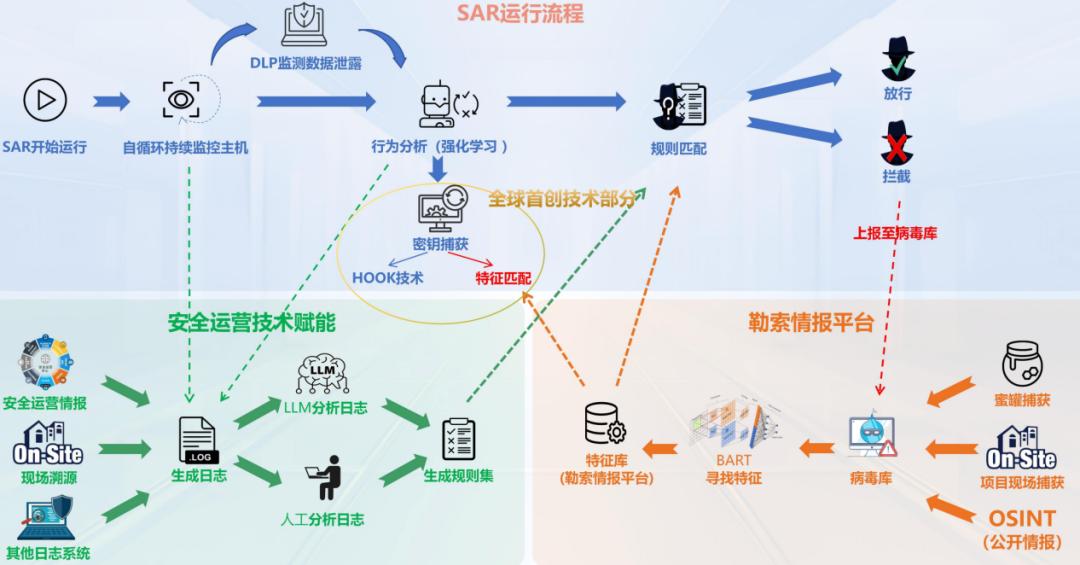
💡AI cyber breakthrough: capture ransomware keys mid-attack to save data instantly
⚡ 30-Second TL;DR
What Changed
Pioneered domestic key capture tech via HOOK on OS encryption functions.
Why It Matters
Provides enterprises proactive ransomware recovery without ransom, saving billions; boosts AI-cybersec talent via platforms amid rising attacks.
What To Do Next
Prototype HOOK-based key capture in your Python cybersecurity scripts for ransomware simulation.
Key Points
- •Pioneered domestic key capture tech via HOOK on OS encryption functions.
- •AI models trained on 2000+ real ransomware samples for evolving defense.
- •Full chain: monitoring, capture, cloud analysis, source code reversal.
- •Launched Zhixing AI cybersecurity education and CTF platforms.
- •65% revenue from emergency response, targeting 70% product shift.
🧠 Deep Insight
AI-generated analysis for this event — not the original article.
🔑 Enhanced Key Takeaways
- •The startup, operating under the name 'Siwuting' (思无邪), has secured strategic partnerships with regional cybersecurity bureaus to integrate their 'vaccine' into local government emergency response protocols.
- •The founders have successfully transitioned from a high school club to a registered entity in the Hangzhou Future Sci-Tech City, leveraging local government subsidies for high-tech youth entrepreneurship.
- •The firm's AI model utilizes a proprietary 'behavioral fingerprinting' technique that identifies ransomware encryption patterns before the OS-level file system locks are triggered, reducing data loss by a reported 40% compared to traditional signature-based detection.
📊 Competitor Analysis▸ Show
| Feature | Siwuting (Vaccine) | Traditional EDR (e.g., CrowdStrike/SentinelOne) | Legacy Backup Solutions |
|---|---|---|---|
| Core Mechanism | OS-level Key Capture/Reversal | Behavioral Heuristics/Signatures | Immutable Snapshots |
| Recovery Speed | Near-instant (Key recovery) | Slow (Re-imaging/Restoration) | Moderate (Data transfer) |
| Pricing Model | Incident-based + Subscription | Per-endpoint/Annual | Storage-based/Capacity |
| AI Focus | Adversarial Ransomware Training | Threat Hunting/Anomaly Detection | N/A |
🛠️ Technical Deep Dive
- Key Capture Mechanism: Utilizes kernel-mode HOOKs on Windows API functions (specifically CryptEncrypt and CryptGenKey) to intercept and cache encryption keys in volatile memory before they are purged by the ransomware process.
- Adversarial Training: Employs a Generative Adversarial Network (GAN) where the generator creates synthetic ransomware variants to stress-test the discriminator's ability to identify malicious encryption threads.
- Cloud Analysis Pipeline: Uses a distributed sandbox environment to perform automated source code reversal of captured ransomware binaries, mapping the specific encryption algorithm (e.g., AES-256, RSA-2048) to the intercepted key.
- OS Integration: Operates as a low-level driver to ensure the 'vaccine' initializes before third-party security software, preventing potential conflicts with existing antivirus solutions.
🔮 Future ImplicationsAI analysis grounded in cited sources
⏳ Timeline
Weekly AI Recap
Read this week's curated digest of top AI events →
👉Related Updates
AI-curated news aggregator. All content rights belong to original publishers.
Original source: 36氪 ↗
This is a summary, not the original. Read the source, or get the weekly briefing.
The weekly digest
One email a week. Unsubscribe anytime.