Suiyuan Technology's 4.7 billion loss and future
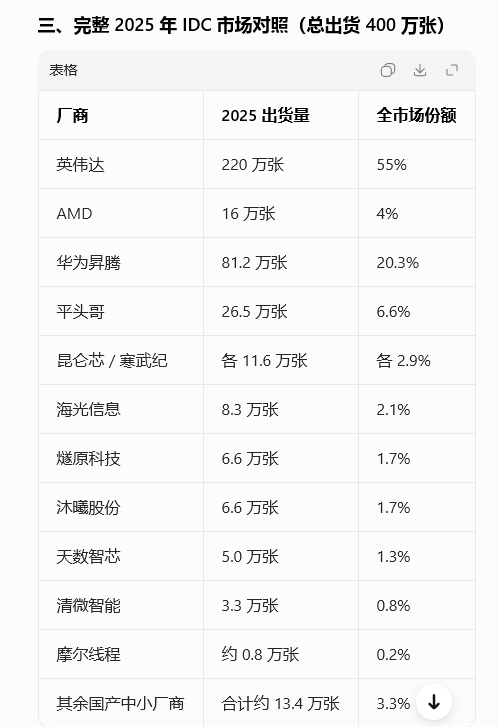
💡Critical analysis of the Chinese AI chip market and the challenges of competing with established GPU ecosystems.
⚡ 30-Second TL;DR
What Changed
Cumulative losses exceed 4.7 billion RMB as of Q1 2026.
Why It Matters
The company's struggle highlights the difficulty of building a non-CUDA software ecosystem and the competitive pressure in the AI hardware market.
What To Do Next
Monitor the performance benchmarks of the L600 training-inference chip to see if it can bridge the gap in high-end training capabilities.
Key Points
- •Cumulative losses exceed 4.7 billion RMB as of Q1 2026.
- •Revenue is heavily concentrated in inference products (98.85%).
- •Tencent accounts for over 80% of sales revenue, indicating high customer concentration.
- •The company is betting on next-gen training-inference integrated chips for profitability.
🧠 Deep Insight
AI-generated analysis for this event — not the original article.
🔑 Enhanced Key Takeaways
- •Suiyuan Technology (Enflame) has completed multiple rounds of financing involving major strategic investors including Tencent, CMB International, and Sequoia China, which have been critical to sustaining its high R&D burn rate.
- •The company's core product line, the 'CloudBlazer' (Suiyuan) series, utilizes a proprietary architecture designed to support mainstream frameworks like PyTorch and TensorFlow, aiming for software-hardware co-optimization.
- •Regulatory headwinds and US export controls on high-end GPUs have created a 'substitution window' that Suiyuan is attempting to exploit, though it faces stiff competition from Huawei Ascend and other domestic players.
- •The company's R&D expenditure has consistently outpaced revenue growth, a common trend among Chinese AI chip startups prioritizing market share and ecosystem compatibility over immediate profitability.
- •Suiyuan has been actively participating in the construction of large-scale domestic AI computing centers, shifting its business model from pure chip sales to providing integrated AI infrastructure solutions.
📊 Competitor Analysis▸ Show
| Feature | Suiyuan (Enflame) | Huawei (Ascend) | Cambricon | Biren Technology |
|---|---|---|---|---|
| Primary Focus | Inference/Training | Full-stack AI | Training/Inference | High-end Training |
| Ecosystem | Proprietary/Open | MindSpore | Cambricon NeuWare | Proprietary |
| Market Position | Challenger | Market Leader | Established | High-end Challenger |
🛠️ Technical Deep Dive
- Architecture: Utilizes a many-core architecture optimized for high-bandwidth memory (HBM) to address the memory wall in large model training.
- Interconnect: Employs a proprietary high-speed interconnect technology to enable multi-chip scaling, critical for cluster-level training performance.
- Software Stack: Features a unified software platform designed to minimize porting efforts for developers transitioning from NVIDIA CUDA environments.
- Precision Support: Hardware supports mixed-precision computing (FP16/BF16/INT8) to balance throughput and accuracy for LLM inference tasks.
🔮 Future ImplicationsAI analysis grounded in cited sources
⏳ Timeline
Weekly AI Recap
Read this week's curated digest of top AI events →
👉Related Updates



AI-curated news aggregator. All content rights belong to original publishers.
Original source: 虎嗅 ↗
This is a summary, not the original. Read the source, or get the weekly briefing.
The weekly digest
One email a week. Unsubscribe anytime.