Storage Hike Reshuffles Phone Market Leaders
💡Memory crunch from AI hits phones—watch supply ripple to data centers
⚡ 30-Second TL;DR
What Changed
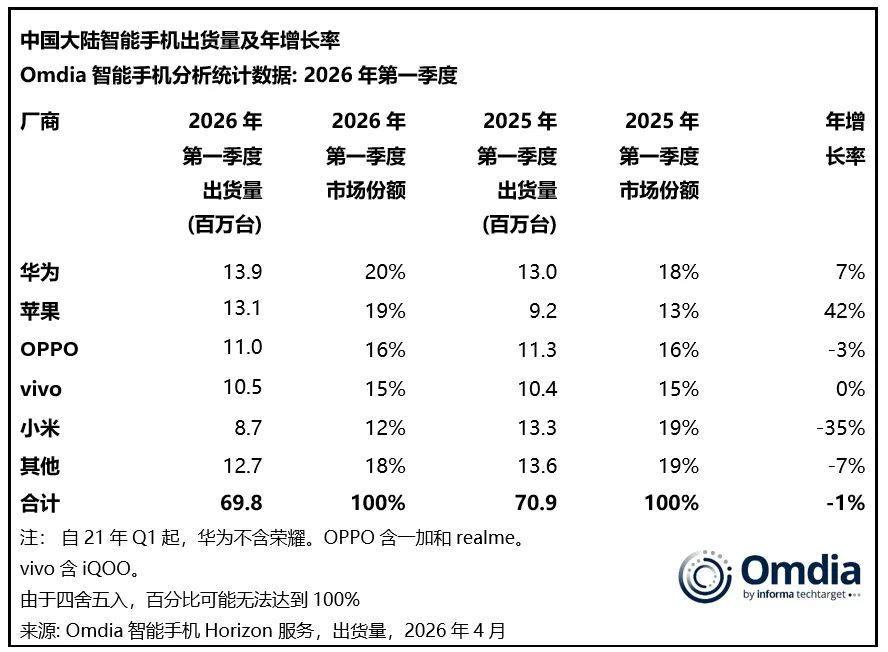
Storage component prices surge impacts smartphone shipments
Why It Matters
Memory price rises, driven partly by AI demand, squeeze consumer device margins. Benefits premium brands like Huawei/Apple with pricing power. Signals broader supply chain strain.
What To Do Next
Check latest NAND pricing forecasts from TrendForce for AI training storage budgeting.
Key Points
- •Storage component prices surge impacts smartphone shipments
- •Huawei and Apple benefit and climb rankings
- •Xiaomi drops below top five positions
- •Overall market seats realigned due to costs
🧠 Deep Insight
AI-generated analysis for this event — not the original article.
🔑 Enhanced Key Takeaways
- •The surge in NAND flash and DRAM pricing is disproportionately affecting mid-range and budget-oriented OEMs, as they lack the vertical integration or long-term supply contracts enjoyed by premium players like Apple and Huawei.
- •Huawei's resurgence is bolstered by its proprietary Kirin chipset ecosystem and localized supply chain resilience, which mitigates reliance on volatile global memory markets compared to competitors.
- •Market data indicates a shift in consumer behavior where users are opting for longer replacement cycles, forcing manufacturers to prioritize high-margin premium devices over volume-driven budget models to maintain profitability.
📊 Competitor Analysis▸ Show
| Feature/Metric | Apple (Premium) | Huawei (Premium) | Xiaomi (Mid/Budget) |
|---|---|---|---|
| Supply Chain Strategy | Vertical Integration | Localized/Diversified | Market-price dependent |
| Storage Pricing Impact | Low (High margins) | Low (Strategic stockpiling) | High (Margin compression) |
| Market Positioning | Ultra-Premium | Premium/Flagship | Value/Volume-driven |
| Recent Ranking Trend | Upward/Stable | Upward | Downward |
🔮 Future ImplicationsAI analysis grounded in cited sources
⏳ Timeline
Weekly AI Recap
Read this week's curated digest of top AI events →
👉Related Updates



AI-curated news aggregator. All content rights belong to original publishers.
Original source: 钛媒体 ↗
This is a summary, not the original. Read the source, or get the weekly briefing.
The weekly digest
One email a week. Unsubscribe anytime.