Standardization failure: BBQ chain refunds 48,000 customers
💡A critical lesson on why over-automating manual processes without human oversight can destroy brand value.
⚡ 30-Second TL;DR
What Changed
Over-reliance on electronic temperature sensors caused inconsistent heat distribution.
Why It Matters
This case serves as a cautionary tale for founders attempting to automate artisanal or experience-based workflows without sufficient human-in-the-loop validation.
What To Do Next
When implementing automated quality control, always include a manual verification layer to account for edge cases your sensors might miss.
Key Points
- •Over-reliance on electronic temperature sensors caused inconsistent heat distribution.
- •24 stores were affected, resulting in 1.1 million RMB in refunds.
- •The brand reverted to manual temperature testing to ensure quality control.
🧠 Deep Insight
Web-grounded analysis with 16 cited sources.
🔑 Enhanced Key Takeaways
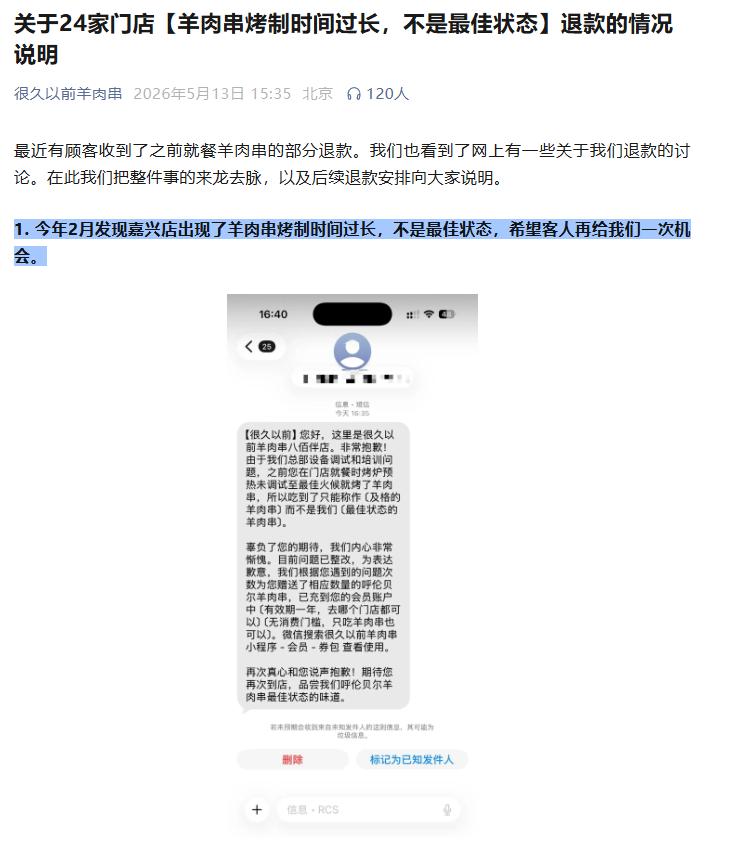
- •The quality inconsistency issue was initially discovered at a Jiaxing store in February 2026, prompting a nationwide investigation by the brand.
- •The root cause was identified as an over-reliance on electronic temperature gun readings, which failed to account for voltage fluctuations that impacted the actual heating power and internal air temperature of the grills.
- •The company proactively initiated the refunds and issued a public apology, rather than reacting to widespread customer complaints, which some analysts suggest could be a strategic move to reinforce its quality-focused brand image.
- •The compensation involved refunding half the cost of the lamb skewers to 48,022 affected tables, totaling over 1.1 million RMB.
- •The brand, often referred to as the 'Haidilao of BBQ' for its emphasis on service and customer experience, has a history of proactive customer service, including offering free meals or refunds for minor complaints.
🛠️ Technical Deep Dive
- The electronic temperature sensors used were '测温枪' (temperature guns).
- The target preheating temperature for the automatic rotating electric grills was set at 530°C.
- A key technical flaw was that the temperature guns might have only measured the surface temperature of the grill, not the actual internal air temperature, leading to insufficient preheating despite reaching the target reading.
- Voltage fluctuations in the stores were a significant factor, causing inconsistent power supply to the grills and affecting their actual heating capability.
- Larger grills used for bigger tables were particularly susceptible to insufficient preheating, especially when serving the first batch of customers, even if the power supply was generally adequate.
- The grills are designed as 'automatic rotating electric grills' (自动旋转电烤炉) with a bottom smoke exhaust system to provide a smokeless, interactive self-service grilling experience.
- Following the incident, the brand reverted to manual temperature testing, where staff gauge the grill's readiness by hand over the surface, indicating a shift away from sole reliance on electronic sensors.
🔮 Future ImplicationsAI analysis grounded in cited sources
⏳ Timeline
📎 Sources (16)
Factual claims are grounded in the sources below. Forward-looking analysis is AI-generated interpretation.
- Google Search Source
- Google Search Source
- Google Search Source
- Google Search Source
- Google Search Source
- Google Search Source
- Google Search Source
- Google Search Source
- Google Search Source
- Google Search Source
- Google Search Source
- Google Search Source
- Google Search Source
- Google Search Source
- Google Search Source
- Google Search Source
Weekly AI Recap
Read this week's curated digest of top AI events →
👉Related Updates

AI-curated news aggregator. All content rights belong to original publishers.
Original source: 36氪 ↗