Spotting AI-Generated Writing Techniques
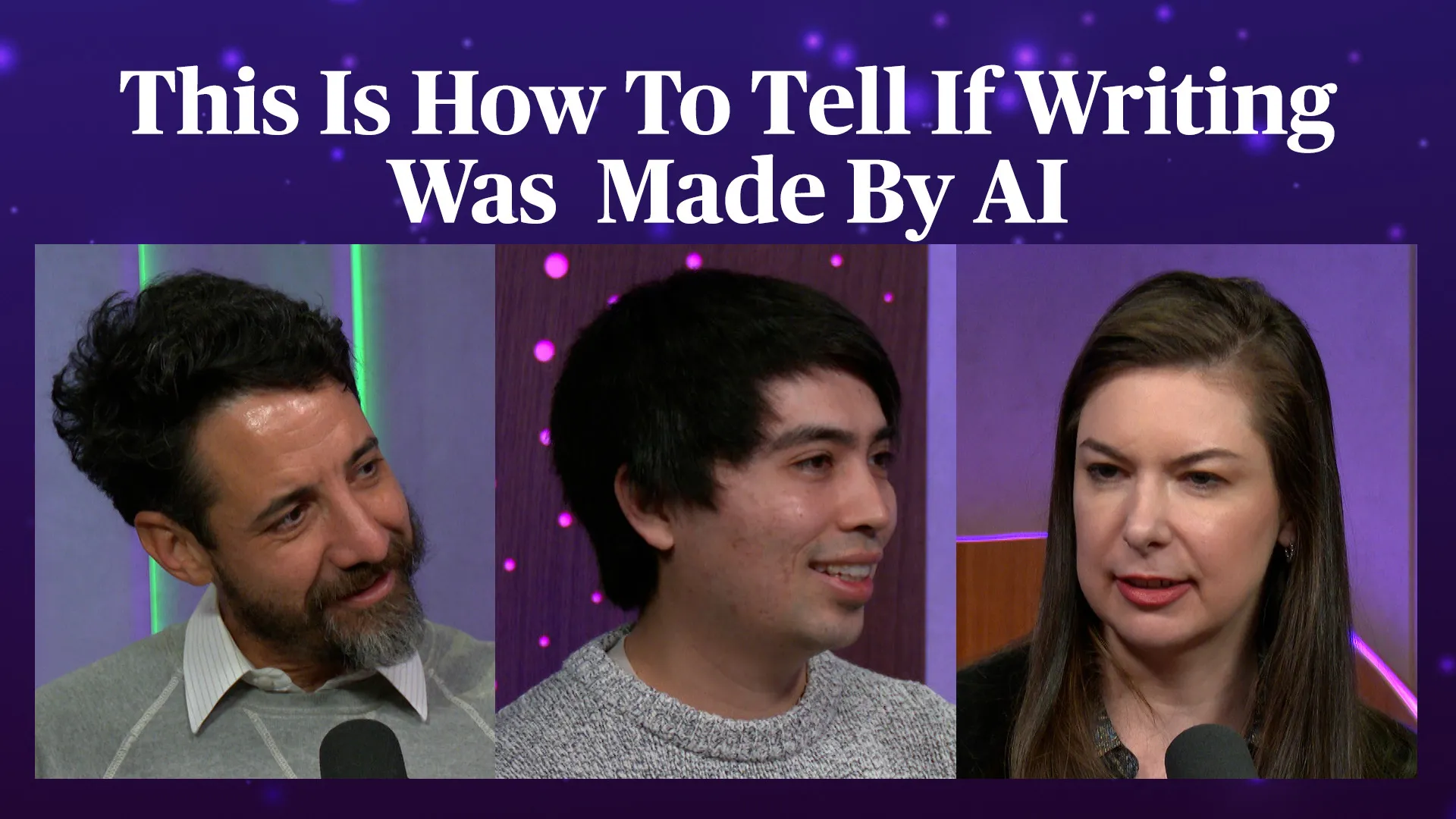
💡Master AI text detection methods from Pangram Labs CEO interview.
⚡ 30-Second TL;DR
What Changed
AI writing surpasses humans in grammar and cleanliness.
Why It Matters
Advances in detection tools are crucial for maintaining content authenticity amid AI proliferation. Impacts publishers, educators, and AI users verifying outputs.
What To Do Next
Test your LLM outputs with Pangram Labs detector to evade easy spotting.
Key Points
- •AI writing surpasses humans in grammar and cleanliness.
- •Pangram Labs CEO details advanced detection techniques.
- •Discusses false positives/negatives and internet future.
- •Humans quickly sense 'off' quality in AI text.
🧠 Deep Insight
AI-generated analysis for this event — not the original article.
🔑 Enhanced Key Takeaways
- •Pangram Labs utilizes a proprietary 'stylometric fingerprinting' approach that analyzes syntactic patterns and lexical diversity rather than relying solely on perplexity scores, which are prone to manipulation by adversarial prompting.
- •The detection software integrates with enterprise content management systems to provide real-time 'AI-probability' scores, specifically targeting the mitigation of automated SEO spam and synthetic misinformation campaigns.
- •Recent industry benchmarks indicate that while detection tools are effective against base-model outputs, they struggle significantly with 'human-in-the-loop' content where AI drafts are heavily edited by human writers to introduce intentional stylistic irregularities.
📊 Competitor Analysis▸ Show
| Feature | Pangram Labs | GPTZero | Originality.ai |
|---|---|---|---|
| Primary Focus | Enterprise Stylometry | Education/Academic | SEO/Content Marketing |
| Pricing Model | Custom Enterprise API | Freemium/Subscription | Pay-per-credit |
| Detection Method | Stylometric Fingerprinting | Perplexity/Burstiness | Pattern Recognition/API |
🛠️ Technical Deep Dive
- •Employs a multi-layered neural architecture that maps text segments against a baseline of known LLM training distributions.
- •Utilizes 'Burstiness' analysis to measure the variance in sentence structure and length, as AI models tend to produce more uniform rhythmic patterns compared to human authors.
- •Implements a secondary classifier trained on adversarial examples to reduce false positives caused by non-native English speakers or highly technical, formulaic writing styles.
- •API integration supports real-time stream processing, allowing for sub-second latency in content verification workflows.
🔮 Future ImplicationsAI analysis grounded in cited sources
⏳ Timeline
📰 Event Coverage
Weekly AI Recap
Read this week's curated digest of top AI events →
👉Related Updates
AI-curated news aggregator. All content rights belong to original publishers.
Original source: Bloomberg Technology ↗
This is a summary, not the original. Read the source, or get the weekly briefing.
The weekly digest
One email a week. Unsubscribe anytime.