Spotify Labels and Limits AI Artists
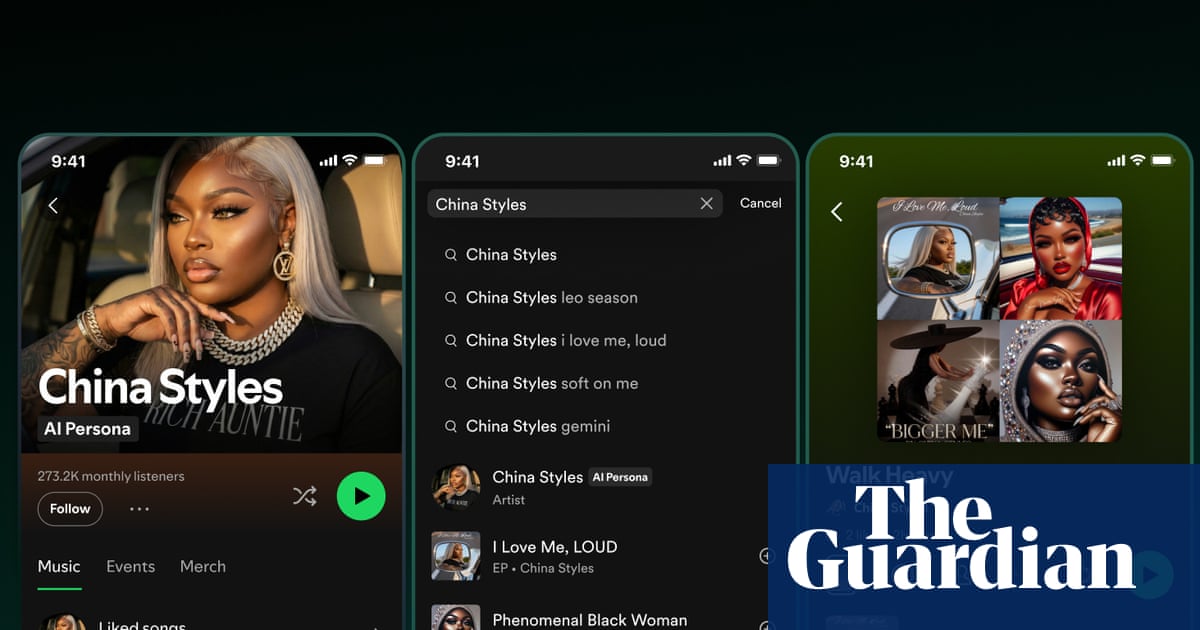
💡Spotify’s AI persona policy could reshape discovery, labeling, and monetization for synthetic music.
⚡ 30-Second TL;DR
What Changed
The “AI persona” label will appear on artist profiles and playlist track listings.
Why It Matters
The move could reduce the visibility and monetization opportunities of synthetic music identities on Spotify. It also establishes a platform-level precedent for labeling AI-generated creators rather than treating them like ordinary artists.
What To Do Next
Audit your music-generation or creator-upload pipeline for reliable AI-origin metadata before publishing tracks to Spotify.
Key Points
- •The “AI persona” label will appear on artist profiles and playlist track listings.
- •AI-generated artist identities will be excluded from algorithmic recommendations.
- •The policy is intended to reduce fake performers and improve transparency for listeners.
🧠 Deep Insight
AI-generated analysis for this event.
🔑 Enhanced Key Takeaways
- •Spotify is leveraging its 'Streamshare' integrity detection system to automatically identify and flag AI-generated audio patterns that mimic human performance.
- •The policy specifically targets 'functional' AI music—such as white noise, rain sounds, and ambient loops—that has historically flooded the platform to game royalty pools.
- •Major record labels have pressured Spotify to implement these labels to protect the royalty share of human artists whose streaming numbers are diluted by AI-generated content.
- •The exclusion from algorithmic recommendations applies specifically to 'Personalized Editorial' playlists, meaning AI artists will no longer appear in 'Discover Weekly' or 'Release Radar'.
- •Spotify is introducing a new API endpoint for distributors to declare AI usage at the point of ingestion, which triggers the mandatory 'AI persona' metadata tag.
📊 Competitor Analysis▸ Show
| Feature | Spotify | Apple Music | YouTube Music | SoundCloud |
|---|---|---|---|---|
| AI Labeling | Mandatory | Voluntary/Manual | Automated Content ID | Limited/User-Reported |
| Algo Exclusion | Yes | No | Partial | No |
| Royalty Protection | High | Moderate | Moderate | Low |
🛠️ Technical Deep Dive
- Implementation utilizes a proprietary audio fingerprinting model that analyzes spectral density and rhythmic consistency to differentiate between human-performed and synthetic audio.
- The AI persona tag is integrated into the Spotify Metadata Schema (SMS) as a boolean flag within the track-level JSON object.
- Algorithmic filtering is enforced via a secondary layer in the recommendation engine that checks the 'is_ai_generated' flag before calculating the collaborative filtering score for user feeds.
🔮 Future ImplicationsAI analysis grounded in cited sources
⏳ Timeline
📰 Event Coverage
Weekly AI Recap
Read this week's curated digest of top AI events →
👉Related Updates


AI-curated news aggregator. All content rights belong to original publishers.
Original source: The Guardian Technology ↗