Spotify Flags AI-Generated Artists
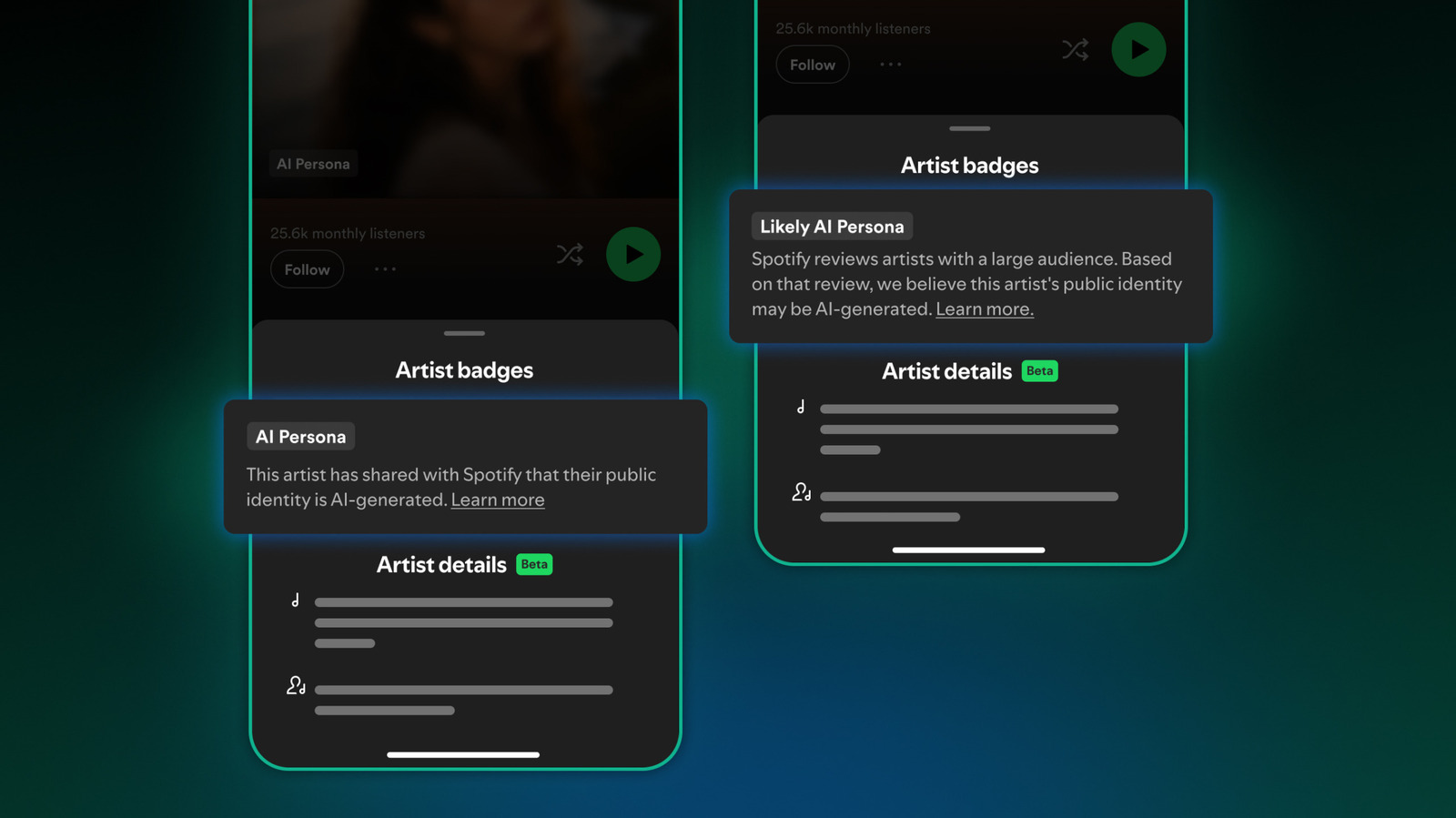
💡Spotify’s labels could set a new transparency standard for AI-generated music and virtual artists.
⚡ 30-Second TL;DR
What Changed
AI Persona labels will warn listeners when an artist is not real.
Why It Matters
The feature could help listeners distinguish synthetic artist identities from human performers. For AI creators and platforms, it signals growing pressure to disclose the provenance of generated audio and related personas.
What To Do Next
Add provenance metadata and a human-review path to any AI-generated music publishing workflow before distributing tracks to Spotify.
Key Points
- •AI Persona labels will warn listeners when an artist is not real.
- •Spotify is responding to an influx of AI-generated music.
- •The labels aim to improve transparency around artist authenticity.
🧠 Deep Insight
AI-generated analysis for this event.
🔑 Enhanced Key Takeaways
- •Spotify's initiative is part of a broader 'Content Authenticity' framework that integrates watermarking technology to detect synthetic audio files during the ingestion process.
- •The labels are being rolled out in partnership with major labels and independent distributors to ensure metadata compliance regarding AI-assisted versus fully AI-generated tracks.
- •This move follows significant pressure from the Human Artistry Campaign and various music unions demanding clearer distinction between human-created and machine-generated content.
- •Spotify is utilizing a proprietary machine learning classifier, trained on a dataset of known AI-generated audio signatures, to automatically flag suspicious uploads before they reach the platform.
- •The platform has introduced new terms of service requiring creators to disclose the use of generative AI in their production process, with non-compliance leading to potential account suspension.
📊 Competitor Analysis▸ Show
| Feature | Spotify (AI Persona Labels) | Apple Music (AI Disclosure) | YouTube Music (AI Labeling) |
|---|---|---|---|
| Detection Method | Proprietary ML Classifier | Metadata-based disclosure | Content ID / Audio Fingerprinting |
| User Transparency | Explicit 'AI Persona' tag | Voluntary artist disclosure | 'Altered content' labels |
| Pricing Impact | None (Standard Tier) | None | None |
🛠️ Technical Deep Dive
- Implementation relies on a multi-modal detection pipeline that analyzes both audio spectral characteristics and metadata patterns.
- The system employs a Convolutional Neural Network (CNN) architecture optimized for identifying artifacts common in latent diffusion models and transformer-based audio generators.
- Integration occurs at the ingestion layer, where tracks are scanned against a database of known synthetic audio fingerprints before being indexed in the Spotify catalog.
- The labeling system is dynamically updated via a backend API that pushes 'AI-Persona' flags to the client-side UI based on real-time verification results.
🔮 Future ImplicationsAI analysis grounded in cited sources
⏳ Timeline
Weekly AI Recap
Read this week's curated digest of top AI events →
👉Related Updates
AI-curated news aggregator. All content rights belong to original publishers.
Original source: Engadget ↗