SpaceX: High Ambitions vs. Market Reality
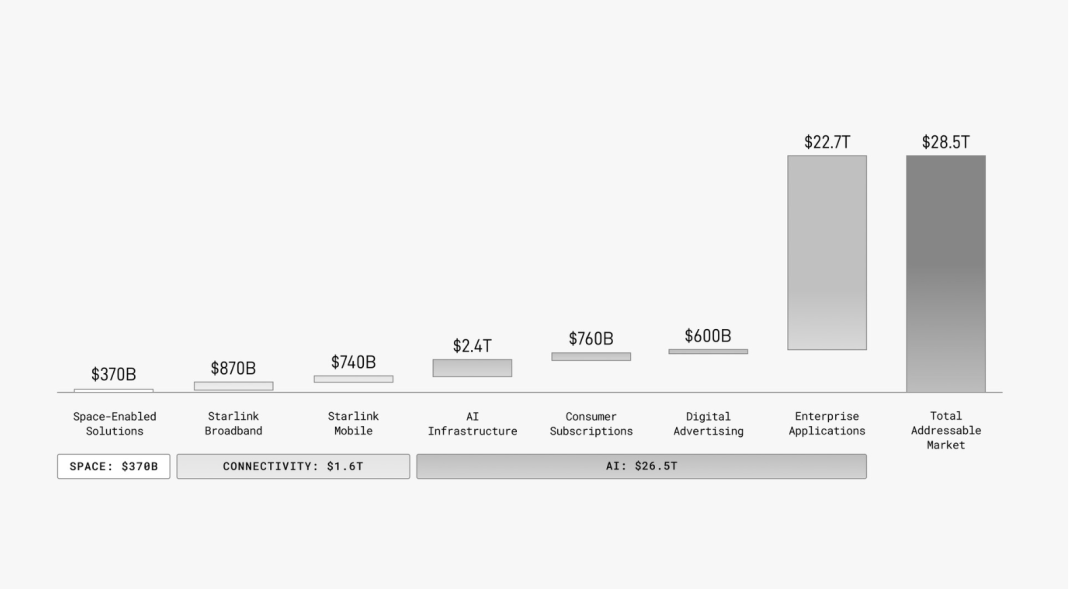
💡Learn how capital market skepticism impacts the development of large-scale, high-tech infrastructure projects.
⚡ 30-Second TL;DR
What Changed
SpaceX maintains a 'noble' brand image in the aerospace sector
Why It Matters
The narrative highlights the cooling enthusiasm for capital-intensive 'dream' projects in the current tech investment climate.
What To Do Next
Evaluate the ROI of your own AI infrastructure projects to ensure they can withstand tightening capital market scrutiny.
Key Points
- •SpaceX maintains a 'noble' brand image in the aerospace sector
- •Capital markets are increasingly skeptical of high-cost AI/aerospace ventures
- •Execution risk remains a primary concern for long-term investors
🧠 Deep Insight
AI-generated analysis for this event — not the original article.
🔑 Enhanced Key Takeaways
- •SpaceX has achieved a dominant market share in global launch services, with Starlink now contributing a significant portion of the company's total revenue and cash flow.
- •The development of Starship, the world's most powerful launch vehicle, has faced repeated regulatory and technical hurdles, impacting the projected cadence of lunar and Mars missions.
- •SpaceX's valuation has surged to over $200 billion in recent private market transactions, driven largely by the rapid expansion of its satellite internet constellation.
- •The company is increasingly reliant on government contracts, including NASA's Artemis program and various Department of Defense missions, which provide a stable financial buffer against commercial market volatility.
- •Internal reports indicate that SpaceX is aggressively managing its burn rate by transitioning to a fully reusable launch architecture to lower the cost-per-kilogram to orbit.
📊 Competitor Analysis▸ Show
| Feature | SpaceX (Starship/Falcon) | Blue Origin (New Glenn) | Rocket Lab (Neutron) |
|---|---|---|---|
| Reusability | Full (Starship) / Partial (Falcon) | Partial (Booster) | Partial (Booster) |
| Primary Market | LEO, MEO, Deep Space | LEO, Government, Commercial | Small/Medium Launch, LEO |
| Status | Operational/Testing | Initial Flight Testing | Development |
🛠️ Technical Deep Dive
- Starship Architecture: Two-stage fully reusable launch system consisting of the Super Heavy booster and the Starship spacecraft.
- Propulsion: Raptor engines utilizing sub-cooled liquid methane (CH4) and liquid oxygen (LOX) for high-efficiency, full-flow staged combustion.
- Starlink Constellation: Utilizes phased-array antennas and optical inter-satellite links (laser terminals) to provide low-latency global broadband.
- Reusability Mechanism: Grid fins and landing burns for booster recovery; heat shield tiles and flap control for atmospheric reentry of the upper stage.
🔮 Future ImplicationsAI analysis grounded in cited sources
⏳ Timeline
Weekly AI Recap
Read this week's curated digest of top AI events →
👉Related Updates


AI-curated news aggregator. All content rights belong to original publishers.
Original source: 钛媒体 ↗
This is a summary, not the original. Read the source, or get the weekly briefing.
Weekly AI briefing
One email a week. Unsubscribe anytime.