SpaceX files for massive IPO with AI-centric strategy
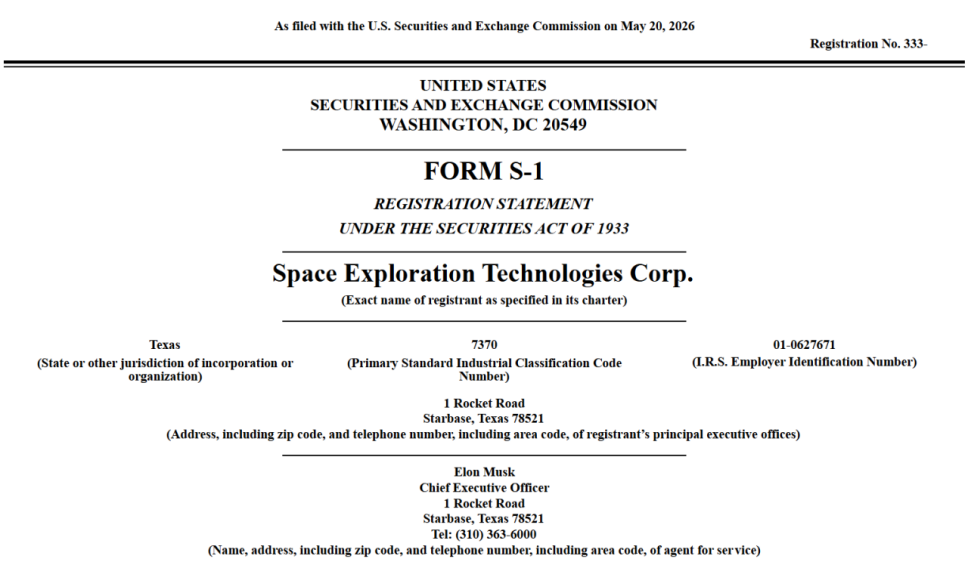
💡SpaceX is pivoting from rockets to becoming the world's largest AI compute provider via space-based infrastructure.
⚡ 30-Second TL;DR
What Changed
Targeting $2 trillion valuation with $75-80 billion in funding.
Why It Matters
SpaceX's pivot to AI infrastructure could redefine the economics of space-based computing and challenge terrestrial data center limitations.
What To Do Next
Monitor the performance of Colossus data centers and Starship V3 flight tests as indicators for the viability of space-based AI infrastructure.
Key Points
- •Targeting $2 trillion valuation with $75-80 billion in funding.
- •AI segment, including xAI/Grok, is the primary growth driver despite current losses.
- •Secured a $45 billion contract with Anthropic for Colossus data center compute.
- •Future roadmap includes deploying orbital AI data centers powered by Starship.
🧠 Deep Insight
Web-grounded analysis with 12 cited sources.
🔑 Enhanced Key Takeaways
- •SpaceX's agreement with Anthropic is a $1.25 billion per month deal through May 2029, totaling nearly $45 billion, granting Anthropic access to SpaceX's Colossus I and Colossus II data centers for AI compute, primarily for inference tasks.
- •The S-1 filing reveals a significant strategic pivot, with 76% ($7.72 billion) of SpaceX's capital deployment in Q1 2026 directed towards AI infrastructure and data center buildouts.
- •SpaceX acquired Elon Musk's AI company, xAI, in an all-stock deal in February 2026, which valued the combined entity at approximately $1.25 trillion at the time of the merger.
- •The IPO filing positions SpaceX as a vertically integrated AI infrastructure company, asserting that 93% of its projected $28.5 trillion total addressable market is tied to its AI segment.
- •SpaceX is reportedly developing its own chip manufacturing capabilities with Tesla, potentially through a project named Terafab, aiming to produce a terawatt of compute per year to mitigate AI chip supply constraints.
🛠️ Technical Deep Dive
- SpaceX's Colossus 1 data center features over 220,000 Nvidia GPUs and provides 300 megawatts of compute capacity.
- Orbital AI data centers are envisioned to harness near-constant solar energy in space and utilize the vacuum for cooling through radiator panels, eliminating the need for terrestrial liquid and air cooling systems.
- These orbital data centers could measure up to 330 feet (100 meters) in length and operate in orbits between 310 miles and 1,243 miles (500 to 2000 kilometers) in altitude.
- SpaceX is reportedly pursuing a chip manufacturing initiative, potentially called Terafab, in collaboration with Tesla, with an ambitious goal of producing a terawatt of compute annually to support its AI infrastructure.
🔮 Future ImplicationsAI analysis grounded in cited sources
⏳ Timeline
📎 Sources (12)
Factual claims are grounded in the sources below. Forward-looking analysis is AI-generated interpretation.
Weekly AI Recap
Read this week's curated digest of top AI events →
👉Related Updates




AI-curated news aggregator. All content rights belong to original publishers.
Original source: 虎嗅 ↗