SpaceX Could Enable Orbital Data Centers, Says Expert
💡Explore the future of AI compute infrastructure in extreme environments like space and the ocean.
⚡ 30-Second TL;DR
What Changed
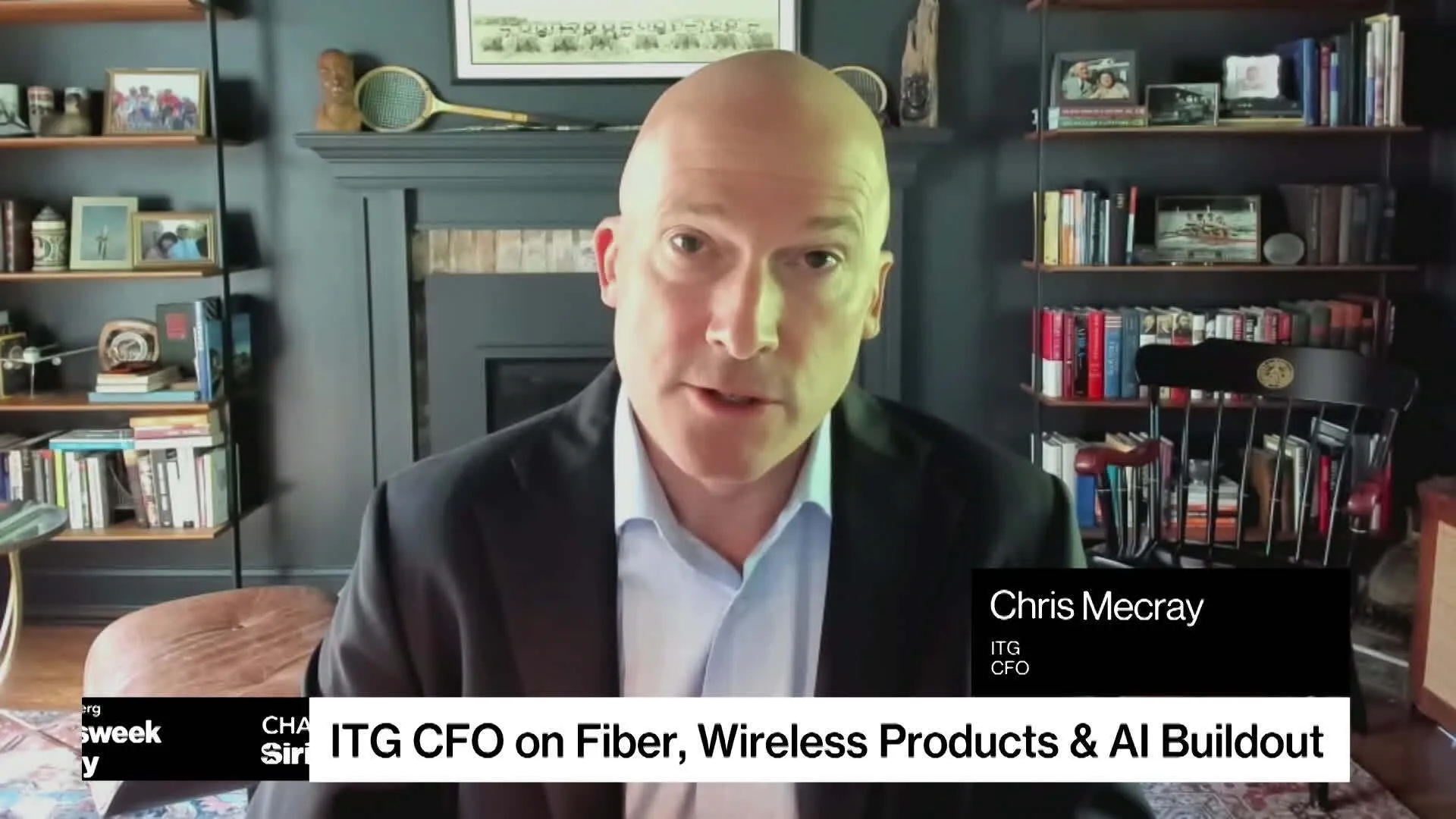
SpaceX is identified as the only company capable of building orbital data centers.
Why It Matters
He also notes that ocean-based data centers currently offer a significantly cheaper alternative.
What To Do Next
Evaluate your long-term compute infrastructure needs and consider the viability of edge computing in non-traditional environments.
Key Points
- •SpaceX is identified as the only company capable of building orbital data centers.
- •Ocean data centers are currently 100x cheaper than orbital alternatives.
- •Infrastructure innovation is moving toward extreme environments to support AI compute.
🧠 Deep Insight
Background and context from public sources — not the original article. 22 sources cited.
🔑 Enhanced Key Takeaways
- •SpaceX has unveiled its first-generation orbital data center satellite, named 'AI1,' which is designed to run AI compute workloads from low Earth orbit. This satellite features a 150 kW peak output and an interchangeable compute payload, allowing for hardware from various chipmakers.
- •Beyond current cost disadvantages, orbital data centers offer strategic benefits such as regulatory freedom, ultra-low latency for applications like remote sensing, and continuous access to solar power unhindered by atmospheric conditions, which could lead to significant energy cost savings at scale.
- •Significant technical challenges for orbital data centers include effective thermal management in the vacuum of space (where direct sunlight is intense despite the cold), radiation hardening for computing hardware, ensuring high-bandwidth inter-satellite communication, and mitigating orbital debris risks.
- •Google is also actively exploring space-based AI infrastructure through 'Project Suncatcher,' a research initiative envisioning solar-powered satellite constellations equipped with TPUs and free-space optical links, with plans to launch prototype satellites by early 2027.
- •While Microsoft's Project Natick for underwater data centers is no longer active, other companies like Panthalassa are pursuing autonomous floating, wave-powered data centers in international waters, aiming for substantial cost advantages and environmental benefits over terrestrial and orbital options. China has also launched commercial underwater data centers powered by offshore wind.
📊 Competitor Analysis▸ Show
| Feature/Category | SpaceX (Orbital Data Centers) | Microsoft Project Natick (Ocean-based) | Panthalassa (Ocean-based) | Google Project Suncatcher (Orbital Research) | China (Underwater Data Centers) |
|---|---|---|---|---|---|
| Status | AI1 prototype unveiled, plans for megaconstellation. | Project inactive as of 2024. | Prototype (Ocean-2) tested 2025, commercial deployment planned 2026. | Research moonshot, prototype satellites planned for early 2027. | Commercial operations launched (e.g., Shanghai Lingang project). |
| Power Source | Solar arrays (150 kW peak per AI1). | Connected to onshore power grid, potential for co-located renewables. | Wave energy, autonomous operation in international waters. | Solar-powered satellite constellations. | Offshore wind farms. |
| Cooling Method | 110 sq meters deployable liquid radiators, vacuum of space. | Natural seawater cooling, sealed nitrogen environment. | Natural seawater cooling. | Vacuum of space, passive radiative cooling. | Natural seawater cooling. |
| Key Advantages | Regulatory freedom, ultra-low latency for remote sensing, continuous solar power, potential for massive scale. | Increased reliability (8x in trials), reduced water/energy consumption, rapid deployment near coastal populations. | Significantly lower cost than orbital/land-based, renewable wave power, zero land permits, environmental benefits. | Scalability of AI compute, continuous solar power, reduced terrestrial resource impact. | Reduced power consumption (over 1/5th), reduced freshwater use, commercial deployment. |
| Key Challenges | High launch costs, thermal management, radiation effects, high-bandwidth inter-satellite comms, orbital debris. | Operational logistics, maintenance access, subsea connections, permitting, project terminated by Microsoft. | Wave energy reliability, deep ocean deployment logistics, power transmission to shore. | High-bandwidth inter-satellite comms, tight formation flying, radiation hardening, launch costs. | Maintenance access, subsea connections, environmental review. |
| Cost Comparison | Currently more expensive than terrestrial/ocean-based, aims for cost reduction with Starship. | Aimed for lower costs, but not commercialized. | Estimates 10x-100x cheaper than space, significantly lower than land-based. | Aims for cost comparability with terrestrial by mid-2030s with launch cost reductions. | Reduces power consumption by over one-fifth compared to land-based. |
🛠️ Technical Deep Dive
- SpaceX AI1 Satellite: Designed for AI compute workloads, with a 150 kW peak power output and 120 kW average. It achieves an efficiency of 70 kW per ton.
- Power Generation: Each AI1 satellite is equipped with a 150-kilowatt solar array, providing approximately 250 watts per square meter of power.
- Cooling System: To manage heat in the vacuum of space, AI1 utilizes 110 square meters of deployable liquid radiators, supplemented by pumping loops for redundancy and micrometeroid shielding.
- Compute Payload: The AI1 features an interchangeable compute payload, allowing for the integration of hardware from various chipmakers, equivalent to a single Nvidia GB300 rack (which requires about 140 kW on Earth).
- Inter-Satellite Communication: SpaceX's Starlink satellites, which form the basis for this infrastructure, already use Optical Intersatellite Links (ISLs) capable of up to 200 Gbps, creating a global internet mesh. Starlink V2 Mini satellites specifically offer 96 Gbps bandwidth with improved laser beams.
- Orbital Challenges: Space-based computing requires specialized hardware for radiation resistance, robust thermal management systems due to extreme temperature fluctuations (-170 to 120 Celsius), and advanced attitude control for maintaining tight satellite formations necessary for high-bandwidth optical links.
- Google Project Suncatcher: Envisions satellite constellations with Google TPUs connected by free-space optical links. Research indicates that achieving data center-scale communication (tens of terabits per second) between satellites is feasible using dense wavelength division multiplexing and spatial multiplexing, provided satellites fly in extremely tight formations (kilometers or less).
🔮 Future ImplicationsAI analysis grounded in cited sources
⏳ Timeline
📎 Sources (22)
Factual claims are grounded in the sources below. Forward-looking analysis is AI-generated interpretation.
Weekly AI Recap
Read this week's curated digest of top AI events →
👉Related Updates


AI-curated news aggregator. All content rights belong to original publishers.
Original source: Bloomberg Technology ↗
This is a summary, not the original. Read the source, or get the weekly briefing.
Weekly AI briefing
One email a week. Unsubscribe anytime.