South Korea Plans Underwater AI Data Center
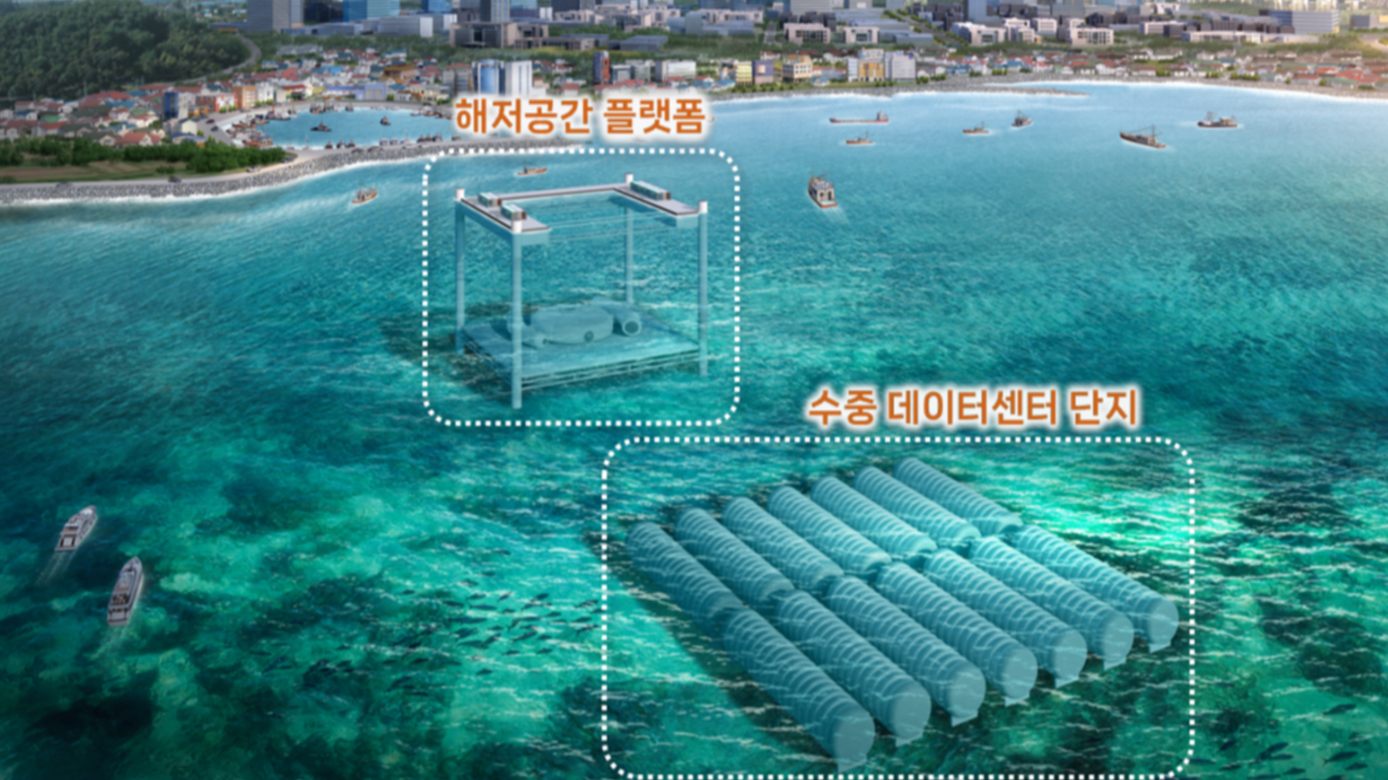
💡South Korea’s 100,000-server subsea plan could reshape how AI capacity expands in land-constrained markets.
⚡ 30-Second TL;DR
What Changed
The Ministry of Oceans and Fisheries selected Ulsan as the demonstration site in April.
Why It Matters
If technically and economically viable, subsea data centers could give AI operators an alternative way to expand computing capacity in land-scarce regions. The project also signals that governments are considering unconventional locations for future AI infrastructure.
What To Do Next
Add subsea data-center infrastructure to your capacity-planning review and compare its power, cooling, connectivity, and maintenance assumptions with conventional facilities.
Key Points
- •The Ministry of Oceans and Fisheries selected Ulsan as the demonstration site in April.
- •The project targets additional AI infrastructure capacity without requiring more terrestrial land.
- •The proposed subsea facility could eventually accommodate up to 100,000 servers.
- •Ulsan is a major industrial hub for automotive and shipbuilding companies.
🧠 Deep Insight
AI-generated analysis for this event.
🔑 Enhanced Key Takeaways
- •The project leverages Ulsan's unique maritime environment to utilize seawater for natural cooling, significantly reducing the Power Usage Effectiveness (PUE) compared to traditional air-cooled terrestrial data centers.
- •The initiative is part of a broader South Korean government strategy to achieve carbon neutrality by 2050, as underwater data centers can be powered by offshore wind energy farms located near Ulsan.
- •The Ministry of Oceans and Fisheries is collaborating with private sector partners and research institutes to develop specialized pressure-resistant, corrosion-proof server housing modules.
- •The project aims to mitigate the 'Not In My Backyard' (NIMBY) syndrome associated with large-scale data center construction in densely populated South Korean urban areas.
- •The subsea infrastructure is designed to be modular, allowing for easier maintenance and scalability compared to fixed-location terrestrial facilities.
📊 Competitor Analysis▸ Show
| Feature | South Korea Subsea Project | Microsoft Project Natick | Highlander (China) |
|---|---|---|---|
| Cooling Method | Seawater Heat Exchange | Seawater Heat Exchange | Seawater Heat Exchange |
| Scalability | High (Modular) | Low (Single Pod) | High (Modular) |
| Primary Focus | AI/Industrial Hub | Cloud/Edge Computing | Commercial Data Storage |
🛠️ Technical Deep Dive
- Cooling System: Employs a closed-loop heat exchange system where internal server heat is transferred to the surrounding seawater via a conductive hull or external heat exchanger.
- Structural Integrity: Utilizes high-grade marine alloys and specialized coatings to prevent biofouling and saltwater corrosion at depths ranging from 20 to 50 meters.
- Power Delivery: Integration with offshore renewable energy grids, potentially utilizing subsea power cables to minimize transmission losses.
- Server Density: Designed for high-density AI compute clusters, requiring advanced vibration dampening and pressure-sealed enclosures to protect sensitive hardware.
🔮 Future ImplicationsAI analysis grounded in cited sources
⏳ Timeline
Weekly AI Recap
Read this week's curated digest of top AI events →
👉Related Updates

AI-curated news aggregator. All content rights belong to original publishers.
Original source: cnBeta (Full RSS) ↗