๐Ÿ‡ฌ๐Ÿ‡งFreshcollected in 18m

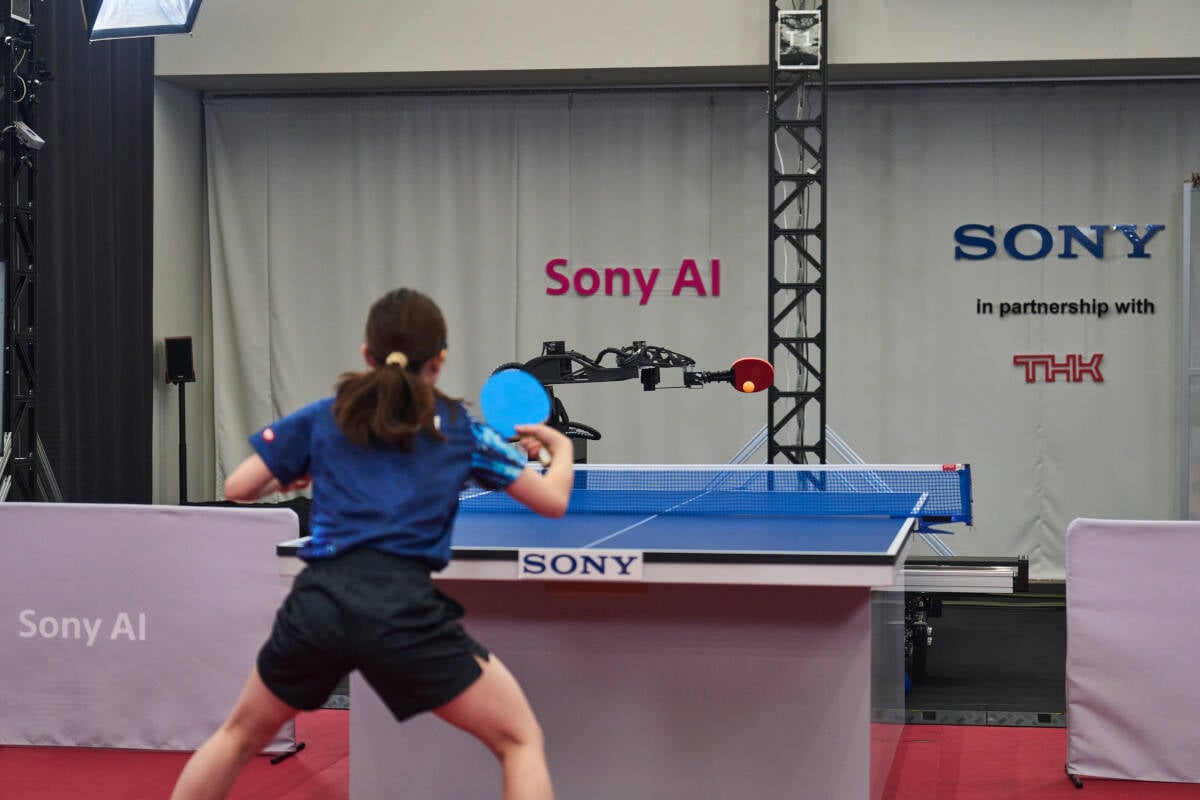
Sony AI Masters Ping-Pong Challenge
Sony AI Masters Ping-Pong Challenge
PostLinkedIn
๐Ÿ‡ฌ๐Ÿ‡งRead original on The Register - AI/ML
#robotics#table-tennis#embodied-aisony-ai-table-tennis-robot

๐Ÿ’กSony AI beats humans at ping-pong: breakthrough for embodied AI speed/accuracy

โšก 30-Second TL;DR

What Changed

Sony AI robot defeats humans in live ping-pong matches

Why It Matters

Advances embodied AI for real-time interaction, potentially transforming robotics in manufacturing, sports training, and healthcare. Signals shift toward practical, human-competitive robots.

What To Do Next

Study Sony's ping-pong AI papers for real-time robotics control techniques.

Who should care:Researchers & Academics

๐Ÿง  Deep Insight

AI-generated analysis for this event.

๐Ÿ”‘ Enhanced Key Takeaways

  • โ€ขThe system utilizes a multi-modal sensor fusion approach, integrating high-speed vision systems with predictive modeling to calculate ball trajectory in real-time under sub-millisecond latency constraints.
  • โ€ขSony's research emphasizes 'human-robot collaboration' rather than just competition, focusing on developing adaptive AI that can adjust its playstyle to match the skill level of the human opponent for safer, more engaging interactions.
  • โ€ขThe project leverages Sony's proprietary 'Deep Reinforcement Learning' frameworks, specifically optimized for physical hardware control to overcome the 'sim-to-real' gap where models trained in virtual environments fail to perform accurately in the physical world.
๐Ÿ“Š Competitor Analysisโ–ธ Show
FeatureSony AI (Ping-Pong)Google DeepMind (Robotics)Omron (FORPHEUS)
Primary FocusHigh-speed physical reactionGeneral-purpose manipulationHuman-machine coaching
LatencySub-millisecondVariable (Task dependent)Millisecond-level
BenchmarksHuman-level competitive playSuccess rate in grasping/assemblyRally duration/consistency

๐Ÿ› ๏ธ Technical Deep Dive

  • โ€ขVision System: Employs multiple high-frame-rate cameras synchronized to track the ball's 3D position and spin characteristics.
  • โ€ขControl Architecture: Uses a hierarchical control loop where a high-level policy determines the target strike point, and a low-level controller manages motor torque for the robotic arm.
  • โ€ขSim-to-Real Transfer: Utilizes domain randomization in training to ensure the policy is robust against variations in lighting, ball surface friction, and mechanical wear of the robot.
  • โ€ขHardware: Custom-designed lightweight robotic arm with high-torque actuators to achieve the rapid acceleration required for competitive table tennis.

๐Ÿ”ฎ Future ImplicationsAI analysis grounded in cited sources

Industrial robotics will adopt sub-millisecond reaction times for assembly line quality control.
The success of Sony's high-speed tracking and response system provides a blueprint for real-time defect detection and correction in high-velocity manufacturing environments.
AI-driven physical rehabilitation devices will become more responsive to patient movement.
The adaptive, human-centric control algorithms developed for ping-pong can be repurposed to provide dynamic, real-time resistance or assistance in physical therapy robotics.

โณ Timeline

2020-06
Sony AI is established to accelerate the research and development of AI technologies.
2021-09
Sony AI announces its focus on the 'AI x Robotics' flagship project to explore human-robot interaction.
2022-11
Sony AI publishes research on high-speed robotic table tennis, demonstrating initial tracking capabilities.
2024-05
Sony AI showcases advanced iterations of the robotic arm capable of sustained rallies against human players.
๐Ÿ“ฐ

Weekly AI Recap

Read this week's curated digest of top AI events โ†’

๐Ÿ‘‰Related Updates

AI-curated news aggregator. All content rights belong to original publishers.
Original source: The Register - AI/ML โ†—