🔥36氪•Stalecollected in 29m
Sonok Xiaolong Series Targets Projection Leapfrog
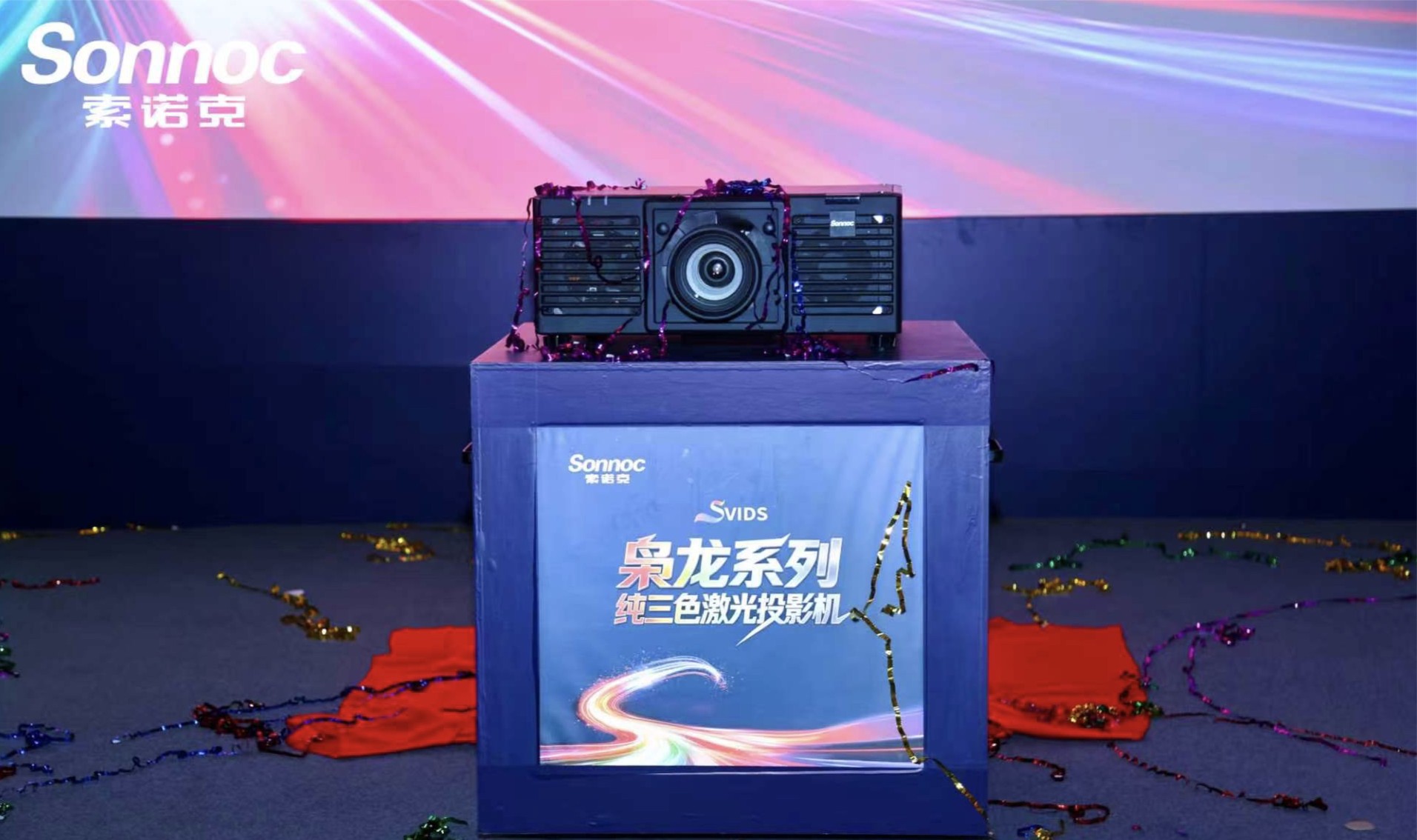
#projection-tech#tri-color-laser#ai-visionxiaolong-series-pure-tri-color-laser-projectorsonokxiaolongstarnet-ruijiehuawei-hisilicon
💡AI-enhanced projectors for robot vision & pro displays cut costs 30%
⚡ 30-Second TL;DR
What Changed
Pure tri-color laser with TRS scanning doubles color gamut and brightness vs mainstream.
Why It Matters
Enables high-fidelity displays for AI vision apps in robotics and cultural exhibits. Domestic supply chain cuts costs, accelerating tri-color laser adoption in premium markets.
What To Do Next
Test AIPQ AI color tuning SDK for custom display calibration in vision projects.
Who should care:Enterprise & Security Teams
Key Points
- •Pure tri-color laser with TRS scanning doubles color gamut and brightness vs mainstream.
- •AIPQ AI auto-tunes colors via sample learning, replacing manual adjustments.
- •Targets pro scenes like museums, theaters; costs cut 30% via domestic chips.
- •Future robot 'second eye' and medium-free 3D imaging goals.
- •Overseas push in 2026 with 50M RMB sales target.
🧠 Deep Insight
AI-generated analysis for this event.
🔑 Enhanced Key Takeaways
- •Sonok's strategic pivot leverages the 'Xiaolong' series to transition from a traditional projector manufacturer to an AI-integrated visual solutions provider, specifically targeting the high-end digital exhibition market.
- •The partnership with Huawei Hisilicon involves the integration of specialized SoC (System-on-Chip) architectures that offload complex image processing tasks from the main CPU, enabling real-time AIPQ adjustments without latency.
- •The 50M RMB overseas sales target for 2026 is specifically focused on the Southeast Asian and Middle Eastern markets, where Sonok is positioning its products as a cost-effective alternative to established Japanese and European projection brands.
📊 Competitor Analysis▸ Show
| Feature | Sonok Xiaolong Series | Epson (Pro L Series) | Christie (GS Series) |
|---|---|---|---|
| Light Source | Pure Tri-Color Laser | Laser Phosphor | Laser Phosphor |
| Color Gamut | >110% Rec.2020 | ~90% Rec.709 | ~95% Rec.709 |
| AI Integration | Native AIPQ/Robot Vision | Basic Auto-Calibration | Standard Image Processing |
| Cost Positioning | Aggressive (Domestic Chip) | Premium | Premium |
🛠️ Technical Deep Dive
- •TRS (Tri-color Resonant Scanning) Technology: Utilizes high-frequency resonant mirrors to achieve uniform light distribution, reducing speckle noise by approximately 40% compared to standard tri-color laser systems.
- •AIPQ Architecture: Employs a neural network trained on a dataset of 10,000+ professional-grade color profiles, allowing the projector to perform real-time color correction based on ambient light sensors and projection surface material detection.
- •Thermal Management: Features a liquid-cooled heat sink design specifically optimized for the high-density heat output of pure tri-color laser diodes, extending the operational lifespan to a rated 30,000 hours.
- •Integration Protocol: Supports standard DMX512 and Art-Net protocols for seamless integration into professional stage lighting and museum control systems.
🔮 Future ImplicationsAI analysis grounded in cited sources
Sonok will achieve a 15% market share in the Chinese engineering projector segment by Q4 2026.
The combination of domestic chip-driven cost reduction and the shift toward AI-automated installation significantly lowers the barrier to entry for mid-sized system integrators.
The 'second eye' robot vision feature will enable fully autonomous multi-projector blending.
By utilizing external camera feedback loops integrated with the projector's internal AI, the system can eliminate the need for manual geometric correction and edge blending in complex installations.
⏳ Timeline
2023-09
Sonok initiates R&D partnership with Huawei Hisilicon for custom projection SoC development.
2024-11
Company completes prototype testing of the TRS scanning engine.
2025-06
Sonok secures strategic investment to expand production capacity for the Xiaolong series.
2026-02
Official launch of the Xiaolong series pure tri-color laser engineering projectors.
📰
Weekly AI Recap
Read this week's curated digest of top AI events →
👉Related Updates
AI-curated news aggregator. All content rights belong to original publishers.
Original source: 36氪 ↗