SK hynix Expands China SSD Capacity, Eyes Solidigm IPO
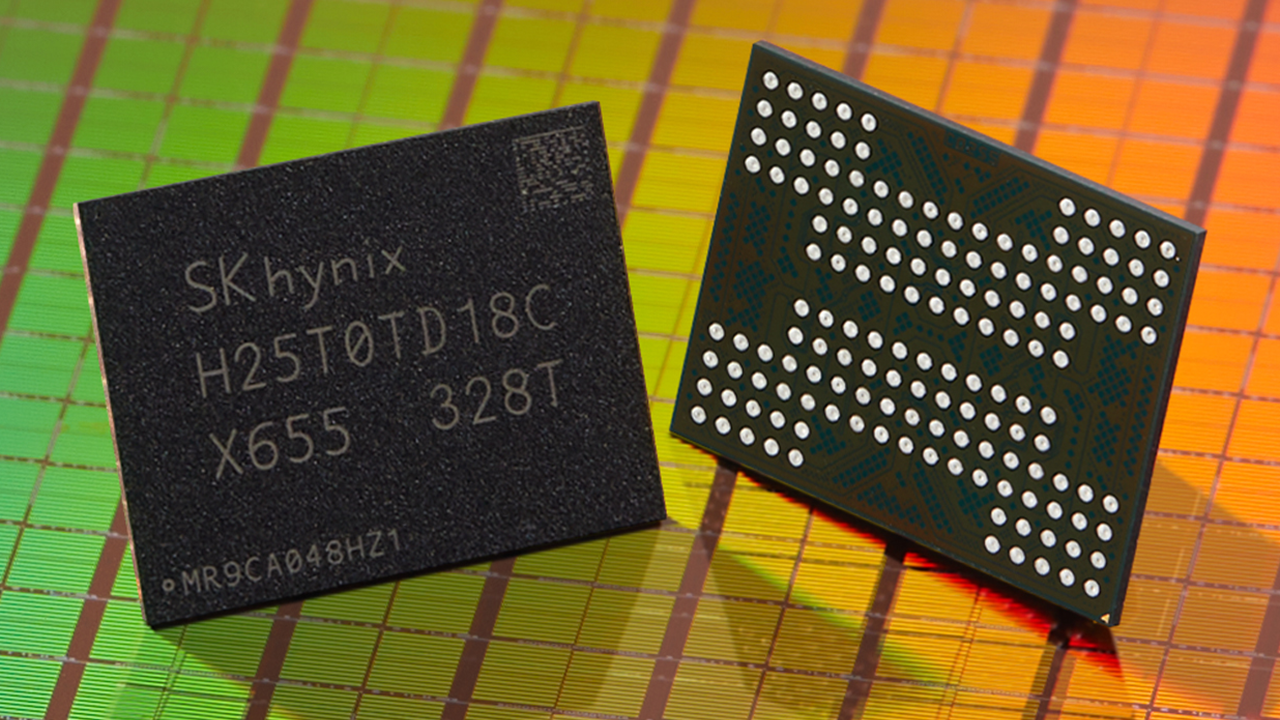
💡AI clusters need reliable high-end SSDs—this report signals possible changes in capacity and supplier strategy.
⚡ 30-Second TL;DR
What Changed
A second phase of SK hynix's China fab expansion could raise local production capacity by 50%.
Why It Matters
Additional SSD capacity could improve supply availability for AI data centers, although the China-based expansion may remain exposed to geopolitical and export-control risks. A Solidigm IPO could also provide greater visibility into the economics of enterprise SSDs.
What To Do Next
Add SK hynix and Solidigm enterprise SSDs to your next AI-storage benchmark, measuring latency, endurance, throughput, and supply lead times.
Key Points
- •A second phase of SK hynix's China fab expansion could raise local production capacity by 50%.
- •The expansion targets high-end data-center SSD demand, a critical storage segment for AI workloads.
- •SK hynix is reportedly weighing a NASDAQ IPO for its Solidigm business.
🧠 Deep Insight
AI-generated analysis for this event.
🔑 Enhanced Key Takeaways
- •SK hynix's Dalian facility, originally acquired from Intel's NAND and SSD business, serves as the primary hub for the company's enterprise SSD production in China.
- •The potential Solidigm IPO is viewed by analysts as a strategy to deleverage SK hynix's balance sheet following the massive capital expenditure required for HBM (High Bandwidth Memory) capacity expansion.
- •Solidigm has increasingly focused on high-capacity QLC (Quad-Level Cell) NAND technology, positioning itself as a leader in replacing traditional HDDs in hyperscale data centers.
- •The expansion in China faces complex geopolitical headwinds, requiring SK hynix to navigate US export controls regarding advanced semiconductor manufacturing equipment.
- •Solidigm's market strategy emphasizes 'AI-optimized' storage solutions, specifically targeting the massive data throughput requirements of large language model (LLM) training and inference.
📊 Competitor Analysis▸ Show
| Feature | SK hynix/Solidigm | Samsung Electronics | Micron Technology | Western Digital |
|---|---|---|---|---|
| Primary Focus | High-Capacity QLC/Enterprise SSD | Vertical Integration/Performance | HBM & Enterprise NAND | HDD/SSD Hybrid Portfolio |
| Key Advantage | Cost-per-TB (QLC leadership) | Manufacturing Scale | DRAM/NAND Synergy | Broad Market Reach |
| AI Positioning | High-density storage for LLMs | Performance-focused NVMe | Data center efficiency | Edge-to-Cloud storage |
🛠️ Technical Deep Dive
- Solidigm utilizes Floating Gate NAND technology, a legacy from the Intel acquisition, which differs from the Charge Trap Flash (CTF) used by many competitors.
- The company's D5-P5336 series represents a significant technical milestone, offering up to 61.44TB in a single E1.L form factor.
- Implementation focuses on maximizing IOPS per watt, specifically optimizing firmware for sequential read-heavy workloads typical of AI data lakes.
- The expansion in Dalian involves transitioning to more advanced 176-layer and 232-layer NAND nodes to maintain cost competitiveness.
🔮 Future ImplicationsAI analysis grounded in cited sources
⏳ Timeline
Weekly AI Recap
Read this week's curated digest of top AI events →
👉Related Updates
AI-curated news aggregator. All content rights belong to original publishers.
Original source: Tom's Hardware ↗