Seres faces massive losses amid Huawei ecosystem expansion
💡Understand the financial risks of AI-driven automotive partnerships and the impact of aggressive R&D accounting.
⚡ 30-Second TL;DR
What Changed
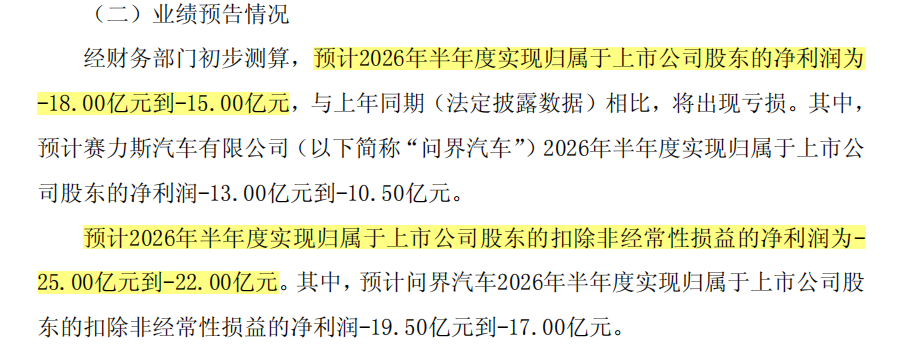
2026 H1 net loss projected between 1.5-1.8 billion RMB.
Why It Matters
The financial instability of Seres highlights the risks of 'black-box' partnerships with tech giants where hardware-software integration is outsourced. It serves as a cautionary tale for manufacturers relying on a single platform partner.
What To Do Next
Analyze the financial health and R&D capitalization ratios of your hardware-AI integration partners to assess long-term project viability.
Key Points
- •2026 H1 net loss projected between 1.5-1.8 billion RMB.
- •High R&D capitalization (4.56 billion RMB in 2025) creates long-term impairment risks.
- •Huawei's strategy to partner with more automakers dilutes Seres' unique market position.
- •Significant asset impairment losses on inventory and intangible assets impacting profitability.
🧠 Deep Insight
AI-generated analysis for this event.
🔑 Enhanced Key Takeaways
- •Seres' financial strain is exacerbated by the 'HIMA' (Harmony Intelligent Mobility Alliance) expansion, which now includes brands like Luxeed, Stelato, and Maextro, forcing Seres to compete for marketing resources within the same ecosystem.
- •The company's reliance on the AITO brand has led to a high customer acquisition cost, as Seres must balance Huawei's premium pricing strategy with the need to maintain volume in a saturated Chinese EV market.
- •Regulatory filings indicate that Seres has been aggressively amortizing R&D costs, which analysts warn may lead to 'profitability cliffs' if future sales growth fails to outpace the depreciation of these capitalized assets.
- •Supply chain integration with Huawei has reduced Seres' internal R&D autonomy, effectively transitioning the company into a high-volume manufacturing partner rather than a traditional automotive OEM with independent product roadmaps.
- •Recent shifts in Huawei's 'Smart Selection' business model have moved toward a revenue-sharing structure that prioritizes Huawei's software and component margins, leaving Seres with thinner per-unit profitability.
📊 Competitor Analysis▸ Show
| Feature/Model | Seres (AITO M9) | Li Auto (L9) | NIO (ES8) |
|---|---|---|---|
| Core Tech | Huawei ADS 3.0 / HarmonyOS | Li-AD / In-house OS | NAD / In-house OS |
| Pricing (RMB) | 469,800 - 569,800 | 409,800 - 459,800 | 498,000 - 598,000 |
| Drivetrain | EREV / BEV | EREV | BEV |
| Market Focus | Tech-integrated Luxury | Family-oriented Utility | Premium Service/Battery Swap |
🛠️ Technical Deep Dive
- Seres vehicles utilize the Huawei DriveONE powertrain system, which integrates the motor, controller, and reducer into a single unit to optimize energy density.
- The integration of Huawei ADS (Advanced Driving System) 3.0 relies on a fusion of LiDAR, millimeter-wave radar, and high-definition cameras, processed via Huawei's proprietary MDC (Mobile Data Center) computing platform.
- The chassis architecture incorporates the Tuling Intelligent Chassis, featuring active suspension and torque vectoring controlled by Huawei's iDVP (Intelligent Digital Vehicle Platform).
🔮 Future ImplicationsAI analysis grounded in cited sources
⏳ Timeline
Weekly AI Recap
Read this week's curated digest of top AI events →
👉Related Updates
AI-curated news aggregator. All content rights belong to original publishers.
Original source: 虎嗅 ↗