Securing Autonomous AI Agents in Development Workflows
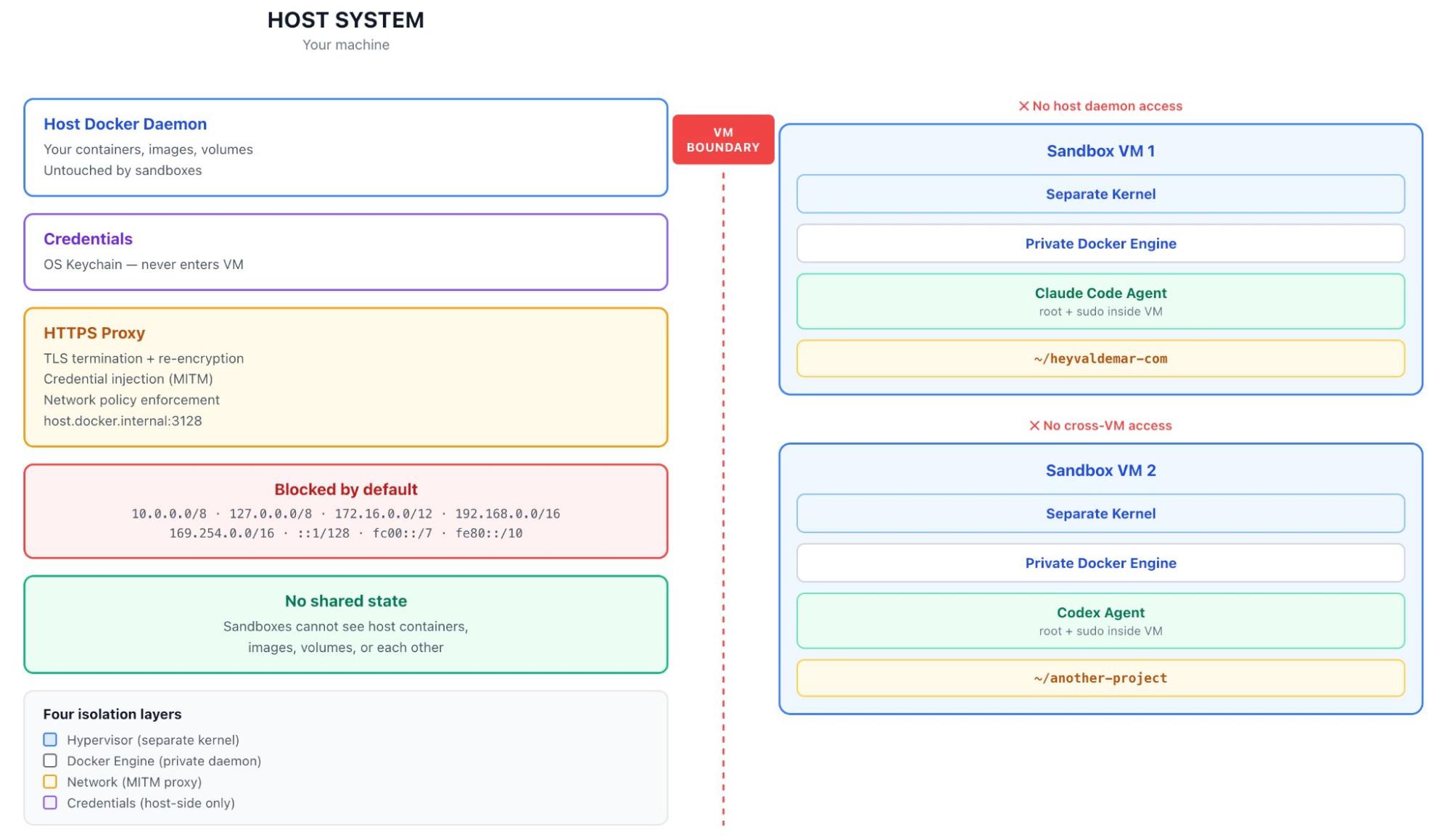
💡Learn how to safely integrate autonomous AI coding agents into your workflow without compromising system security.
⚡ 30-Second TL;DR
What Changed
Autonomous agents require clear boundaries and 'skills files' to prevent unauthorized changes.
Why It Matters
As AI agents gain more autonomy in production environments, developers must rethink sandbox isolation to prevent accidental or malicious code execution. This shift will likely lead to new security standards for AI-integrated development tools.
What To Do Next
Create a dedicated 'skills file' or configuration manifest for your AI coding agent to explicitly define restricted directories and sensitive deployment commands.
Key Points
- •Autonomous agents require clear boundaries and 'skills files' to prevent unauthorized changes.
- •Mass-migration tasks demonstrate the capability of agents to handle complex architectural refactoring.
- •Security in AI-driven development shifts from simple access control to managing untrusted autonomous workloads.
🧠 Deep Insight
Web-grounded analysis with 21 cited sources.
🔑 Enhanced Key Takeaways
- •Autonomous AI coding agents, including Claude Code, have been found to have critical vulnerabilities (e.g., CVE-2025-59536, CVE-2026-21852) that allow for remote code execution and API key theft, often triggered by simply cloning or opening untrusted projects with malicious configuration files.
- •Securing AI agents necessitates a shift towards runtime security, as traditional static analysis tools are insufficient to detect risks like dangerous system calls, unauthorized file access, or credential leakage that occur during an agent's autonomous execution.
- •New attack vectors specific to AI agents include prompt injection through embedded malicious instructions in code comments or documentation, and supply chain poisoning via hallucinated or compromised dependencies that agents might autonomously pull.
- •Docker has introduced "Docker AI Governance," a centralized control plane that enforces policies across network, filesystem, credentials, and Model Context Protocol (MCP) tool access, often leveraging isolated microVMs to provide deeper, non-negotiable security for AI agent behavior.
- •A significant portion of AI-generated code, with studies indicating up to 45%, contains security flaws, highlighting that while AI improves code generation speed, it does not inherently improve code security, and can even introduce new vulnerabilities like insecure cryptographic implementations or cross-site scripting.
📊 Competitor Analysis▸ Show
| Feature / Aspect | Claude Code | Cursor | Windsurf | Cline | Gemini CLI |
|---|---|---|---|---|---|
| Interface | Terminal-first workflow | Visual IDE (VS Code environment) | AI IDE (formerly Codeium) | Open source, terminal-based, VS Code plugin | Conversational, terminal-based |
| Autonomy Level | High, end-to-end autonomy | More developer direction required | Autonomous multi-file edits (Cascade mode) | Autonomous agent | Strong reasoning on large codebases |
| Model Flexibility | Anthropic models only | Supports Claude Sonnet as backend | AI native IDE | Open source, any model (BYOK) | Google's model ecosystem |
| Pricing | Usage-based, higher tiers $100-$200/mo | Free (limited), Pro: $20/mo, Business: $40/user/mo | Free tier, Pro: $15/mo, Teams: $30/user/mo | Free (you pay API provider directly) | (Not explicitly stated, but implies usage-based with Google Cloud) |
| Key Strengths | Terminal native, 200K token context, reads/edits/executes across codebase | Multi-file agent editing, VS Code ecosystem, visual diff review | Generous free tier, codebase indexing, Cascade mode | Open source, full cost control, large community, multi-agent | Connects coding tasks with Google Cloud services |
| Weaknesses/Trade-offs | Usage limits, Anthropic-only models, terminal-first learning curve | Requires more developer direction than Claude Code | Smaller community, tighter model integration | Requires own API key, daily API token costs can vary | (Not explicitly stated, but potentially less autonomy than Claude Code) |
🛠️ Technical Deep Dive
- Agent Loop: Autonomous AI coding agents operate on an "observe, plan, act, repeat" loop, continuously reading files, executing commands, and iterating based on outputs.
- Model Context Protocol (MCP): MCP is an open standard introduced by Anthropic (late 2024) that allows AI applications to connect to external tools and data sources. It provides a governed capability layer, handling server-side authentication, ensuring agents access only specific endpoints (limiting blast radius), and logging interactions in a central observability stack.
- Skills Files: These files provide "judgment" to the agent, instructing it on when and why to trigger specific actions, such as snapshots.
- Isolation Mechanisms: Docker utilizes micro virtual machines (MicroVMs) within its Docker Sandboxes to provide deeper, process-level isolation for AI agents, enforcing policies on filesystem and network access.
- Credential Management: Docker AI Governance includes a session-scoped credential model that limits what credentials an agent session can see and blocks exfiltration to unapproved destinations, reducing the attack surface.
🔮 Future ImplicationsAI analysis grounded in cited sources
⏳ Timeline
📎 Sources (21)
Factual claims are grounded in the sources below. Forward-looking analysis is AI-generated interpretation.
Weekly AI Recap
Read this week's curated digest of top AI events →
👉Related Updates


AI-curated news aggregator. All content rights belong to original publishers.
Original source: Docker Blog ↗