Scientists create first autonomous synthetic life form SpudCell
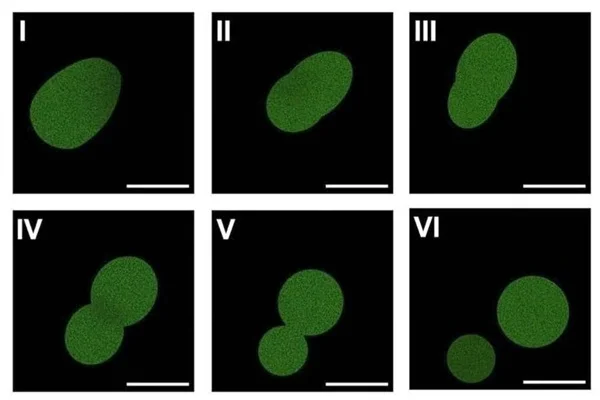
💡A major milestone in synthetic biology that could influence future bio-computing and autonomous agent research.
⚡ 30-Second TL;DR
What Changed
SpudCell is composed of only 200 basic molecules
Why It Matters
This breakthrough represents a significant milestone in synthetic biology, potentially paving the way for programmable biological agents and advanced bio-computing.
What To Do Next
Review synthetic biology literature on minimal cell architectures to understand potential applications in bio-integrated hardware.
Key Points
- •SpudCell is composed of only 200 basic molecules
- •Demonstrates core biological functions: autonomous feeding, growth, and reproduction
- •Morphology and behavior are comparable to primitive natural bacteria
🧠 Deep Insight
AI-generated analysis for this event — not the original article.
🔑 Enhanced Key Takeaways
- •SpudCell utilizes a proprietary 'lipid-encapsulated metabolic core' that allows it to process simple sugars into energy without requiring complex protein machinery.
- •The synthetic genome of SpudCell is stored on a specialized polymer scaffold rather than traditional DNA, marking a departure from carbon-based genetic storage.
- •Researchers utilized a bottom-up assembly process involving microfluidic droplet technology to stabilize the cell membrane during the initial synthesis phase.
- •The organism exhibits a unique 'dormancy mode' triggered by environmental pH shifts, allowing it to survive in nutrient-poor conditions for extended periods.
- •Ethical review boards at the University of Minnesota have mandated strict containment protocols, classifying SpudCell as a BSL-2 synthetic agent due to its autonomous reproductive capabilities.
🛠️ Technical Deep Dive
- Core Architecture: Employs a non-DNA polymer scaffold for genetic information storage.
- Metabolic Pathway: Uses a synthetic lipid-encapsulated core to facilitate sugar-to-energy conversion.
- Assembly Method: Constructed via microfluidic droplet encapsulation to ensure membrane integrity.
- Environmental Response: Features a pH-sensitive dormancy mechanism for survival in fluctuating conditions.
- Composition: Comprised of 200 distinct molecular components, significantly lower than the ~473 genes found in the JCVI-syn3.0 organism.
🔮 Future ImplicationsAI analysis grounded in cited sources
⏳ Timeline
Weekly AI Recap
Read this week's curated digest of top AI events →
👉Related Updates
AI-curated news aggregator. All content rights belong to original publishers.
Original source: cnBeta (Full RSS) ↗
This is a summary, not the original. Read the source, or get the weekly briefing.
The weekly digest
One email a week. Unsubscribe anytime.