🐯虎嗅•Stalecollected in 18m
Samsung Pivots China to AI Chips Export
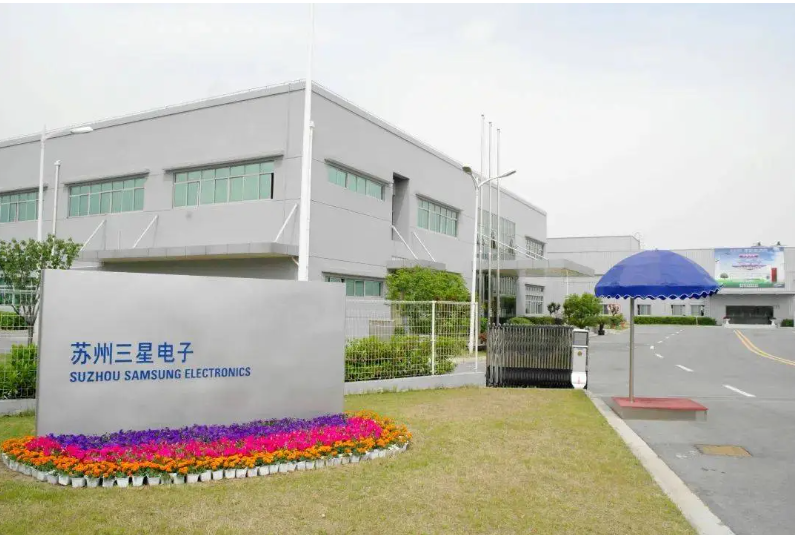
💡Samsung dumps China sales, doubles AI chip output from there
⚡ 30-Second TL;DR
What Changed
2025 China appliances loss 9.4B RMB, market share <1%
Why It Matters
Reinforces China's role as global AI hardware hub despite consumer shifts. Ensures stable supply of NAND/MLCC for AI data centers and EVs.
What To Do Next
Benchmark Samsung Xi'an NAND for AI training storage needs, 40% global supply.
Who should care:Enterprise & Security Teams
Key Points
- •2025 China appliances loss 9.4B RMB, market share <1%
- •Suzhou factory focuses export AI icebox with Bixby, profit x9
- •Xi'an NAND investment +67.5% for 3D/AI storage, 40% global output
- •Tianjin MLCC capacity +30% for EV chips
🧠 Deep Insight
AI-generated analysis for this event.
🔑 Enhanced Key Takeaways
- •Samsung's strategic pivot aligns with the 'China Plus One' manufacturing diversification strategy, shifting from localized consumer goods production to high-value-add component manufacturing for global supply chains.
- •The Suzhou factory transition leverages Samsung's 'SmartThings' ecosystem integration, moving beyond simple appliance manufacturing to producing IoT-enabled edge computing devices that utilize on-device AI for energy management.
- •The expansion of the Xi'an NAND facility is specifically optimized for high-bandwidth memory (HBM) packaging requirements, addressing the critical supply bottleneck for AI training clusters in the Asia-Pacific region.
📊 Competitor Analysis▸ Show
| Feature | Samsung (Xi'an/Tianjin) | SK Hynix (Dalian/Wuxi) | Micron (Xi'an) |
|---|---|---|---|
| Primary Focus | NAND/MLCC/AI-IoT | NAND/DRAM | NAND/Packaging |
| China Strategy | High-end AI/EV components | Legacy/Advanced NAND | Packaging/Testing |
| Market Position | Diversified (Chips + IoT) | Memory-centric | Memory-centric |
🛠️ Technical Deep Dive
- NAND Architecture: The Xi'an facility is transitioning to 9th-generation V-NAND (300+ layers), utilizing double-stacking technology to increase bit density for AI data center storage.
- MLCC Specifications: Tianjin production is shifting toward high-capacitance, high-voltage MLCCs (Multi-Layer Ceramic Capacitors) specifically designed for automotive powertrain and ADAS (Advanced Driver Assistance Systems) reliability standards.
- Edge AI Integration: The new AI-enabled appliances utilize Samsung's 'Exynos' edge AI processors, enabling local neural network inference for predictive maintenance and power optimization without cloud dependency.
🔮 Future ImplicationsAI analysis grounded in cited sources
Samsung will achieve a 15% reduction in operational overhead by 2027.
Exiting the low-margin, high-logistics consumer appliance market in China allows for the consolidation of supply chain resources into high-margin semiconductor manufacturing.
The Xi'an facility will become the primary global hub for Samsung's AI-specific storage solutions.
The massive scale of the Xi'an NAND expansion, combined with the proximity to regional AI data center growth, creates a logistical advantage for high-volume AI memory supply.
⏳ Timeline
2014-05
Samsung officially opens the first phase of the Xi'an NAND flash memory plant.
2018-03
Samsung announces a $2.4 billion investment to expand the Xi'an NAND production facility.
2021-12
Samsung completes the acquisition of the Xi'an NAND plant's second phase, solidifying its position in China.
2024-09
Samsung begins restructuring its China consumer electronics division due to declining market share.
2025-11
Samsung announces the repurposing of the Suzhou appliance factory for AI-integrated export products.
📰
Weekly AI Recap
Read this week's curated digest of top AI events →
👉Related Updates

AI-curated news aggregator. All content rights belong to original publishers.
Original source: 虎嗅 ↗