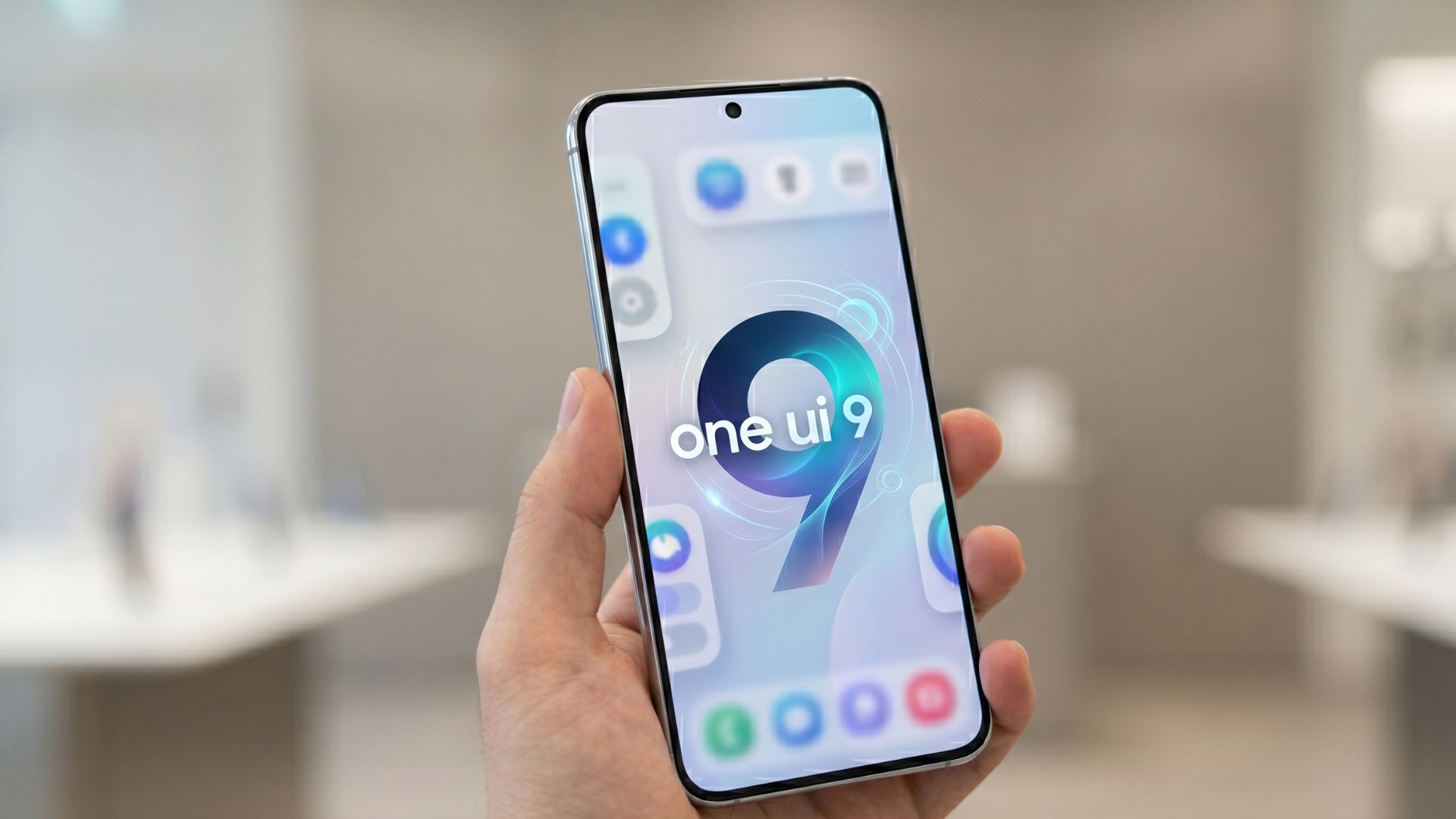
Samsung Launches One UI 9 Beta Based on Android 17
💡Stay ahead of mobile OS changes to ensure your AI applications remain compatible with the latest Android 17 features.
⚡ 30-Second TL;DR
What Changed
One UI 9 beta program is now officially live for Galaxy users.
Why It Matters
This update signals the integration of the latest Android OS features into Samsung's ecosystem, which often influences how AI-driven system features are deployed on mobile hardware.
What To Do Next
Check the Samsung Members app to see if your specific Galaxy model is eligible for the One UI 9 beta enrollment.
Key Points
- •One UI 9 beta program is now officially live for Galaxy users.
- •The software is built on the foundation of Android 17.
- •Samsung is rolling out the update to specific Galaxy models in phases.
🧠 Deep Insight
Web-grounded analysis with 16 cited sources.
🔑 Enhanced Key Takeaways
- •The One UI 9 beta program is initially available for users of the Samsung Galaxy S26 series in select markets, including the US, UK, Korea, and Germany, with plans to expand to India and Poland by May 26.
- •Android 17, internally codenamed 'Cinnamon Bun,' reached Platform Stability with Beta 3 in March 2026 and saw its Beta 4 release in April 2026, signifying a near-final development stage for app compatibility testing.
- •One UI 9 introduces new creative functionalities within Samsung Notes, such as decorative borders and additional pen thicknesses, and integrates a 'Creative Studio' directly into the Contacts app for personalized profile creation.
- •Both Android 17 and One UI 9 place a strong emphasis on enhanced security, with Android 17 adding
ACCESS_LOCAL_NETWORKpermissions and Post-Quantum Cryptography (PQC) APK signing, while One UI 9 features a 'Manage unknown apps' section and proactive warnings against risky installations. - •A significant focus for both the underlying Android 17 and Samsung's One UI 9 is the deeper integration of AI, including Android 17's 'Gemini Intelligence' for multi-step tasks and AI-powered custom widgets, and One UI 9's promise of advanced AI features for upcoming Galaxy flagship devices.
📊 Competitor Analysis▸ Show
| Feature Category | Samsung One UI 9 (based on Android 17) | Google Pixel UI (based on Android 17) |
|---|---|---|
| AI Integration | New creative tools in Samsung Notes, Creative Studio in Contacts, advanced AI features for upcoming flagships. | Gemini Intelligence for multi-step tasks, AI-powered custom widgets. |
| User Interface | Redesigned Quick Panel with flexible arrangement and resizing for brightness, volume, media player. | Tweaked UI design with a frosted glass look, improved split screen interface, Bubbles for any app. |
| Security & Privacy | 'Manage unknown apps' feature, warnings for risky app installations, blocking app execution/installation. | Local Network Access permission, SMS OTP protection, Post-Quantum Cryptography in Android Keystore. |
| Accessibility | Adjustable mouse key speed, merged TalkBack functions, Text Highlighting for readability. | Dedicated Assistant volume stream. |
| Productivity | Samsung DeX enhancements (easier app window movement), new 'Tape' feature in Samsung Notes, 'Network management for concentration' to block internet access for distracting apps. | Handoff API for cross-device continuity, per-app dark theme, separate WiFi/mobile data toggles. |
🛠️ Technical Deep Dive
- Android 17 introduces the
ACCESS_LOCAL_NETWORKpermission, part of theNEARBY_DEVICESgroup, to protect local area network communication. - A new intent,
ACTION_TIMEZONE_OFFSET_CHANGED, is triggered specifically on time zone offset changes, such as Daylight Saving Time transitions. - Applications targeting Android 17 must declare the
FEATURE_NEURAL_PROCESSING_UNIThardware feature to directly access the Neural Processing Unit (NPU). - The operating system updates its internationalization libraries to ICU 78, providing support for Unicode 17.
- Android 17 enforces restrictions on background audio interactions, including playback, audio focus requests, and volume change APIs.
- New
ProfilingManagertriggers are added for debugging performance issues, such asTRIGGER_TYPE_COLD_START(during app cold start),TRIGGER_TYPE_OOM(on OutOfMemoryError), andTRIGGER_TYPE_KILL_EXCESSIVE_CPU_USAGE(when an app is killed due to excessive CPU usage). - Native support for Versatile Video Coding (VVC/H.266) is included, offering superior compression for high-resolution 8K video.
- Apps targeting Android 17 (API 37) are now required to be resizable, enhancing support for large-screen devices like tablets and foldables.
- Android Keystore gains support for Post-Quantum Cryptography (PQC), specifically the NIST-standardized ML-DSA (Module-Lattice-Based Digital Signature Algorithm), with ML-DSA-65 and ML-DSA-87 variants available.
- A new 'Handoff' API in Android 17 facilitates cross-device continuity, allowing users to seamlessly transition app activities between different Android devices.
- One UI 9 includes a 'Network management for concentration' feature within Connectivity Labs, enabling users to block internet access for distracting applications at the network level, complete with PIN protection and scheduled downtime controls.
🔮 Future ImplicationsAI analysis grounded in cited sources
⏳ Timeline
📎 Sources (16)
Factual claims are grounded in the sources below. Forward-looking analysis is AI-generated interpretation.
- Google Search Source
- Google Search Source
- Google Search Source
- Google Search Source
- Google Search Source
- Google Search Source
- Google Search Source
- Google Search Source
- Google Search Source
- Google Search Source
- Google Search Source
- Google Search Source
- Google Search Source
- Google Search Source
- Google Search Source
- Google Search Source
Weekly AI Recap
Read this week's curated digest of top AI events →
👉Related Updates
AI-curated news aggregator. All content rights belong to original publishers.
Original source: TechCabal ↗