Samsung investigating red screen patches on Galaxy S26 Ultra
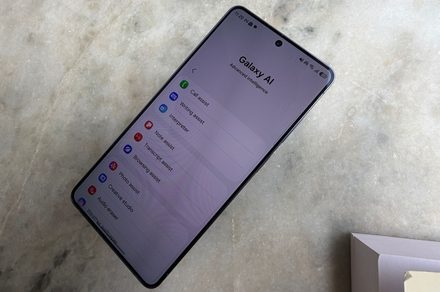
💡Hardware defects in flagship devices can impact how users interact with AI-generated visual content.
⚡ 30-Second TL;DR
What Changed
Users reporting reddish patches on S26 Ultra screens
Why It Matters
Hardware-level display issues can complicate UI/UX design for AI-driven visual applications that rely on color accuracy.
What To Do Next
If you are developing vision-based AI apps, ensure your UI testing includes diverse display hardware to avoid color-dependent usability issues.
Key Points
- •Users reporting reddish patches on S26 Ultra screens
- •Privacy Display panel identified as a potential cause
- •Samsung currently investigating the hardware defect
🧠 Deep Insight
AI-generated analysis for this event — not the original article.
🔑 Enhanced Key Takeaways
- •The 'Privacy Display' technology utilizes a micro-louver layer integrated into the OLED stack to restrict viewing angles, which is suspected of causing uneven light refraction leading to the red tint.
- •Initial reports suggest the discoloration is most prominent when the device is set to low brightness levels or when using the 'Extra Dim' accessibility feature.
- •Samsung's internal quality control teams are reportedly analyzing whether the issue stems from a manufacturing defect in the adhesive bonding the privacy filter to the display panel.
- •Affected users have noted that the red patches are not static and sometimes shift or fade when the screen refresh rate changes from 120Hz to lower power-saving modes.
- •Samsung has issued a temporary software patch in select regions that adjusts the sub-pixel voltage to mask the discoloration, though this has been criticized for slightly reducing overall color accuracy.
📊 Competitor Analysis▸ Show
| Feature | Samsung Galaxy S26 Ultra | Apple iPhone 18 Pro Max | Google Pixel 11 Pro |
|---|---|---|---|
| Display Tech | Privacy OLED (Micro-louver) | Super Retina XDR (Ceramic Shield) | Actua OLED (LTPO) |
| Peak Brightness | 3200 nits | 3000 nits | 2800 nits |
| Privacy Feature | Hardware-level Privacy Panel | Software-based Privacy Screen | None (Software only) |
| Starting Price | $1,299 | $1,199 | $1,099 |
🛠️ Technical Deep Dive
- The Privacy Display panel employs a proprietary micro-louver film layer embedded between the polarizer and the cover glass.
- The red patches are theorized to be caused by 'Mura' effect, where non-uniformity in the micro-louver alignment creates localized light leakage.
- The S26 Ultra uses a tandem OLED architecture, which complicates the calibration of the privacy filter layer.
- Diagnostic logs from affected units indicate a mismatch in the DC dimming voltage supplied to the affected pixel clusters.
🔮 Future ImplicationsAI analysis grounded in cited sources
⏳ Timeline
Weekly AI Recap
Read this week's curated digest of top AI events →
👉Related Updates
AI-curated news aggregator. All content rights belong to original publishers.
Original source: Digital Trends ↗
This is a summary, not the original. Read the source, or get the weekly briefing.
The weekly digest
One email a week. Unsubscribe anytime.