Samsung developing patch for Galaxy S26 Ultra screen tint
💡Hardware-software integration issues in flagship devices provide valuable lessons for mobile AI and display engineering.
⚡ 30-Second TL;DR
What Changed
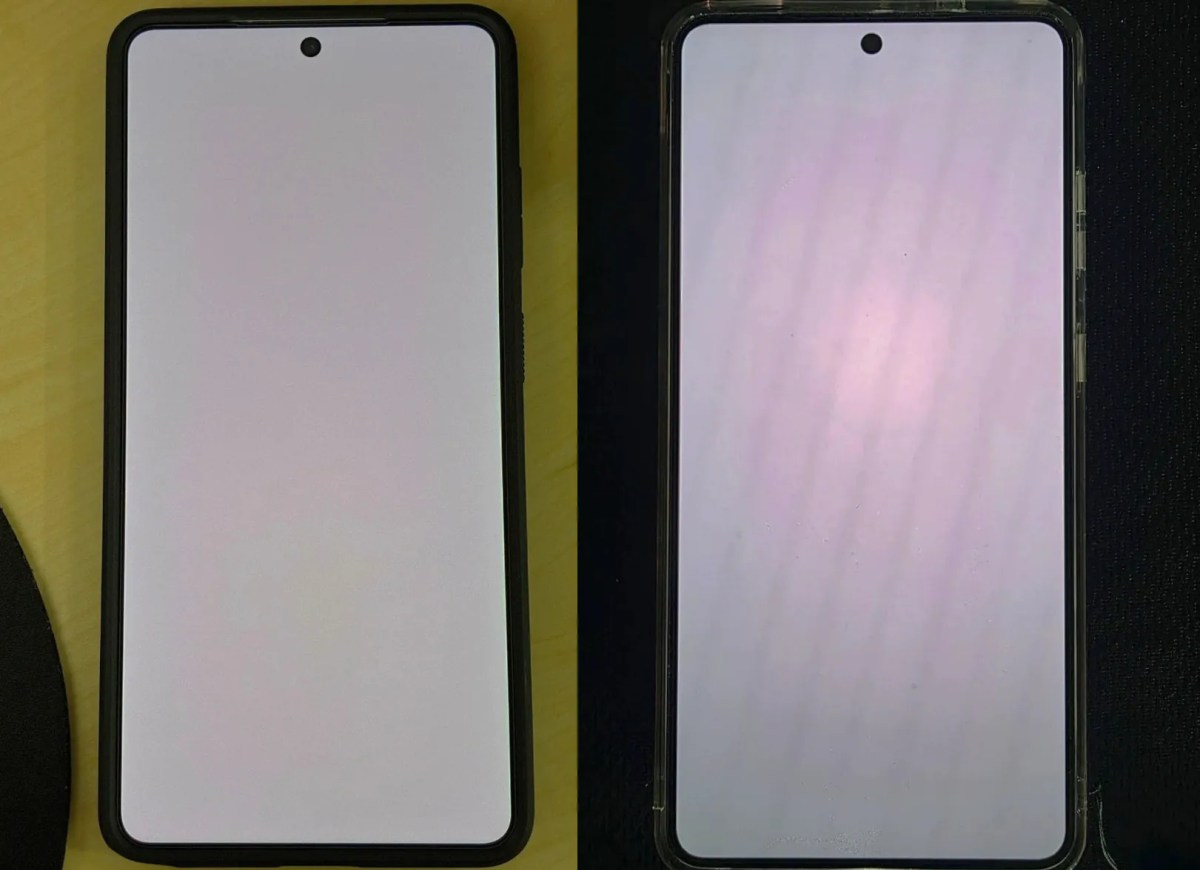
Samsung confirmed a software fix is in development for the red tint issue
Why It Matters
This highlights the challenges of integrating new display technologies like Privacy Display OLED, potentially impacting consumer trust in premium hardware.
What To Do Next
If you are developing display-related software, ensure rigorous color gamut testing across new OLED hardware revisions.
Key Points
- •Samsung confirmed a software fix is in development for the red tint issue
- •Users reported abnormal red color tones on the Galaxy S26 Ultra display
- •Speculation points to potential hardware issues with the new Privacy Display OLED
🧠 Deep Insight
AI-generated analysis for this event — not the original article.
🔑 Enhanced Key Takeaways
- •The 'Privacy Display' technology utilizes a specialized micro-louver layer integrated into the OLED stack to restrict viewing angles, which is suspected of causing color shift at off-axis positions.
- •Internal Samsung documentation suggests the red tint is most pronounced when the display brightness is set below 20%, indicating a potential calibration error in the low-luminance dimming algorithm.
- •Early teardowns of the Galaxy S26 Ultra reveal that the display panel is sourced from a new generation of Samsung Display's 'M16' OLED material set, which may have different voltage requirements than previous iterations.
- •Samsung's software patch is expected to include a revised color lookup table (LUT) specifically targeting the gamma curve adjustments for the Privacy Display layer.
- •Affected users have noted that disabling the 'Adaptive Color Tone' feature in settings temporarily mitigates the red tint, suggesting a conflict between the ambient light sensor and the new display hardware.
📊 Competitor Analysis▸ Show
| Feature | Samsung Galaxy S26 Ultra | Apple iPhone 18 Pro Max | Google Pixel 11 Pro |
|---|---|---|---|
| Display Tech | Privacy OLED (M16) | Super Retina XDR (LTPO) | Actua OLED (G6) |
| Peak Brightness | 3200 nits | 3000 nits | 2800 nits |
| Privacy Feature | Hardware-level micro-louver | Software-based privacy filter | None (Software only) |
| Starting Price | $1,299 | $1,199 | $1,099 |
🛠️ Technical Deep Dive
- The Privacy Display OLED utilizes a physical micro-louver film bonded to the top of the OLED encapsulation layer to physically block light emission beyond a 30-degree viewing angle.
- The red tint phenomenon is technically classified as 'angular color shift,' where the refractive index of the micro-louver layer alters the wavelength of light emitted by red sub-pixels at specific angles.
- The M16 material set introduces a new blue fluorescent emitter that changes the overall white point balance, requiring more precise sub-pixel compensation compared to the M15 set used in the S25 series.
- The upcoming patch will likely modify the Pulse Width Modulation (PWM) frequency or the DC dimming voltage offsets to normalize the red sub-pixel output at low brightness levels.
🔮 Future ImplicationsAI analysis grounded in cited sources
⏳ Timeline
Weekly AI Recap
Read this week's curated digest of top AI events →
👉Related Updates
AI-curated news aggregator. All content rights belong to original publishers.
Original source: cnBeta (Full RSS) ↗
This is a summary, not the original. Read the source, or get the weekly briefing.
The weekly digest
One email a week. Unsubscribe anytime.