Salesforce Outlook Sparks AI Fears
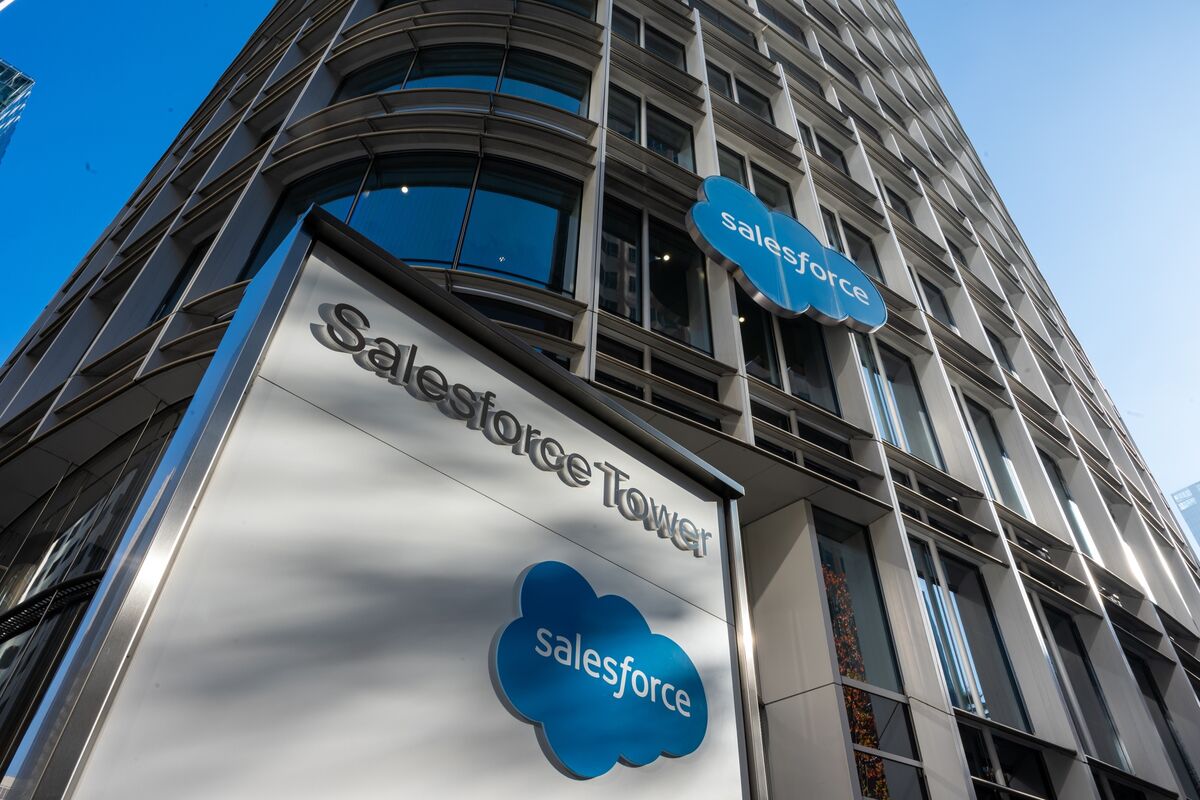
💡Salesforce's weak forecast reveals AI threats to legacy SaaS—critical for enterprise AI planning.
⚡ 30-Second TL;DR
What Changed
Lukewarm sales growth forecast for FY
Why It Matters
Signals potential weakness in Salesforce's AI strategy, pushing enterprises to consider agile AI-native alternatives for CRM needs. May accelerate market share shifts toward AI-first vendors.
What To Do Next
Benchmark Salesforce Einstein against Anthropic's enterprise APIs for CRM automation efficiency.
Key Points
- •Lukewarm sales growth forecast for FY
- •Heightens fears of AI competitor threats
- •Wall Street worries over Salesforce's AI lag
🧠 Deep Insight
Background and context from public sources — not the original article. 10 sources cited.
🔑 Enhanced Key Takeaways
- •Salesforce's Agentforce has faced real-world deployment challenges, including inconsistent AI behavior and lack of trust from enterprise users, requiring the addition of rule-based scripting layers (Agent Script) to enforce predictability[3].
- •Despite adoption headwinds, 54% of organizations are already deploying AI agents across the sales cycle, with high-performing sales teams 1.7x more likely to use AI agents than underperformers, creating a widening competitive gap[2].
- •Gartner projects agentic AI could drive approximately 30% of enterprise application software revenue by 2035 (surpassing $450 billion), but this requires robust data foundations—89% of data leaders cite strong data infrastructure as critical for AI success[1][6].
- •96% of IT leaders report that AI agent success depends on integration across systems, with API-driven architectures emerging as the unified foundation for multi-agent orchestration and governance[7].
📊 Competitor Analysis▸ Show
| Capability | Salesforce Agentforce | Microsoft Dynamics 365 | HubSpot Sales Hub |
|---|---|---|---|
| AI Agent Deployment | 54% adoption rate; requires Agent Script for consistency | Rapidly evolving integrations | Rapidly evolving integrations |
| Sales Productivity Gains | Research/content creation time reduced by 1/3 | Not specified in search results | Not specified in search results |
| Enterprise Maturity | Inconsistent behavior; trust issues reported | Emerging capability | Emerging capability |
| Integration Architecture | API-driven (96% of IT leaders prioritize) | Implied but not detailed | Implied but not detailed |
🛠️ Technical Deep Dive
- Agent Script Layer: Rule-based scripting mechanism added to Agentforce to enforce step-by-step logic and predictable AI behavior, shifting configuration responsibility to CIOs[3]
- Orchestrator Agents: Intermediary AI agents that coordinate fleets of specialist agents (inventory, billing, logistics), acting as personal AI assistants aligned to business preferences[4]
- Semantic Layer for Agent Collaboration: Common language protocol enabling AI agents to negotiate with external business agents on behalf of organizations[4]
- Data Foundation Requirements: Trusted, unified, and contextual data infrastructure required to unlock agentic AI value; 84% of technical leaders report needing data overhauls for AI strategies[6]
- Multi-Agent Integration: API-driven architectures serve as unified foundation for connecting, orchestrating, and governing multiple agents across enterprise systems[7]
🔮 Future ImplicationsAI analysis grounded in cited sources
⏳ Timeline
📎 Sources (10)
Factual claims are grounded in the sources below. Forward-looking analysis is AI-generated interpretation.
- a5corp.com — Top 3 AI Driven Salesforce Trends to Watch in 2026
- futurumgroup.com — AI Agents Take Center Stage Will Sales Teams That Automate Win in 2026
- salesforceben.com — What Salesforce Learnt About AI in 2025 and How 2026 Will Be Different
- salesforce.com — AI Trends for 2026
- salesforce.com — Strategic Growth Priorities for Agentic Enterprise 2026
- salesforce.com — Data Analytics Trends 2026
- salesforce.com — Connectivity Report Announcement 2026
- businessinsider.com — Software Selloff Salesforce Snowflake Benioff Anthropic Stock Price 2026 2
- salesforce.com — State of Marketing 2026
- admin.salesforce.com — 2026 Roadmap for Salesforce Admins AI Agentforce and Emerging Trends Podcast
Weekly AI Recap
Read this week's curated digest of top AI events →
👉Related Updates

AI-curated news aggregator. All content rights belong to original publishers.
Original source: Bloomberg Technology ↗
This is a summary, not the original. Read the source, or get the weekly briefing.
Weekly AI briefing
One email a week. Unsubscribe anytime.