Russian spies targeting routers with default credentials
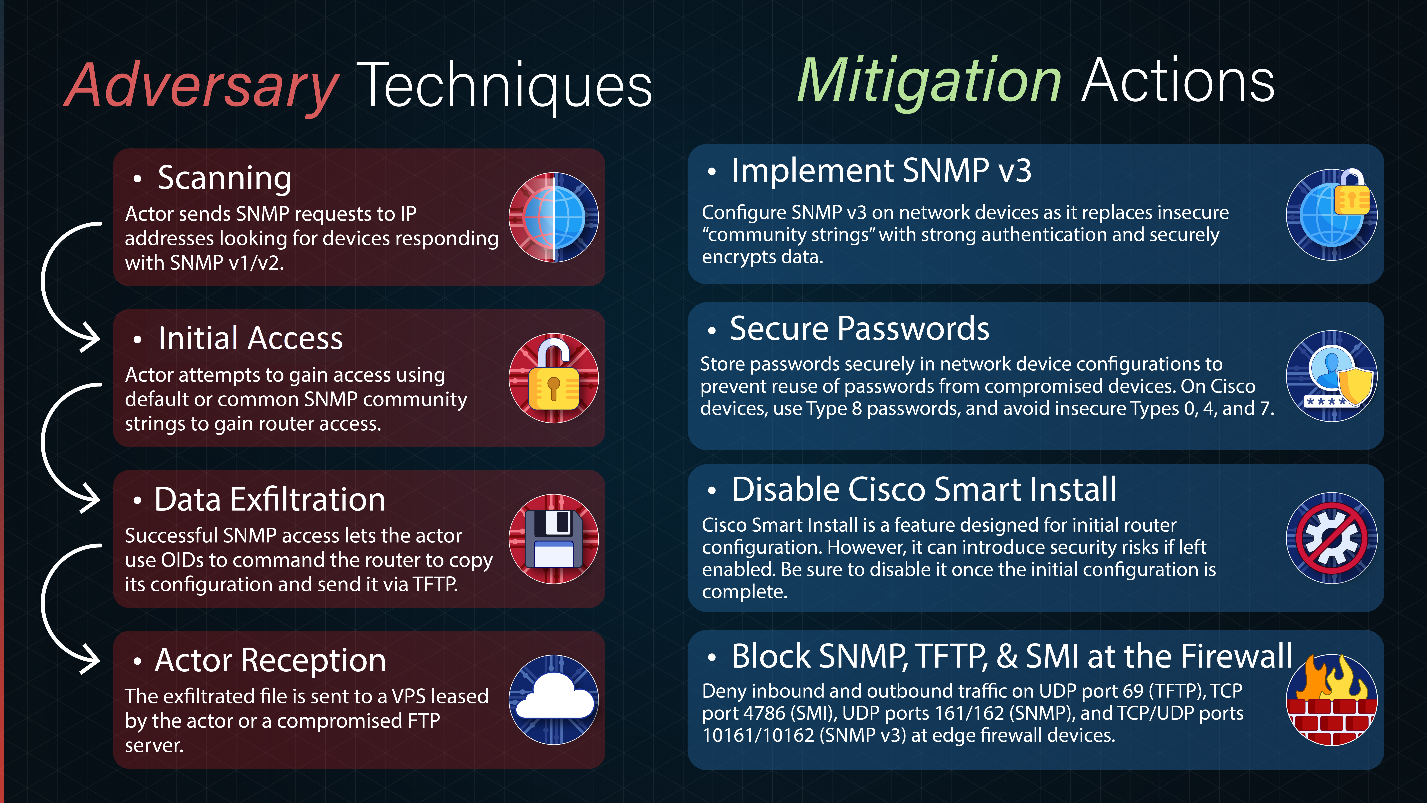
💡Learn how legacy protocol vulnerabilities are being exploited to compromise network infrastructure.
⚡ 30-Second TL;DR
What Changed
FSB hackers are targeting routers with legacy protocols
Why It Matters
This highlights critical infrastructure vulnerabilities that could lead to large-scale data interception or botnet recruitment. AI-driven network monitoring tools must prioritize identifying legacy protocol usage.
What To Do Next
Audit your infrastructure for any devices using default credentials or legacy protocols like Telnet and disable them immediately.
Key Points
- •FSB hackers are targeting routers with legacy protocols
- •Default credentials remain a primary attack vector
- •Attackers are harvesting configuration files for further exploitation
🧠 Deep Insight
AI-generated analysis for this event.
🔑 Enhanced Key Takeaways
- •The campaign has been linked to the threat actor group tracked as APT28 (also known as Fancy Bear), which operates under the Russian GRU/FSB intelligence apparatus.
- •Attackers are specifically exploiting vulnerabilities in Small Office/Home Office (SOHO) routers, including models from Ubiquiti, MikroTik, and Cisco, by leveraging known CVEs alongside credential stuffing.
- •The harvested configuration files often contain sensitive information such as VPN credentials, internal network topology, and administrative passwords that facilitate lateral movement.
- •Security researchers have observed the use of custom-built modular malware, such as 'ZuoRAT' or similar variants, to maintain persistence on compromised edge devices.
- •The operation utilizes a distributed network of compromised IoT devices to obfuscate the origin of the scanning traffic, making attribution and blocking more difficult for network defenders.
🛠️ Technical Deep Dive
- Attackers utilize automated scanning scripts to identify open ports (typically 80, 443, 22, and 8080) on public-facing interfaces.
- The exploitation process involves brute-forcing the web management interface or SSH service using lists of common default credentials (e.g., admin/admin, root/password).
- Once access is gained, attackers execute shell commands to download configuration files (often stored in /etc/config or similar directories) via TFTP or HTTP.
- Persistence is achieved by modifying startup scripts or injecting malicious firmware updates that survive device reboots.
- The malware often employs encrypted C2 (Command and Control) communication channels to exfiltrate data while evading signature-based intrusion detection systems.
🔮 Future ImplicationsAI analysis grounded in cited sources
⏳ Timeline
Weekly AI Recap
Read this week's curated digest of top AI events →
👉Related Updates

AI-curated news aggregator. All content rights belong to original publishers.
Original source: iTNews Australia ↗