Russia to address long-term ISS structural cracks
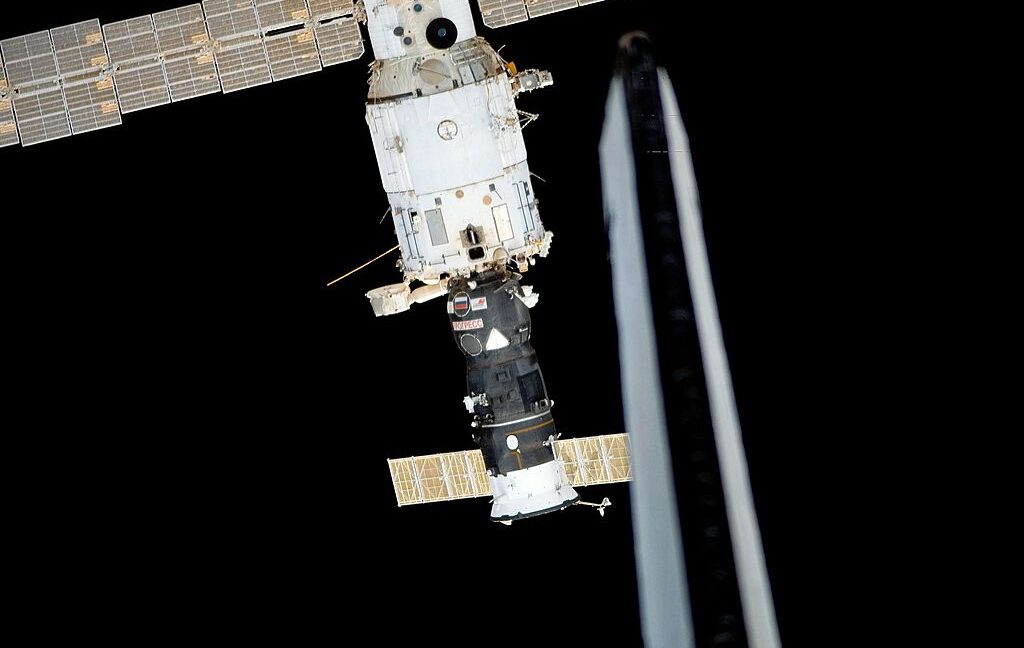
💡Critical infrastructure maintenance on the ISS impacts the future of space-based AI research and hardware deployment.
⚡ 30-Second TL;DR
What Changed
NASA and Roscosmos are coordinating to repair persistent cracks on the ISS.
Why It Matters
The resolution of these structural issues is vital for the continued operation of the ISS, which serves as a primary testbed for space-based robotics and remote sensing AI experiments.
What To Do Next
Monitor NASA's public technical briefings for updates on orbital structural maintenance protocols if you are developing hardware for space-based AI applications.
Key Points
- •NASA and Roscosmos are coordinating to repair persistent cracks on the ISS.
- •The issue has been a long-standing point of contention between the two agencies.
- •Structural integrity of the station remains a critical safety priority for orbital operations.
🧠 Deep Insight
Background and context from public sources — not the original article. 21 sources cited.
🔑 Enhanced Key Takeaways
- •The structural cracks are primarily located in the Russian Zvezda service module's transfer tunnel (PrK) and the Zarya module, with Zvezda leaks ongoing since 2019.
- •The leak rate in the Zvezda module increased to two pounds per day by June 2026, having previously reached 3.7 pounds per day in April 2024.
- •A recent repair attempt in June 2026 by Roscosmos, which involved considering cutting a bracket, prompted NASA to direct astronauts to a 'safe haven' in a SpaceX Dragon spacecraft due to potential structural risks, though the repair was subsequently paused for further assessment.
- •NASA has classified the Zvezda leaks as a high-risk threat, potentially leading to 'catastrophic failure,' and has elevated the issue to the highest level of risk in its management system.
- •While Roscosmos attributes the cracks to high cyclic fatigue caused by micro-vibrations, NASA suggests a multi-causal origin, including pressure, mechanical stress, residual stress, material properties, and environmental exposures.
🛠️ Technical Deep Dive
- Affected Modules: The primary areas of concern are the Zvezda Service Module's transfer tunnel (PrK), which provides life support and living quarters, and the Zarya Module (Functional Cargo Block - FCB), the oldest ISS component used for storage.
- Nature of Cracks: Described as microscopic structural cracks, 'superficial fissures,' or 'scratches on the surface of the aluminum plate.'
- Leak Rates: The Zvezda module's leak rate escalated to approximately two pounds per day in June 2026, after previously reaching 3.7 pounds (1.7 kg) per day in April 2024, up from less than 1 pound (0.45 kg) per day when first detected in September 2019.
- Proposed Repair Methods: Roscosmos has utilized temporary and permanent sealants. A more extensive repair considered in June 2026 involved cutting a bracket for better access, a method NASA viewed as potentially high-risk.
- Suspected Causes: Roscosmos suggests high cyclic fatigue from micro-vibrations. NASA proposes a multi-causal explanation, including pressure, mechanical stress, residual stress, material properties, and environmental exposures. The ISS also endures extreme temperature fluctuations (-120°C to 120°C) and dynamic stresses from docking/undocking, contributing to structural wear.
- Structural Forces: The ISS is pressurized to about 1013 hPa (14.7 pounds per square inch), subjecting docking rings to substantial forces (approximately 385 kN or 86,500 lbs) from the internal atmosphere.
🔮 Future ImplicationsAI analysis grounded in cited sources
⏳ Timeline
📎 Sources (21)
Factual claims are grounded in the sources below. Forward-looking analysis is AI-generated interpretation.
- nasa.gov
- livescience.com
- wikipedia.org
- sciencedaily.com
- futurism.com
- reddit.com
- youtube.com
- youtube.com
- washingtonpost.com
- spaceanddefense.io
- space.com
- universetoday.com
- independent.co.uk
- the-independent.com
- businessinsider.com
- sciencefactionpodcast.com
- planetary.org
- stackexchange.com
- cbc.ca
- mexicobusiness.news
- wkyc.com
Weekly AI Recap
Read this week's curated digest of top AI events →
👉Related Updates
AI-curated news aggregator. All content rights belong to original publishers.
Original source: Ars Technica ↗
This is a summary, not the original. Read the source, or get the weekly briefing.
Weekly AI briefing
One email a week. Unsubscribe anytime.