Robots Install 100MW Solar in Mojave Desert
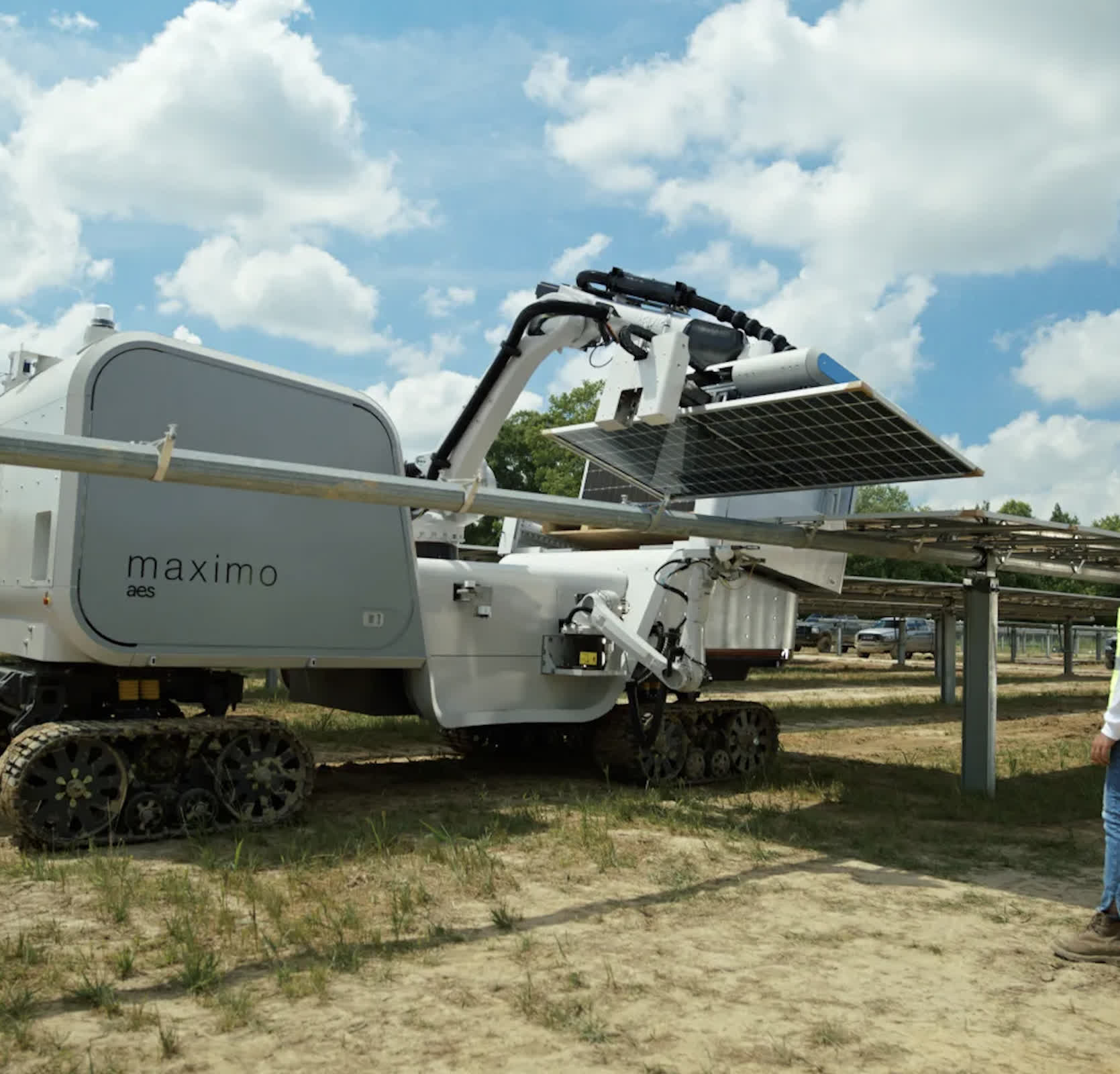
💡Embodied AI robots hit 100MW solar milestone—construction automation breakthrough.
⚡ 30-Second TL;DR
What Changed
Maximo robot fleet handles full 100MW PV installation
Why It Matters
Scales embodied AI robotics into renewable infrastructure, cutting labor costs and deployment times for massive energy projects globally.
What To Do Next
Demo Maximo's robot fleet via their site for embodied AI in construction prototypes.
Key Points
- •Maximo robot fleet handles full 100MW PV installation
- •Deployed at AES Bellefield complex in Mojave Desert
- •Largest robot application in utility-scale solar to date
- •Pioneers automation transition in solar construction
🧠 Deep Insight
AI-generated analysis for this event — not the original article.
🔑 Enhanced Key Takeaways
- •The Maximo deployment utilizes a proprietary 'autonomous solar construction' platform that integrates computer vision and precision robotics to handle module mounting, which historically required significant manual labor due to the weight and fragility of PV panels.
- •The Bellefield project, developed by AES, is notable for its scale, with the total site capacity reaching 500MW, meaning the Maximo robotic fleet was responsible for a 100MW subset of the overall installation, serving as a large-scale pilot for future site-wide automation.
- •This automation approach addresses critical labor shortages in the renewable energy sector, specifically targeting the reduction of 'repetitive strain' injuries and improving installation consistency in extreme environmental conditions like the Mojave Desert.
📊 Competitor Analysis▸ Show
| Feature | Maximo (Autonomous) | Traditional Manual Labor | Semi-Automated Racking Systems |
|---|---|---|---|
| Installation Speed | High (24/7 potential) | Moderate (Shift-based) | Moderate |
| Labor Cost | Low (High CapEx) | High (Variable) | Moderate |
| Precision | High (Sub-millimeter) | Variable | Moderate |
| Deployment Scale | Utility-scale | Any | Utility-scale |
🛠️ Technical Deep Dive
- •Robotic Platform: Maximo utilizes a modular, tracked vehicle architecture designed for uneven desert terrain.
- •Vision System: Employs multi-modal sensor fusion, including LiDAR and high-resolution stereoscopic cameras, for real-time panel alignment and structural mounting.
- •End-Effector: Features a specialized vacuum-suction gripper system capable of handling various PV module sizes while maintaining structural integrity.
- •Connectivity: Operates on a private 5G/LTE mesh network to coordinate fleet movement and synchronize installation tasks across the 100MW site.
🔮 Future ImplicationsAI analysis grounded in cited sources
⏳ Timeline
Weekly AI Recap
Read this week's curated digest of top AI events →
👉Related Updates



AI-curated news aggregator. All content rights belong to original publishers.
Original source: cnBeta (Full RSS) ↗
This is a summary, not the original. Read the source, or get the weekly briefing.
Weekly AI briefing
One email a week. Unsubscribe anytime.