Robot Open-Source Revolution Unfolds
💡Free open-source robot brains beat Google/Nvidia closed models—build now.
⚡ 30-Second TL;DR
What Changed
OpenVLA uses dual encoders (DINOv2 space + SigLIP semantics) + Llama2 to outperform larger RT-2-X.
Why It Matters
Lowers barriers for robot devs with free high-perf models/datasets, accelerates embodied AI vs closed moats, boosts China/global open ecosystem.
What To Do Next
Download OpenVLA weights and fine-tune on Open X-Embodiment for your robot tasks.
Key Points
- •OpenVLA uses dual encoders (DINOv2 space + SigLIP semantics) + Llama2 to outperform larger RT-2-X.
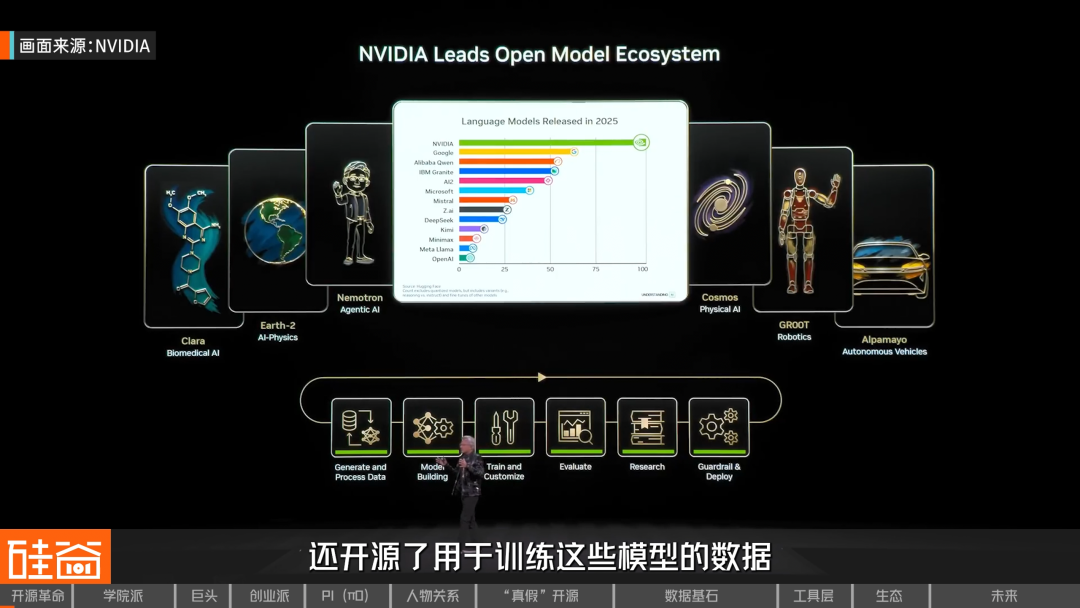
- •Nvidia GR00T N1.6 pairs VLM planning with diffusion actions, plus Omniverse/Isaac full ecosystem.
- •Xiaomi-Robotics-0 (47B) MoT splits brain/cerebellum for low-latency on consumer GPUs.
- •Octo enables zero-shot universal robot policies for broad adaptability.
🧠 Deep Insight
AI-generated analysis for this event — not the original article.
🔑 Enhanced Key Takeaways
- •The open-source shift is driven by the 'data bottleneck' in robotics, where companies are pivoting to synthetic data generation and simulation-to-real (Sim2Real) pipelines to overcome the scarcity of high-quality, diverse physical interaction datasets.
- •The emergence of 'foundation models for robotics' is shifting the industry standard from task-specific fine-tuning to general-purpose policy distillation, allowing models to generalize across different robot embodiments (e.g., manipulators vs. humanoids) without retraining.
- •Hardware-software co-design is becoming critical, as evidenced by Xiaomi's MoT architecture, which optimizes memory bandwidth and compute latency specifically for edge-deployed consumer-grade GPUs rather than relying solely on cloud-based inference.
📊 Competitor Analysis▸ Show
| Feature | OpenVLA (Academic) | Nvidia GR00T N1.6 | Xiaomi-Robotics-0 | Tesla (Closed) |
|---|---|---|---|---|
| Architecture | Dual-Encoder/Llama2 | VLM + Diffusion | 47B MoT (Brain/Cerebellum) | Proprietary Transformer |
| Ecosystem | Open/Research | Omniverse/Isaac | Consumer/Edge-focused | Vertical Integration |
| Benchmark | 7B beats RT-2-X | Industry Standard | Low-latency focus | Internal/Black-box |
🛠️ Technical Deep Dive
- •OpenVLA Architecture: Utilizes a 7B parameter Llama-2 backbone, leveraging DINOv2 for spatial feature extraction and SigLIP for semantic understanding, enabling high-resolution visual tokenization.
- •Xiaomi-Robotics-0 (MoT): Implements a Mixture-of-Tokens (MoT) architecture that decouples high-level reasoning (brain) from low-level motor control (cerebellum) to minimize inference latency.
- •Nvidia GR00T N1.6: Integrates a multimodal VLM for high-level task planning with a diffusion-based policy head for continuous action space generation, optimized for the Isaac Sim environment.
- •Octo Policy: Employs a transformer-based policy trained on a massive multi-robot dataset, utilizing a tokenized action space to enable zero-shot transfer across diverse robot morphologies.
🔮 Future ImplicationsAI analysis grounded in cited sources
⏳ Timeline
Weekly AI Recap
Read this week's curated digest of top AI events →
👉Related Updates



AI-curated news aggregator. All content rights belong to original publishers.
Original source: 虎嗅 ↗
This is a summary, not the original. Read the source, or get the weekly briefing.
Weekly AI briefing
One email a week. Unsubscribe anytime.