Ramble First, Prompt Later
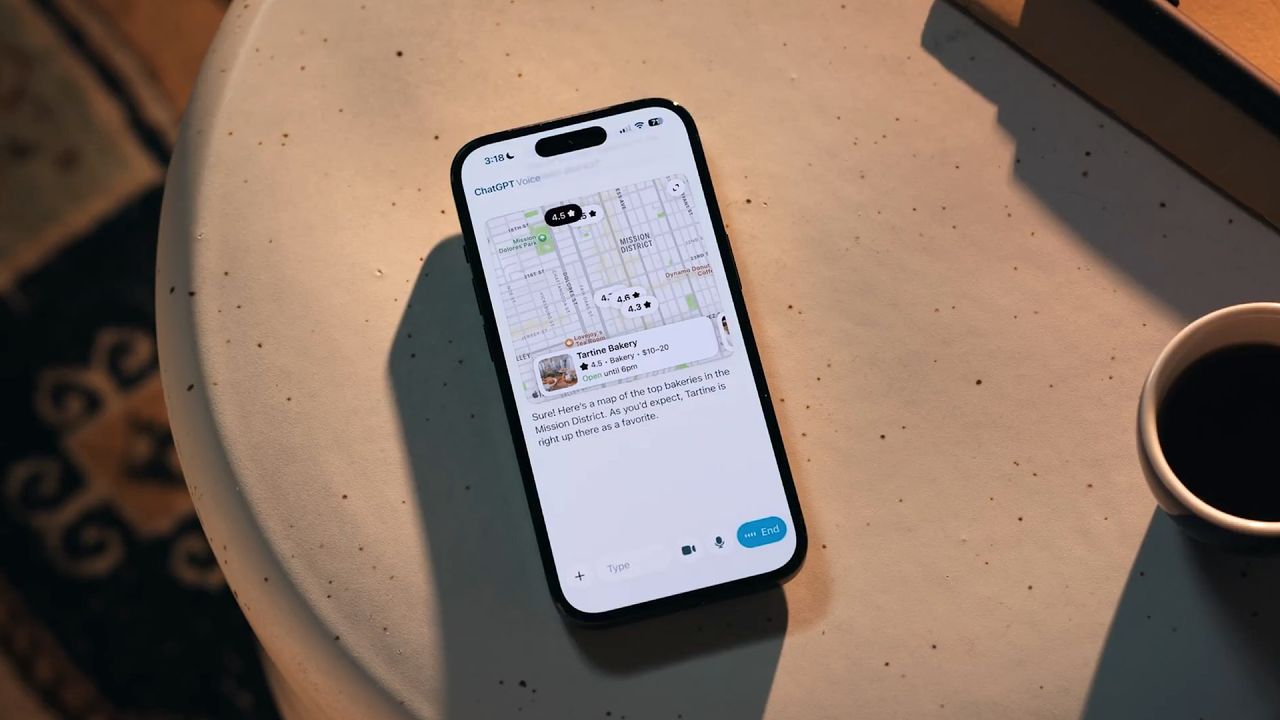
💡See why a messy 10-minute dialogue may outperform carefully engineered prompts.
⚡ 30-Second TL;DR
What Changed
The author replaced carefully written prompts with a 10-minute stream-of-consciousness conversation.
Why It Matters
For AI practitioners, the article reinforces conversational context as a practical prompting strategy, especially during brainstorming and problem framing. It does not report a new ChatGPT capability or a measurable model improvement.
What To Do Next
Run a 10-minute unstructured ChatGPT conversation about one real project, then ask it to summarize your goals, constraints, and next steps.
Key Points
- •The author replaced carefully written prompts with a 10-minute stream-of-consciousness conversation.
- •ChatGPT reportedly produced more insightful answers from the messy conversational context.
- •The experience changed the author’s approach to using AI, favoring dialogue over prompt perfection.
🧠 Deep Insight
AI-generated analysis for this event.
🔑 Enhanced Key Takeaways
- •Research into 'Chain-of-Thought' (CoT) prompting suggests that LLMs perform better when they generate intermediate reasoning steps, which aligns with the benefits of extended, iterative dialogue.
- •The 'Ramble First' approach leverages the model's increased context window, allowing it to maintain coherence over longer sessions compared to single-turn prompt engineering.
- •Cognitive load studies in human-AI interaction indicate that users often struggle to articulate complex requirements upfront, making iterative refinement a more natural cognitive process.
- •Advanced prompting techniques like 'Prompt Chaining' and 'Recursive Summarization' are increasingly being automated by AI agents to mimic the benefits of long-form conversational exploration.
- •Recent updates to major LLM architectures have improved 'statefulness' in long conversations, reducing the likelihood of the model losing track of initial instructions during extended rambles.
🛠️ Technical Deep Dive
- Context Window Utilization: Extended conversations utilize the full token capacity of the model, allowing for higher-density semantic mapping of user intent.
- Attention Mechanism Dynamics: In long-form dialogue, the attention mechanism dynamically weights earlier conversational turns, helping the model maintain thematic consistency without explicit re-prompting.
- Latent Space Exploration: Iterative dialogue allows the model to traverse latent space more effectively, narrowing down optimal outputs through successive feedback loops rather than a single high-stakes inference call.
- Token Efficiency: While 'rambling' consumes more input tokens, it often reduces the need for 'prompt engineering' overhead, potentially lowering the total cost of achieving a high-quality output.
🔮 Future ImplicationsAI analysis grounded in cited sources
⏳ Timeline
Weekly AI Recap
Read this week's curated digest of top AI events →
👉Related Updates
AI-curated news aggregator. All content rights belong to original publishers.
Original source: TechRadar AI ↗