๐Ÿ“ŠFreshcollected in 7m

Quantum Risk to Crypto Not Imminent
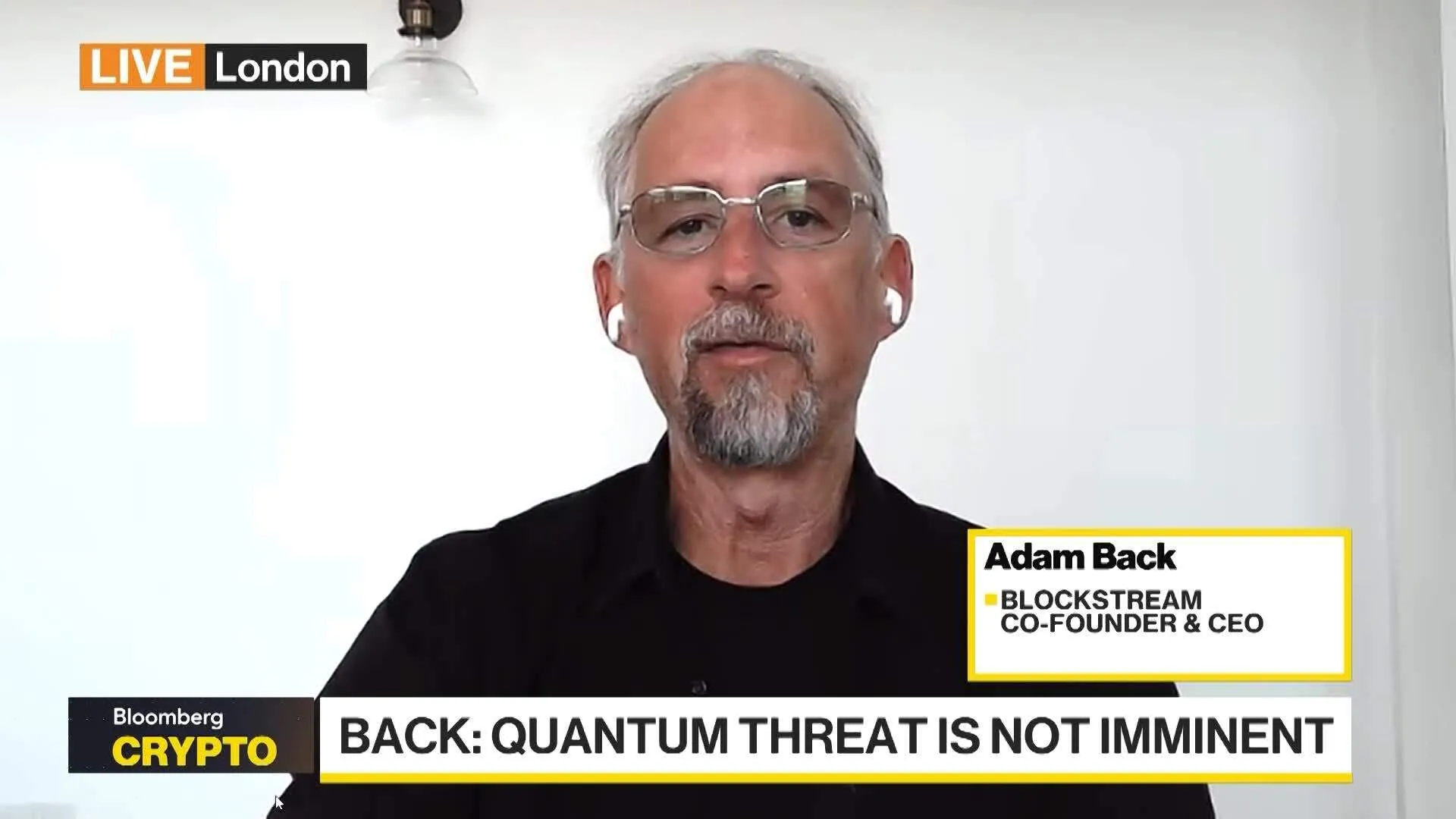
Quantum Risk to Crypto Not Imminent
PostLinkedIn
๐Ÿ“ŠRead original on Bloomberg Technology

๐Ÿ’กQuantum breakthroughs threaten crypto; prep your AI apps now

โšก 30-Second TL;DR

What Changed

Adam Back downplays immediate quantum risk to crypto assets.

Why It Matters

Could accelerate research into post-quantum cryptography, indirectly benefiting AI systems relying on secure blockchain for data integrity.

What To Do Next

Test NIST post-quantum cryptography standards in your AI-blockchain prototypes.

Who should care:Researchers & Academics

๐Ÿง  Deep Insight

AI-generated analysis for this event.

๐Ÿ”‘ Enhanced Key Takeaways

  • โ€ขThe primary vulnerability identified by researchers involves Shor's algorithm, which could theoretically solve the Elliptic Curve Discrete Logarithm Problem (ECDLP) used in Bitcoin's secp256k1 signature scheme.
  • โ€ขIndustry experts are increasingly focusing on 'harvest now, decrypt later' attacks, where encrypted data is intercepted today to be decrypted once sufficiently powerful fault-tolerant quantum computers become available.
  • โ€ขThe transition to Post-Quantum Cryptography (PQC) for blockchain networks is complicated by the need for hard forks, which require consensus among decentralized stakeholders and could potentially impact network performance or transaction throughput.

๐Ÿ› ๏ธ Technical Deep Dive

  • โ€ขBitcoin currently utilizes ECDSA (Elliptic Curve Digital Signature Algorithm) with the secp256k1 curve for transaction signing.
  • โ€ขQuantum threat models rely on the assumption of a Cryptographically Relevant Quantum Computer (CRQC) capable of executing Shor's algorithm at scale.
  • โ€ขProposed mitigation strategies include transitioning to Lamport signatures or other hash-based signature schemes, which are considered quantum-resistant but often result in significantly larger transaction sizes.
  • โ€ขThe NIST Post-Quantum Cryptography Standardization project is the primary benchmark for selecting algorithms (e.g., CRYSTALS-Kyber, CRYSTALS-Dilithium) that could eventually be integrated into blockchain protocols.

๐Ÿ”ฎ Future ImplicationsAI analysis grounded in cited sources

Bitcoin will undergo a protocol-level upgrade to quantum-resistant signatures before 2035.
The increasing efficiency of quantum error correction suggests that the timeline for a CRQC is shrinking, forcing developers to prioritize PQC integration to maintain long-term asset security.
Legacy Bitcoin addresses will become 'quantum-vulnerable' assets.
Addresses that have already revealed their public key (via outgoing transactions) are susceptible to private key derivation by quantum computers, unlike addresses that have never sent funds.

โณ Timeline

2014-01
Adam Back becomes CEO of Blockstream, focusing on Bitcoin infrastructure and sidechains.
2022-07
NIST announces the first group of quantum-resistant cryptographic algorithms selected for standardization.
2024-08
NIST releases the first three finalized post-quantum encryption standards (FIPS 203, 204, and 205).
๐Ÿ“ฐ

Weekly AI Recap

Read this week's curated digest of top AI events โ†’

๐Ÿ‘‰Related Updates

AI-curated news aggregator. All content rights belong to original publishers.
Original source: Bloomberg Technology โ†—