Profitability Paths for Chinese Commercial Space Firms
💡Insight into the business models and profitability timelines of China's emerging commercial space sector.
⚡ 30-Second TL;DR
What Changed
Blue Arrow and CAS Space both target 2029 for potential profitability.
Why It Matters
Establishing a distinct valuation framework for Chinese space firms helps investors and developers better assess the long-term viability of the sector.
What To Do Next
Review the technical specifications of reusable launch vehicles to understand the cost-per-kg reduction trends in the industry.
Key Points
- •Blue Arrow and CAS Space both target 2029 for potential profitability.
- •Profitability relies on reusable rocket technology and high-frequency launch scaling.
- •The industry is moving away from the SpaceX 'AI-bundled' valuation model toward a distributed ecosystem.
- •Massive demand from domestic constellations like GW and Qianfan drives industry growth.
🧠 Deep Insight
AI-generated analysis for this event — not the original article.
🔑 Enhanced Key Takeaways
- •The Chinese government's 'New Quality Productive Forces' policy has specifically prioritized the commercial space sector, providing direct subsidies and infrastructure support to firms like Blue Arrow and CAS Space to accelerate launch cadence.
- •Blue Arrow's Zhuque-3 (ZQ-3) rocket utilizes stainless steel structures, a design choice aimed at reducing manufacturing costs and turnaround times compared to traditional carbon-fiber composites.
- •CAS Space, as a commercial spin-off of the Chinese Academy of Sciences, leverages unique access to state-owned launch facilities and technical talent pools that private-only startups cannot easily replicate.
- •The 'Qianfan' (Thousand Sails) constellation, also known as G60, is modeled after Starlink but emphasizes a multi-orbit strategy to support both broadband and direct-to-cell services for the domestic Chinese market.
- •Recent regulatory shifts in China have begun to allow private commercial space firms to bid on government-backed satellite deployment contracts, a significant departure from the previous state-monopoly model.
📊 Competitor Analysis▸ Show
| Feature | Blue Arrow (ZQ-3) | CAS Space (Lijian-1/3) | SpaceX (Falcon 9) |
|---|---|---|---|
| Reusability | Planned (Stainless Steel) | Planned (Vertical Landing) | Proven (10+ flights) |
| Primary Focus | Heavy-lift / Constellation | Medium-lift / Rapid Response | Global Broadband / Heavy-lift |
| Status | Development/Testing | Operational/Development | Fully Operational |
🛠️ Technical Deep Dive
- Zhuque-3 (ZQ-3) utilizes TQ-12A liquid oxygen-methane engines, which offer higher specific impulse and cleaner combustion for reusability.
- CAS Space's Lijian-3 is designed for high-frequency launches with a focus on modular payload fairings to accommodate diverse satellite sizes for the Qianfan constellation.
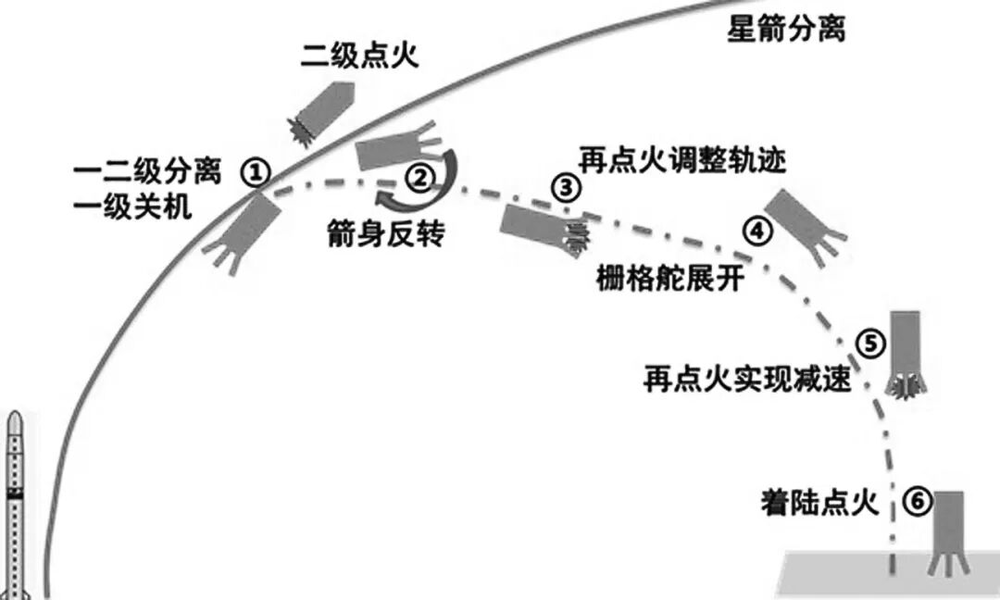
- Both firms are transitioning from expendable architectures to vertical takeoff, vertical landing (VTVL) systems, requiring advanced grid fin control and throttleable engine technology.
- Integration of autonomous flight termination systems (AFTS) is becoming a standard requirement for Chinese commercial rockets to reduce ground-based range safety infrastructure costs.
🔮 Future ImplicationsAI analysis grounded in cited sources
⏳ Timeline
Weekly AI Recap
Read this week's curated digest of top AI events →
👉Related Updates

AI-curated news aggregator. All content rights belong to original publishers.
Original source: 虎嗅 ↗
This is a summary, not the original. Read the source, or get the weekly briefing.
Weekly AI briefing
One email a week. Unsubscribe anytime.