🐯虎嗅•Stalecollected in 19m
Price Rumors Fuel May Day EV Sales Surge
💡Chip hikes in EVs signal rising AI hardware costs for autonomous driving projects.
⚡ 30-Second TL;DR
What Changed
Over 10 NEV brands announced hikes since 2024, 2000-10,000 RMB amid BYD/Changan moves.
Why It Matters
Market shifts favor EV brands with advanced intelligent driving and smart cockpits, ending pure price wars. Rising component costs may squeeze margins but boost premium tech adoption, benefiting AI-integrated auto leaders.
What To Do Next
Track semiconductor price trends via Changan/BYD reports to forecast AI chip costs in AV development.
Who should care:Founders & Product Leaders
Key Points
- •Over 10 NEV brands announced hikes since 2024, 2000-10,000 RMB amid BYD/Changan moves.
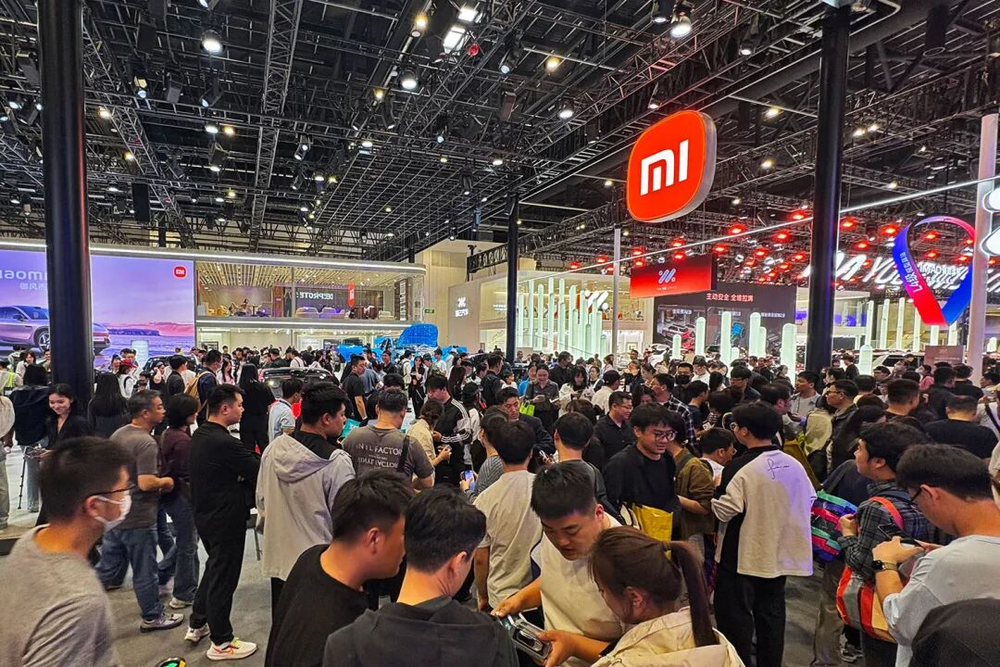
- •Dealerships report 6+ daily sales, full trial car bookings, long queues at Beijing Auto Show.
- •BYD blames 2nd-gen blade battery & flash charging; Changan cites chip/memory rises.
- •Huawei HarmonyOS, Xiaomi, Ideal booths packed with families testing smart features.
- •Direct rebates equalize financing costs, accelerating orders for high-tech models.
🧠 Deep Insight
AI-generated analysis for this event.
🔑 Enhanced Key Takeaways
- •The surge is exacerbated by the expiration of specific regional government subsidies in major Tier-1 cities, which were designed to phase out by mid-2026, creating a 'use-it-or-lose-it' urgency for consumers.
- •Supply chain analysts note that the price hikes are not solely due to raw material costs but are a strategic move by OEMs to improve gross margins after a prolonged 'price war' that eroded profitability throughout 2025.
- •Data from the China Passenger Car Association (CPCA) indicates that the market share of domestic NEV brands reached a record 68% in April 2026, further marginalizing legacy joint-venture brands which are struggling to integrate competitive intelligent cockpit software.
📊 Competitor Analysis▸ Show
| Feature | Huawei HarmonyOS (AITO) | Xiaomi (SU7/SU8) | Ideal (L-Series) |
|---|---|---|---|
| Core Strength | ADS 3.0 Autonomous Driving | Ecosystem Integration | Extended-Range Efficiency |
| Pricing Strategy | Premium/High-end | Aggressive/Value-driven | Family-oriented/Luxury |
| Key Benchmark | Industry-leading perception | High-performance acceleration | Best-in-class cabin comfort |
🛠️ Technical Deep Dive
- •BYD 2nd-Gen Blade Battery: Utilizes a new cell-to-body (CTB) integration technique that increases volumetric energy density by approximately 15% compared to the first generation, while improving thermal management via a new liquid cooling plate design.
- •Huawei ADS 3.0: Implements a 'God's Eye' perception architecture that shifts from traditional BEV+Transformer to a more advanced end-to-end neural network, reducing latency in decision-making for complex urban navigation.
- •Changan Chip/Memory Integration: Transitioning to localized high-performance SoCs (System-on-Chips) to mitigate supply chain volatility, utilizing advanced 7nm process nodes for cockpit domain controllers.
🔮 Future ImplicationsAI analysis grounded in cited sources
Consolidation of the Chinese NEV market will accelerate in Q3 2026.
Smaller manufacturers unable to pass on rising component costs to consumers will face severe liquidity crises as demand shifts toward dominant, tech-integrated brands.
Average transaction prices (ATP) for NEVs will rise by 5-8% by year-end.
The successful implementation of price hikes during the May Day surge provides OEMs with the market validation needed to sustain higher pricing tiers throughout the remainder of the year.
⏳ Timeline
2024-01
Initial industry-wide price war begins, triggered by aggressive discounting from major NEV players.
2025-03
Xiaomi officially enters the market with the SU7, disrupting the mid-to-high-end sedan segment.
2025-11
BYD announces the development of the 2nd-gen Blade Battery to address range and charging speed bottlenecks.
2026-04
Multiple OEMs announce price adjustments citing rising costs of memory chips and advanced battery materials.
📰
Weekly AI Recap
Read this week's curated digest of top AI events →
👉Related Updates


AI-curated news aggregator. All content rights belong to original publishers.
Original source: 虎嗅 ↗