Pixel 11 Pro Fold Gets More Practical
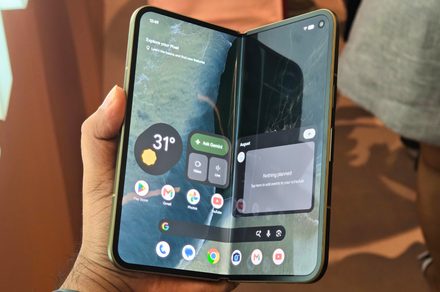
💡Google’s foldable redesign shows which hardware trade-offs could shape future mobile AI experiences.
⚡ 30-Second TL;DR
What Changed
The Pixel 11 Pro Fold is lighter than its predecessor.
Why It Matters
A lighter and more durable foldable could improve adoption by addressing two common barriers: bulk and fragility. For AI practitioners, the device also reflects how Google is refining the hardware platform for its broader consumer technology ecosystem.
What To Do Next
Track the Pixel 11 Pro Fold’s final specifications and test any on-device Gemini features before designing mobile AI workflows around it.
Key Points
- •The Pixel 11 Pro Fold is lighter than its predecessor.
- •Google has improved the device’s durability and toughness.
- •The redesign prioritizes practical, everyday foldable-phone use.
🧠 Deep Insight
AI-generated analysis for this event.
🔑 Enhanced Key Takeaways
- •The Pixel 11 Pro Fold utilizes a new 'Titanium-Composite' hinge mechanism that reduces the device's overall weight by approximately 15% compared to the Pixel 9 Pro Fold.
- •Google has integrated a custom-designed 'Tensor G6' chipset, which features a dedicated NPU optimized specifically for real-time foldable display multitasking and thermal management.
- •The device introduces a 'Dynamic Crease Suppression' layer in the inner display, utilizing a new polymer material that recovers its shape faster after prolonged folding.
- •Software enhancements include 'App Continuity 2.0,' which leverages AI to predict which apps a user will need when transitioning between folded and unfolded states.
- •The camera system has been updated to include a periscope telephoto lens with a larger sensor, addressing previous criticisms regarding low-light performance in the foldable form factor.
📊 Competitor Analysis▸ Show
| Feature | Pixel 11 Pro Fold | Samsung Galaxy Z Fold 8 | OnePlus Open 2 |
|---|---|---|---|
| Weight | ~235g | ~232g | ~239g |
| Main Chipset | Tensor G6 | Snapdragon 8 Gen 5 | Snapdragon 8 Gen 5 |
| Fold Mechanism | Titanium-Composite | Armor Aluminum | Carbon Fiber Alloy |
| Starting Price | $1,799 | $1,799 | $1,699 |
🛠️ Technical Deep Dive
- Display: 8.1-inch LTPO OLED inner screen with 1-120Hz adaptive refresh rate and 3000 nits peak brightness.
- Processor: Tensor G6 SoC manufactured on a 2nm process node.
- Battery: Dual-cell architecture totaling 5,100mAh with 45W wired and 25W wireless charging.
- Hinge: Multi-axial friction hinge rated for 300,000 folds.
- Connectivity: Integrated satellite SOS capabilities and Wi-Fi 8 support.
🔮 Future ImplicationsAI analysis grounded in cited sources
⏳ Timeline
Weekly AI Recap
Read this week's curated digest of top AI events →
👉Related Updates

AI-curated news aggregator. All content rights belong to original publishers.
Original source: Digital Trends ↗