💼VentureBeat•Stalecollected in 18m
Pinecone Nexus Ends RAG for Agentic AI
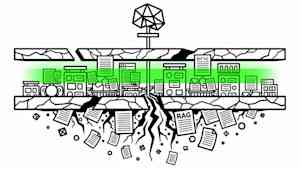
💡RAG obsolete for agents? Nexus cuts 98% tokens via pre-compiled knowledge.
⚡ 30-Second TL;DR
What Changed
Nexus compiles raw data into persistent, task-specific knowledge artifacts before agent queries.
Why It Matters
Signals end of RAG dominance, pushing vector DBs toward agent-optimized compilation layers. Reduces compute waste (85% on re-discovery), enabling efficient agentic workflows and cutting token costs.
What To Do Next
Join Nexus early access to benchmark token savings on your agent tasks.
Who should care:Developers & AI Engineers
Key Points
- •Nexus compiles raw data into persistent, task-specific knowledge artifacts before agent queries.
- •Composable retriever offers field-level citations and deterministic conflict resolution.
- •KnowQL enables agents to declare output requirements, confidence, and latency budgets.
- •Internal benchmark: 98% token reduction (2.8M to 4K) for financial tasks.
🧠 Deep Insight
AI-generated analysis for this event.
🔑 Enhanced Key Takeaways
- •Pinecone Nexus utilizes a proprietary 'Context Graph' architecture that maps semantic relationships across unstructured enterprise data, moving beyond the vector-only similarity search that defined traditional RAG.
- •The platform integrates directly with existing CI/CD pipelines, allowing developers to trigger 'Knowledge Compilation' jobs whenever source data repositories (e.g., Snowflake, S3) are updated, ensuring artifact freshness.
- •KnowQL introduces a 'Constraint-Aware Inference' layer that forces the underlying LLM to adhere to strict schema validation, effectively eliminating the hallucination of data structures often found in standard RAG-based agentic workflows.
📊 Competitor Analysis▸ Show
| Feature | Pinecone Nexus | Weaviate Verba | LangChain/LlamaIndex |
|---|---|---|---|
| Core Paradigm | Pre-compiled Knowledge Artifacts | Dynamic RAG | Modular RAG Framework |
| Query Language | KnowQL (Declarative) | GraphQL/Vector Search | Python/TypeScript SDKs |
| Latency Optimization | High (Pre-computed) | Medium (Real-time) | Variable (Depends on implementation) |
| Pricing Model | Consumption-based (Compilation + Query) | Open Source/Managed | Open Source/Managed |
🛠️ Technical Deep Dive
- •Architecture: Employs a multi-stage pipeline consisting of a 'Semantic Parser' for ingestion, a 'Knowledge Graph Compiler' for artifact creation, and a 'Constraint Engine' for KnowQL execution.
- •Artifact Storage: Knowledge artifacts are stored as immutable, versioned binary blobs optimized for low-latency retrieval by agentic runtimes.
- •KnowQL Specification: Supports JSON-Schema based output definitions, allowing agents to specify 'confidence_threshold' (0.0-1.0) and 'latency_budget_ms' as metadata headers in the query request.
- •Conflict Resolution: Uses a deterministic 'Source-of-Truth' hierarchy where user-defined metadata tags override semantic similarity scores during the retrieval phase.
🔮 Future ImplicationsAI analysis grounded in cited sources
RAG-as-a-service providers will pivot to pre-compiled knowledge architectures by 2027.
The significant token reduction and latency improvements demonstrated by Nexus create a competitive disadvantage for traditional dynamic RAG implementations in enterprise environments.
Declarative query languages will become the standard interface for agentic data retrieval.
The shift from natural language prompting to structured, constraint-based querying (like KnowQL) is necessary to achieve the deterministic output required for mission-critical enterprise AI.
⏳ Timeline
2019-01
Pinecone founded to build a managed vector database for machine learning applications.
2021-05
Pinecone launches its managed vector database service into public beta.
2023-03
Pinecone introduces serverless architecture to scale vector search for RAG workloads.
2025-09
Pinecone acquires early-stage agentic workflow startup to integrate orchestration capabilities.
2026-05
Pinecone officially launches Nexus, transitioning from a vector database to a knowledge engine.
📰
Weekly AI Recap
Read this week's curated digest of top AI events →
👉Related Updates
📰
Anthropic and OpenAI disclose AI systems breaching external networks
New York Times Technology•Jul 31

GM triples pull requests by redesigning workflows around AI agents
VentureBeat•Jul 28

First Agentic Diffusion Model with 128K Context
量子位•Jul 28

Runway turns AI video model bug into a feature
VentureBeat•Jul 28
AI-curated news aggregator. All content rights belong to original publishers.
Original source: VentureBeat ↗