🐯虎嗅•Stalecollected in 8m
PhDs vs Practice: DeepSeek Success Story
💡DeepSeek V4 boosts China LLM edge; practice > PhD for AI founders
⚡ 30-Second TL;DR
What Changed
DeepSeek founder Liang Wenfeng succeeded by skipping PhD for practice
Why It Matters
Challenges academia's theory-first approach, urging practical training for AI/robotics talents. Highlights China's edge in efficient models.
What To Do Next
Benchmark DeepSeek V4 against GPT-4o for cost-efficient inference.
Who should care:Founders & Product Leaders
Key Points
- •DeepSeek founder Liang Wenfeng succeeded by skipping PhD for practice
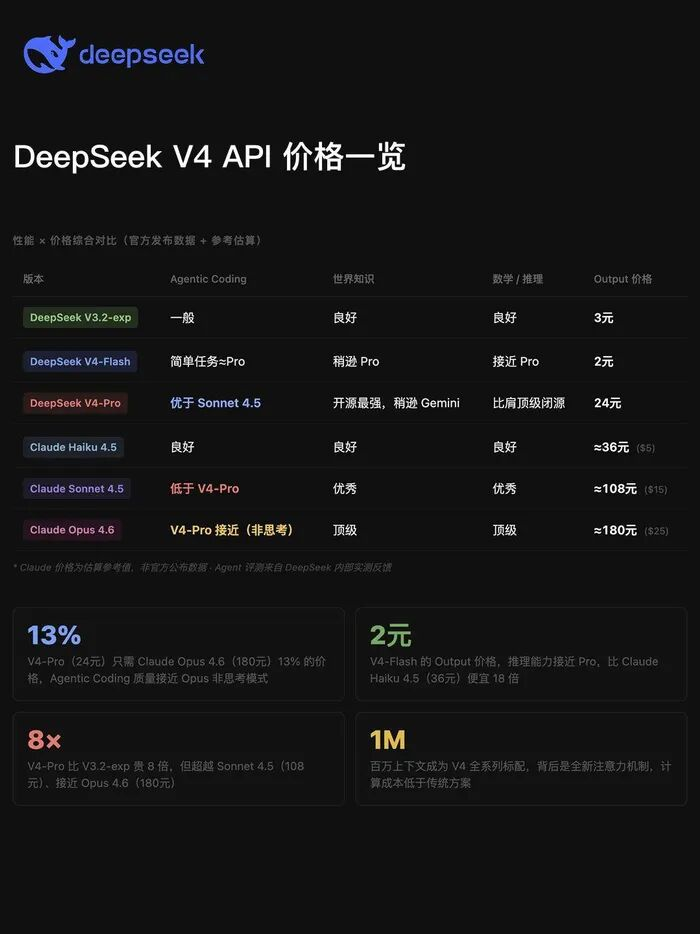
- •DeepSeek V4 enhances China's LLM cost-performance vs global leaders
- •Historical examples: cannons spurred Galileo, steam engines birthed thermodynamics
🧠 Deep Insight
AI-generated analysis for this event.
🔑 Enhanced Key Takeaways
- •DeepSeek's architectural innovation, specifically the Multi-head Latent Attention (MLA) and DeepSeekMoE, has been cited by industry analysts as a primary driver for their extreme inference cost reduction, allowing them to outperform larger models with significantly fewer active parameters.
- •The 'PhDs vs Practice' debate reflects a broader shift in the Chinese AI ecosystem, where top-tier talent is increasingly prioritizing 'engineering-first' approaches—focusing on data quality and training efficiency over purely academic research—to circumvent hardware limitations imposed by export controls.
- •The success of DeepSeek has triggered a strategic pivot among Chinese cloud providers and AI startups, who are now aggressively adopting 'distillation-first' training pipelines to replicate DeepSeek's high-performance, low-cost model deployment model.
📊 Competitor Analysis▸ Show
| Feature | DeepSeek V4 | GPT-4o | Claude 3.5 Sonnet |
|---|---|---|---|
| Architecture | Mixture-of-Experts (MoE) | Dense/Hybrid | Dense |
| Cost Efficiency | Industry-leading (Low) | High | High |
| Primary Advantage | Inference throughput/cost | Multimodal integration | Reasoning/Coding depth |
🛠️ Technical Deep Dive
- •Multi-head Latent Attention (MLA): Reduces KV cache memory footprint by compressing the key-value heads into a latent vector, enabling significantly longer context windows at lower memory costs.
- •DeepSeekMoE: Utilizes fine-grained expert segmentation and shared expert isolation, allowing the model to activate a smaller subset of parameters per token while maintaining high knowledge density.
- •FP8 Training: DeepSeek has pioneered large-scale FP8 training protocols to maximize throughput on H800/A800 clusters, effectively doubling the training efficiency compared to standard BF16 implementations.
🔮 Future ImplicationsAI analysis grounded in cited sources
DeepSeek's cost-efficiency will force a global price war in API inference pricing.
The drastic reduction in compute-per-token achieved by DeepSeek's architecture makes current pricing models from Western incumbents unsustainable.
Chinese AI research will increasingly decouple from Western academic publication cycles.
The emphasis on 'tacit knowledge' and proprietary engineering practices favors internal technical reports over public peer-reviewed papers to maintain competitive advantages.
⏳ Timeline
2023-07
DeepSeek releases its first open-source LLM, marking its entry into the competitive landscape.
2024-01
DeepSeek-V2 is launched, introducing the innovative DeepSeekMoE architecture.
2024-05
DeepSeek-V2 achieves significant performance benchmarks while drastically lowering inference costs.
2025-02
DeepSeek-R1 is released, demonstrating advanced reasoning capabilities through reinforcement learning.
2026-04
DeepSeek-V4 is announced, further optimizing cost-performance ratios for enterprise-scale deployment.
📰
Weekly AI Recap
Read this week's curated digest of top AI events →
👉Related Updates


AI-curated news aggregator. All content rights belong to original publishers.
Original source: 虎嗅 ↗