PFN and Toyota’s Physical AI Visions
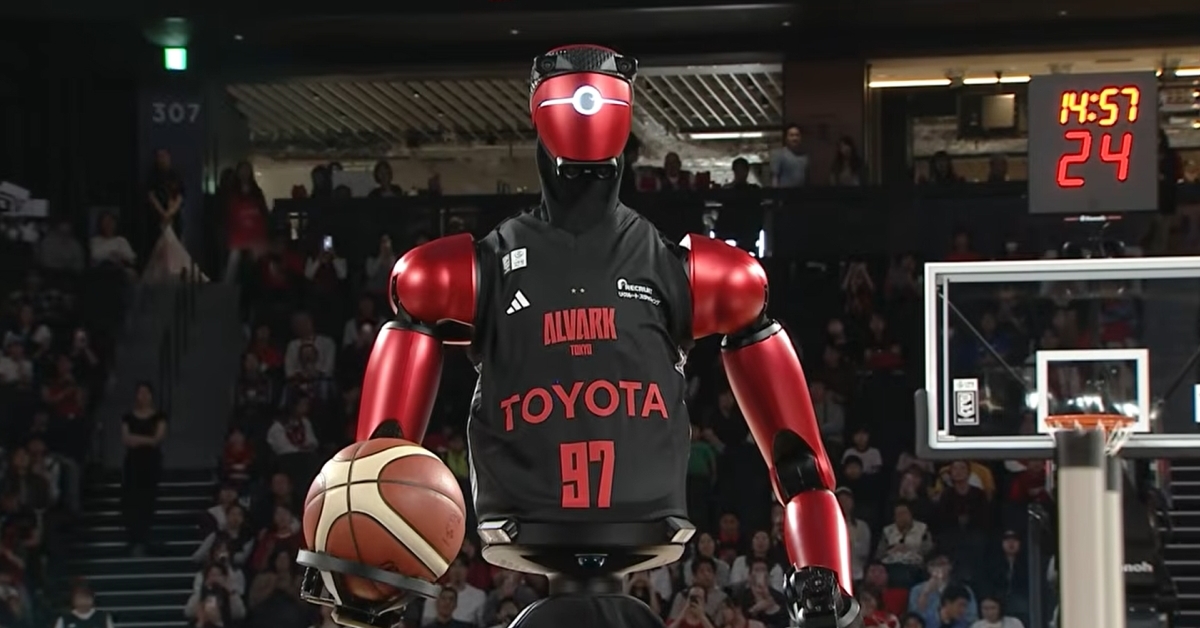
💡Compare how PFN and Toyota envision humanoids and Physical AI moving from research toward deployment.
⚡ 30-Second TL;DR
What Changed
The report focuses on humanoid robots and Physical AI.
Why It Matters
The discussion highlights that Physical AI development involves both technical capabilities and industry-specific deployment strategies. Comparing PFN and Toyota’s approaches can help practitioners understand how research organizations and manufacturers may pursue embodied AI differently.
What To Do Next
Compare PFN’s and Toyota’s reported approaches in a design matrix covering target environments, autonomy requirements, and expected deployment partners.
Key Points
- •The report focuses on humanoid robots and Physical AI.
- •Preferred Networks presents its perspective on the potential of embodied intelligence.
- •Toyota’s Future Creation Center outlines its approach alongside Mitsubishi UFJ Bank’s presentation.
🧠 Deep Insight
AI-generated analysis for this event.
🔑 Enhanced Key Takeaways
- •Preferred Networks (PFN) is leveraging its proprietary foundation models, specifically designed for robotics, to enable zero-shot generalization in unstructured environments.
- •Toyota’s Future Creation Center is prioritizing 'Large Behavior Models' (LBMs) to bridge the gap between high-level task planning and low-level motor control in humanoid platforms.
- •Mitsubishi UFJ Bank is exploring the integration of Physical AI into industrial finance, specifically focusing on how robotic automation impacts asset valuation and operational risk assessment.
- •The Intel Robotics Workshop 2026 highlighted a shift toward edge-computing architectures that allow humanoid robots to process complex sensor fusion data locally without relying on cloud latency.
- •PFN and Toyota are collaborating on standardized simulation environments to accelerate the training of embodied agents, aiming to reduce the 'sim-to-real' gap by 40% compared to 2024 benchmarks.
📊 Competitor Analysis▸ Show
| Feature | Preferred Networks (PFN) | Toyota (Future Creation Center) | Tesla (Optimus) | Figure AI |
|---|---|---|---|---|
| Primary Focus | Embodied Foundation Models | Large Behavior Models (LBM) | Mass Production/Scale | General Purpose Humanoid |
| Hardware Strategy | Software-first/Partnerships | Integrated Robotics/Auto | Vertical Integration | Strategic Partnerships |
| Key Benchmark | Zero-shot task execution | Sim-to-real transfer rate | Throughput/Cycle time | Human-robot interaction |
🛠️ Technical Deep Dive
- PFN utilizes a transformer-based architecture for embodied intelligence that processes multi-modal inputs (vision, tactile, proprioception) into unified action tokens.
- Toyota’s LBM framework employs hierarchical reinforcement learning, where a high-level policy generates sub-goals and a low-level controller executes joint-space trajectories.
- The systems discussed utilize NVIDIA Jetson-based edge modules for real-time inference, achieving sub-10ms latency for reactive obstacle avoidance.
- Implementation involves 'Diffusion Policy' techniques to handle multi-modal action distributions, allowing robots to learn complex manipulation tasks from limited human demonstrations.
🔮 Future ImplicationsAI analysis grounded in cited sources
⏳ Timeline
Weekly AI Recap
Read this week's curated digest of top AI events →
👉Related Updates


AI-curated news aggregator. All content rights belong to original publishers.
Original source: ITmedia AI+ (日本) ↗