PCIe 6.0 SSDs Finally Near Commercial Arrival
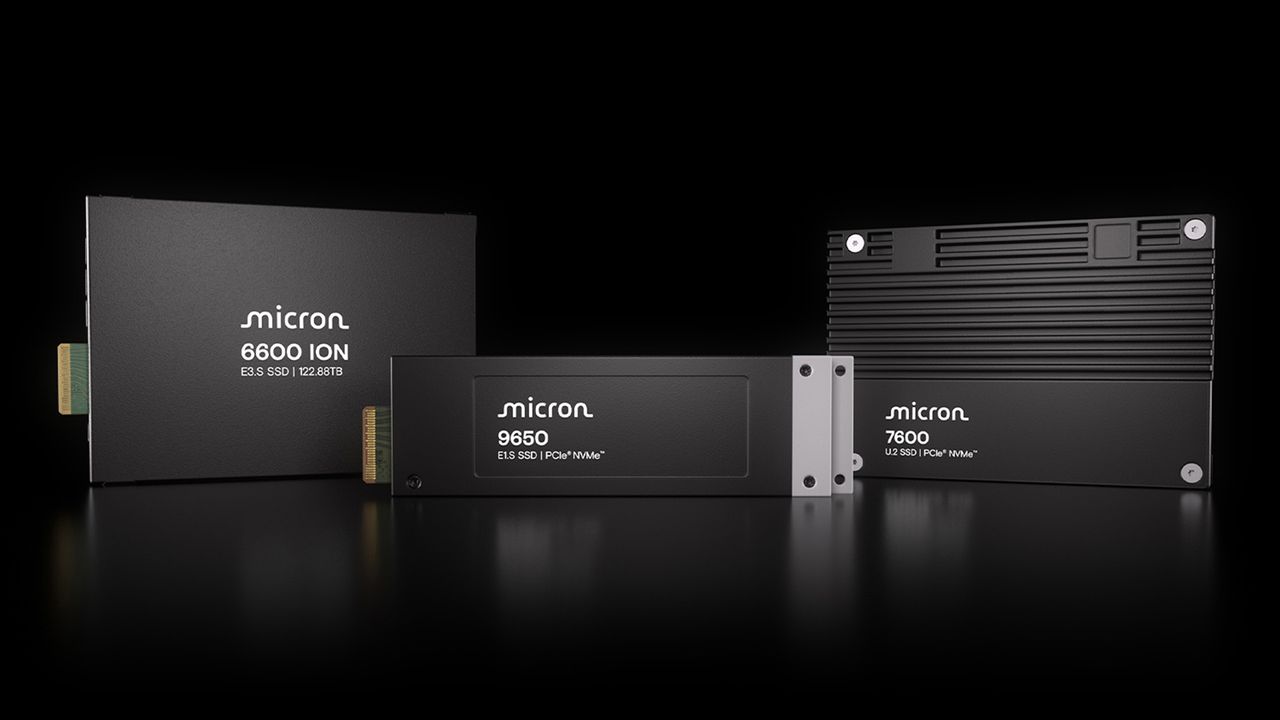
💡PCIe 6.0 SSDs could reshape I/O bottlenecks for AI training and retrieval infrastructure.
⚡ 30-Second TL;DR
What Changed
PCIe 6.0 SSDs are moving toward commercial availability after years of delays.
Why It Matters
Faster SSD interfaces could reduce storage bottlenecks in AI data pipelines, checkpoint handling, and large-scale retrieval systems. However, actual benefits will depend on controller maturity, NAND availability, thermals, and end-to-end system support.
What To Do Next
Ask your storage vendor for PCIe 6.0 SSD qualification results using your AI checkpoint and dataset workloads before planning a deployment.
Key Points
- •PCIe 6.0 SSDs are moving toward commercial availability after years of delays.
- •Micron and Samsung are among the companies preparing PCIe 6.0 storage products.
- •Marvell, Phison, and SMI are developing controllers for high-capacity, high-bandwidth SSDs.
🧠 Deep Insight
AI-generated analysis for this event.
🔑 Enhanced Key Takeaways
- •PCIe 6.0 doubles the raw data rate to 64 GT/s compared to PCIe 5.0, enabling theoretical bandwidth of up to 256 GB/s for a x16 configuration.
- •The transition to PAM4 (Pulse Amplitude Modulation with 4 levels) signaling is a critical technical shift in PCIe 6.0, requiring more complex error correction via Forward Error Correction (FEC) to maintain signal integrity.
- •Enterprise storage vendors are prioritizing PCIe 6.0 specifically for AI training clusters and high-performance computing (HPC) environments where data ingestion bottlenecks limit GPU utilization.
- •Power efficiency per gigabyte is a primary design focus for PCIe 6.0 controllers, as the increased signaling speed significantly raises thermal output compared to previous generations.
- •The adoption of PCIe 6.0 SSDs is heavily dependent on the availability of compatible server platforms, specifically those supporting CXL 3.0, which leverages the PCIe 6.0 physical layer.
📊 Competitor Analysis▸ Show
| Feature | PCIe 5.0 SSDs | PCIe 6.0 SSDs |
|---|---|---|
| Max Throughput | ~14 GB/s | ~28 GB/s (x4 link) |
| Signaling | NRZ | PAM4 |
| Latency | Low | Ultra-Low (with FEC overhead) |
| Primary Market | Enthusiast/Workstation | Data Center/AI Infrastructure |
🛠️ Technical Deep Dive
- Signaling: Utilizes PAM4 modulation to transmit 2 bits per cycle, doubling throughput while maintaining a similar Nyquist frequency to PCIe 5.0.
- Error Correction: Implements FLIT (Flow Control Unit) based encoding and low-latency Forward Error Correction (FEC) to mitigate the higher bit error rates inherent in PAM4.
- Power Management: Introduces L0p state, allowing the link to remain active while reducing power consumption by scaling down the number of active lanes based on traffic demand.
- Backward Compatibility: Maintains full backward compatibility with PCIe 5.0, 4.0, and 3.0 devices, though performance is limited to the lowest common denominator.
🔮 Future ImplicationsAI analysis grounded in cited sources
⏳ Timeline
Weekly AI Recap
Read this week's curated digest of top AI events →
👉Related Updates
AI-curated news aggregator. All content rights belong to original publishers.
Original source: Tom's Hardware ↗