PC Growth Amid AI-Driven Memory Crunch
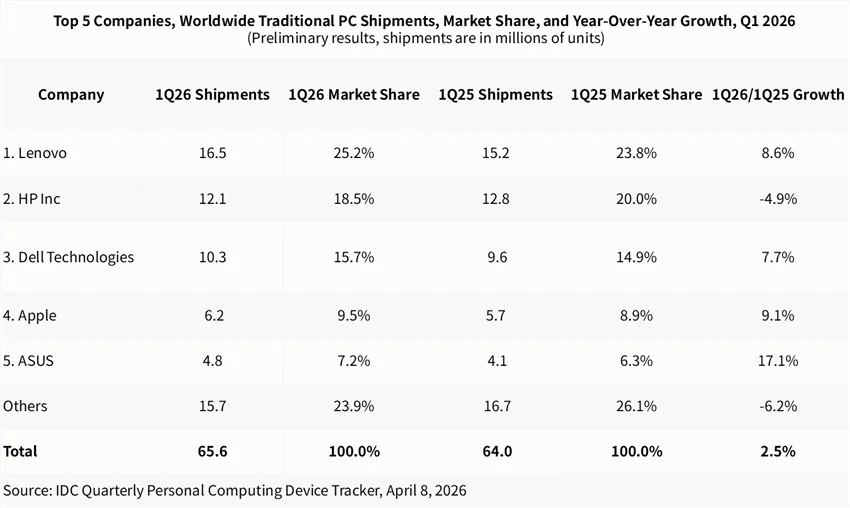
AI boom hikes PC memory 200%—critical for infra builders planning edge AI hardware.
30-Second TL;DR
What Changed
PC shipments +2.5% YoY (IDC), memory costs up $122-237 from HBM shift to AI.
Why It Matters
AI data center demand tightens memory supply, raising PC costs and favoring supply-strong vendors like Lenovo. This could slow AI PC rollout for edge inference if prices persist.
What To Do Next
Track Omdia memory price forecasts to optimize AI workstation procurement timing.
Key Points
- •PC shipments +2.5% YoY (IDC), memory costs up $122-237 from HBM shift to AI.
- •Lenovo +9% to 25% share via supply chain strength and enterprise AI focus.
- •Windows 10 EOL sustains enterprise upgrades; EMEA/Asia +7.4%/4.3%.
- •New AI acceleration PCs lower prices, boost consumer buys pre-hike.
- •HP -4.9% due to consumer reliance and strategy lag.
Deep Insight
AI-generated analysis for this event — not the original article.
Enhanced Key Takeaways
- •The memory supply crunch is exacerbated by a transition to HBM3e and HBM4 production capacity, which has prioritized high-margin AI server contracts over traditional DDR5 modules used in consumer PCs.
- •The Windows 10 EOL deadline, set for October 2025, has created a 'forced' refresh cycle that is currently masking the underlying weakness in consumer discretionary spending on premium hardware.
- •Foundry capacity constraints for NPU-integrated SoCs are creating a secondary bottleneck, limiting the availability of 'AI PC' branded laptops despite strong initial enterprise demand.
Competitor Analysis
- Lenovo (ThinkPad AI)
- 45-50 TOPS (Snapdragon/Intel)
- Dell (Latitude AI)
- 40-45 TOPS (Intel/AMD)
- HP (EliteBook AI)
- 35-40 TOPS (Intel)
- Lenovo (ThinkPad AI)
- Aggressive enterprise bundling
- Dell (Latitude AI)
- Premium/Service-led
- HP (EliteBook AI)
- Value-tier focus
- Lenovo (ThinkPad AI)
- In-house manufacturing (high)
- Dell (Latitude AI)
- Outsourced (high)
- HP (EliteBook AI)
- Outsourced (medium)
| Feature | Lenovo (ThinkPad AI) | Dell (Latitude AI) | HP (EliteBook AI) |
|---|---|---|---|
| NPU TOPS | 45-50 TOPS (Snapdragon/Intel) | 40-45 TOPS (Intel/AMD) | 35-40 TOPS (Intel) |
| Pricing Strategy | Aggressive enterprise bundling | Premium/Service-led | Value-tier focus |
| Supply Chain | In-house manufacturing (high) | Outsourced (high) | Outsourced (medium) |
Technical Deep Dive
- •AI PCs in Q1 2026 are primarily utilizing SoCs with integrated NPUs capable of >40 TOPS, meeting the minimum requirements for local execution of large language models (LLMs) like Llama 3.x.
- •Memory architecture shift: Transition from standard LPDDR5x to LPDDR6 is being accelerated to support the increased bandwidth requirements of on-device AI inference.
- •Thermal management: New chassis designs incorporate vapor chamber cooling to sustain NPU performance during prolonged AI workloads, increasing bill-of-materials (BOM) costs by approximately 8-12%.
Future ImplicationsAI analysis grounded in cited sources
Timeline
- 2024-06Microsoft announces Copilot+ PC requirements, setting the 40 TOPS NPU standard.
- 2025-10Official end of support for Windows 10, triggering the current enterprise upgrade cycle.
- 2026-01Global memory manufacturers announce a 20% reduction in DDR5 output to prioritize HBM production.
Weekly AI Recap
Read this week's curated digest of top AI events →
AI-curated news aggregator. All content rights belong to original publishers.
Original source: 虎嗅 ↗
This is a summary, not the original. Read the source, or get the weekly briefing.
The weekly digest
One email a week. Unsubscribe anytime.