Paul Graham's Billion-Dollar Math and Its Blind Spots
💡Understand why AI is collapsing traditional software moats and where the new competitive advantage lies.
⚡ 30-Second TL;DR
What Changed
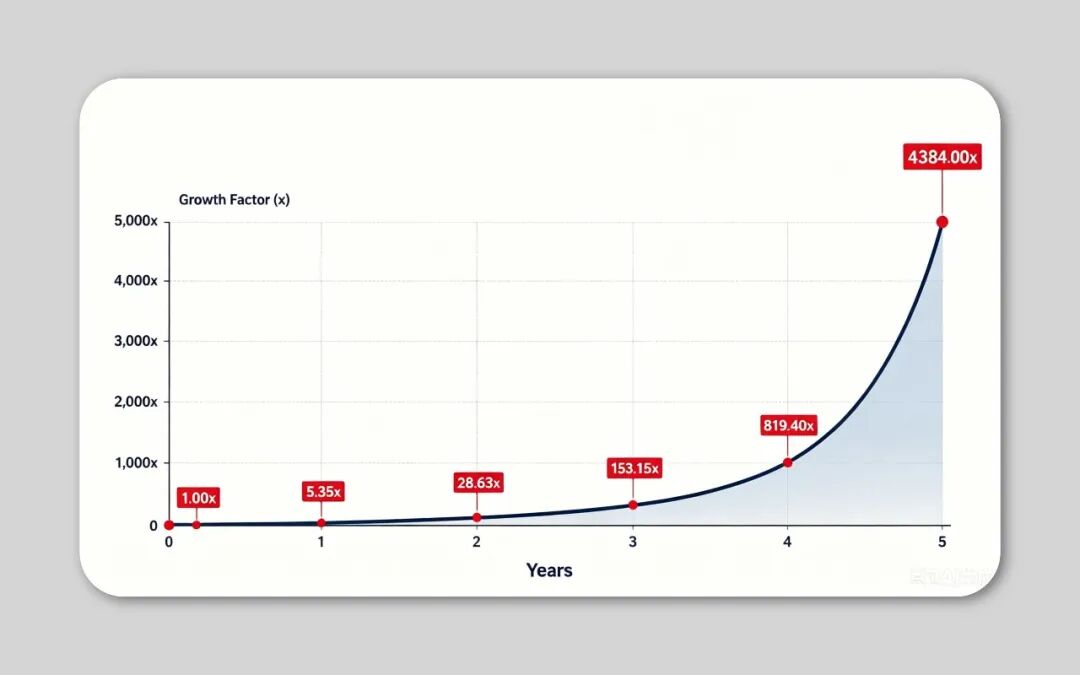
Exponential growth is counter-intuitive for human brains evolved for linear tasks.
Why It Matters
The rise of AI lowers the cost of software production, making code-based moats collapse and forcing startups to focus on deep, trust-based customer relationships.
What To Do Next
Evaluate your product's moat: if it relies solely on code, pivot toward building deep, AI-resistant trust relationships with your users.
Key Points
- •Exponential growth is counter-intuitive for human brains evolved for linear tasks.
- •Survival rate is the most critical, often ignored variable in the 0.46% success rate of YC startups.
- •AI is shifting defensive moats from code-based software to physical-world trust relationships.
- •Empathy is a key differentiator, but it is often a privilege of those already in elite circles.
🧠 Deep Insight
AI-generated analysis for this event — not the original article.
🔑 Enhanced Key Takeaways
- •Paul Graham's 'How to Start a Startup' lecture series, which popularized these growth theories, has been viewed millions of times and serves as the foundational curriculum for Y Combinator's standardized approach to venture scaling.
- •Recent longitudinal studies on YC alumni suggest that the '0.46% success rate' metric is highly skewed by a power-law distribution where a tiny fraction of companies (the 'decacorns') account for over 90% of the total valuation generated by the accelerator.
- •Graham's 'Schlep Blindness' concept—the tendency to avoid painful, unglamorous problems—is increasingly cited by AI researchers as the primary reason why LLM-based startups fail to achieve product-market fit in legacy industries.
- •The shift toward 'physical-world trust' mentioned in the article aligns with the rise of 'Hard Tech' and 'Deep Tech' investment strategies, which prioritize capital-intensive infrastructure over the low-marginal-cost software models Graham originally championed.
- •Critics of the Graham model argue that his emphasis on 'founder mode'—a concept he popularized in 2024—creates a survivorship bias that ignores the systemic advantages provided by YC's elite network and capital access.
🔮 Future ImplicationsAI analysis grounded in cited sources
⏳ Timeline
Weekly AI Recap
Read this week's curated digest of top AI events →
👉Related Updates




AI-curated news aggregator. All content rights belong to original publishers.
Original source: 虎嗅 ↗
This is a summary, not the original. Read the source, or get the weekly briefing.
The weekly digest
One email a week. Unsubscribe anytime.