Pair Wins Turing Award for Encryption Breakthrough
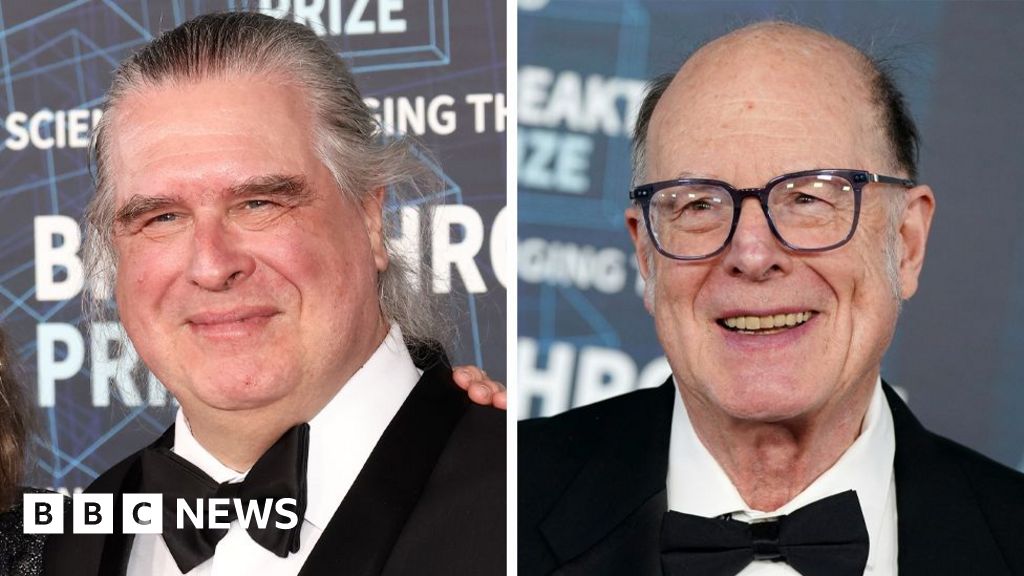
💡Turing Award for encryption secures future AI data comms & privacy.
⚡ 30-Second TL;DR
What Changed
Charles H. Bennett and Gilles Brassard win Turing Award.
Why It Matters
This Turing Award emphasizes foundational cryptography advances critical for AI security and data privacy. It promises enduring protection for digital infrastructures supporting AI systems.
What To Do Next
Read the official ACM Turing Award page for Bennett and Brassard to study their encryption contributions.
Key Points
- •Charles H. Bennett and Gilles Brassard win Turing Award.
- •Award for breakthrough in computer encryption.
- •Expected to secure digital communications long-term.
🧠 Deep Insight
Background and context from public sources — not the original article. 6 sources cited.
🔑 Enhanced Key Takeaways
- •Bennett and Brassard's BB84 protocol, developed in 1984, was the first quantum cryptography protocol ever created and remains foundational to modern Quantum Key Distribution (QKD) schemes used today for quantum-secure public key sharing[1][4].
- •Beyond cryptography, their 1993 discovery of quantum teleportation—decomposing quantum state information into classical and non-classical correlations sent through separate channels—fundamentally reshaped theoretical computing foundations[2][5].
- •The pair's work spans multiple quantum information domains including entanglement distillation, quantum pseudo-telepathy, and classical simulation of quantum entanglement, with several concepts now implemented in laboratory settings[1].
- •Bennett and Brassard's collaboration originated from a 1979 beach conversation in Puerto Rico where they refined Stephen Wiesner's quantum money concept into a cryptographic application—a pivotal moment that launched the quantum information revolution[4].
🛠️ Technical Deep Dive
- •BB84 Protocol: Leverages the quantum uncertainty principle to enable secure communication between parties sharing no initial secret information; uses quantum bits (qubits) and classical information channels[2][4].
- •Cascade Error Correction: Extended BB84 with efficient detection and correction of noise caused by eavesdropping on quantum cryptographic signals[1].
- •Quantum Teleportation Mechanism: Complete information in an unknown quantum state is decomposed into purely classical information and Einstein–Podolsky–Rosen (EPR) correlations, sent through two separate channels, then reassembled to produce an exact replica of the original quantum state (which is destroyed in transmission)[2].
- •Entanglement Distillation: Techniques introduced in 1995–1997 for faithful transmission of classical and quantum information through noisy channels, part of quantum information and computation theory[2].
🔮 Future ImplicationsAI analysis grounded in cited sources
⏳ Timeline
📎 Sources (6)
Factual claims are grounded in the sources below. Forward-looking analysis is AI-generated interpretation.
- cwi.nl — Gilles Brassard Wins 2023 Breakthrough Prize in Fundamental Physics
- en.wikipedia.org — Charles H. Bennett (physicist)
- cifar.ca — Cifars Gilles Brassard Wins Worlds Largest Science Prize
- eu.36kr.com — 3728350323522693
- acm.org — Turing Award 2025
- thelogic.co — Canadian Scientist Gilles Brassard Wins Turing Award for Quantum Breakthroughs
📰 Event Coverage
Weekly AI Recap
Read this week's curated digest of top AI events →
👉Related Updates
AI-curated news aggregator. All content rights belong to original publishers.
Original source: BBC Technology ↗
This is a summary, not the original. Read the source, or get the weekly briefing.
Weekly AI briefing
One email a week. Unsubscribe anytime.