Oxford Postdoc Secures Funding for Robot Optical Sensors
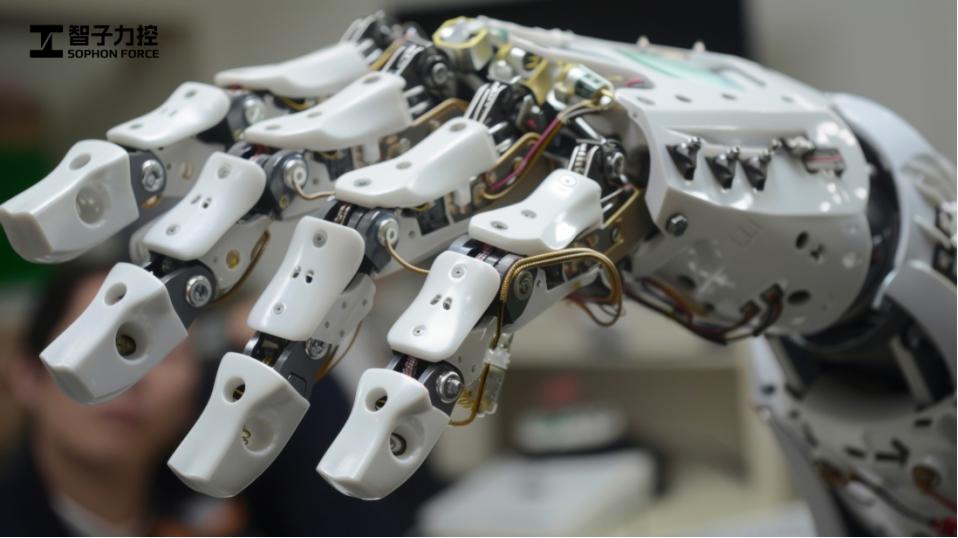
Optical sensors cut robot sensing costs at scale, vital for humanoid dexterity
30-Second TL;DR
What Changed
Two funding rounds: seed from Pudong AI Fund, latest led by Zhongxin Juyuan.
Why It Matters
This funding accelerates optical force sensing adoption in humanoid robots, potentially reducing wiring complexity and enabling dexterous manipulation critical for embodied AI. It positions Zhizi as a key supplier in China's robot supply chain.
What To Do Next
Contact Zhizi Force Control to demo their 1000Hz optical sensors for your robot's force feedback integration.
Key Points
- •Two funding rounds: seed from Pudong AI Fund, latest led by Zhongxin Juyuan.
- •Optical sensors enable 1000Hz sampling, <0.3% crosstalk, lower cost at scale vs electrical.
- •Distributed whole-body force perception for humanoid robots, with digital twin algorithms.
- •Cooperating with leading robot companies; applications in surgery robots and EV battery monitoring.
Deep Insight
AI-generated analysis for this event — not the original article.
Enhanced Key Takeaways
- •Zhizi Force Control's technology utilizes a proprietary 'optical fiber grating' sensing mechanism, which offers superior electromagnetic interference (EMI) immunity compared to traditional capacitive or resistive force sensors used in humanoid joints.
- •The company's business model focuses on providing a 'sensor-as-a-service' platform, integrating their hardware with a proprietary software middleware that simplifies the integration of force-feedback loops into existing robot operating systems (ROS/ROS2).
- •Beyond humanoid robotics, the company is actively piloting its thin-film optical sensing arrays for real-time pressure mapping in EV battery thermal management systems to detect early-stage swelling or mechanical stress.
Competitor Analysis
- Zhizi Force Control
- High (Optical)
- Traditional Strain Gauge Sensors
- Low
- Capacitive Tactile Skins
- Moderate
- Zhizi Force Control
- 1000Hz
- Traditional Strain Gauge Sensors
- 500-1000Hz
- Capacitive Tactile Skins
- 100-500Hz
- Zhizi Force Control
- Low (Plastic/Fiber)
- Traditional Strain Gauge Sensors
- Moderate
- Capacitive Tactile Skins
- High
- Zhizi Force Control
- <0.3%
- Traditional Strain Gauge Sensors
- 1-5%
- Capacitive Tactile Skins
- 2-8%
| Feature | Zhizi Force Control | Traditional Strain Gauge Sensors | Capacitive Tactile Skins |
|---|---|---|---|
| EMI Immunity | High (Optical) | Low | Moderate |
| Sampling Rate | 1000Hz | 500-1000Hz | 100-500Hz |
| Cost at Scale | Low (Plastic/Fiber) | Moderate | High |
| Crosstalk | <0.3% | 1-5% | 2-8% |
Technical Deep Dive
- Sensing Principle: Employs optical fiber Bragg grating (FBG) or intensity-based modulation to detect micro-deformations in the robot's structural components.
- Data Processing: Utilizes a centralized FPGA-based processing unit to perform high-speed signal demodulation, reducing the latency typically associated with distributed ADC (Analog-to-Digital Converter) architectures.
- Integration: The 'structure as sensor' approach embeds optical fibers directly into the robot's load-bearing chassis, eliminating the need for bulky, discrete load cells at every joint.
- Digital Twin: The system feeds real-time force data into a physics-informed neural network (PINN) to predict structural fatigue and optimize motion control trajectories in real-time.
Future ImplicationsAI analysis grounded in cited sources
Timeline
- 2023-05Zhizi Force Control founded by Oxford postdoc Song Goyang.
- 2024-02Secured seed funding round led by Pudong AI Fund.
- 2025-11Completed latest funding round led by Zhongxin Juyuan to scale production.
Weekly AI Recap
Read this week's curated digest of top AI events →
AI-curated news aggregator. All content rights belong to original publishers.
Original source: 36氪 ↗
This is a summary, not the original. Read the source, or get the weekly briefing.
The weekly digest
One email a week. Unsubscribe anytime.