Overfitting: Past Explainers Fail Future Forecasts
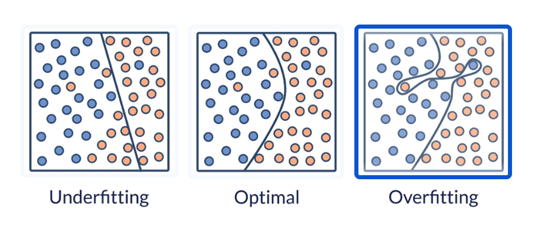
💡Master overfitting analogy for AI models & human decisions—boost generalization now.
⚡ 30-Second TL;DR
What Changed
Overfitting fits historical noise as signal, ruining future predictions in quant models.
Why It Matters
Enhances AI practitioners' understanding of generalization pitfalls, improving model robustness beyond finance.
What To Do Next
Add out-of-sample testing to your next ML strategy to combat overfitting.
Key Points
- •Overfitting fits historical noise as signal, ruining future predictions in quant models.
- •Human cognition overfits limited life events into rigid biases, sacrificing generalization.
- •Quant uses train/test splits; humans should isolate experiences and embrace probabilistic thinking.
🧠 Deep Insight
AI-generated analysis for this event — not the original article.
🔑 Enhanced Key Takeaways
- •The concept of 'narrative fallacy,' popularized by Nassim Taleb, serves as the cognitive psychological foundation for the article's thesis, explaining how humans impose logical structures on random historical data points.
- •In quantitative finance, the 'look-ahead bias' is a specific form of overfitting where models inadvertently incorporate information from the future (test set) into the training process, leading to inflated performance metrics.
- •Recent research in cognitive science suggests that 'Bayesian updating'—the process of adjusting beliefs based on new evidence—is frequently hindered by 'confirmation bias,' which acts as a regularization failure in the human brain.
🔮 Future ImplicationsAI analysis grounded in cited sources
Weekly AI Recap
Read this week's curated digest of top AI events →
👉Related Updates



AI-curated news aggregator. All content rights belong to original publishers.
Original source: 虎嗅 ↗
This is a summary, not the original. Read the source, or get the weekly briefing.
The weekly digest
One email a week. Unsubscribe anytime.